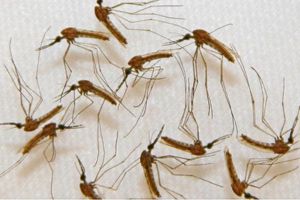
Four new malaria variants linked to drug resistance, 8 counties affected
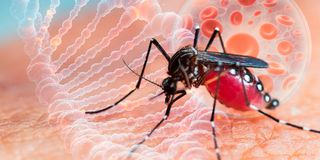
Mutation of the parasites could weaken the effectiveness of both Kenya's first-line and second-line malaria treatments.

A team of Kenyan scientists has found four new variants of the malaria parasite in eight counties across western Kenya that are linked to reduced effectiveness of frontline malaria drugs,
The experts were led by Prof Isabella Oyier of the Kemri-Wellcome Trust in Kilifi, who worked with the Health ministry's National Malaria Control Programme. They presented the findings at the 16th Kemri Annual Scientific and Health (Kash) conference, which ended on Friday. The affected counties are Kisii, Kisumu, Siaya, Busia, Homa Bay, Migori, Bungoma and Kakamega.
Prof Oyier told Nation that these mutations could weaken the effectiveness of both Kenya's first-line and second-line malaria treatments.
The World Health Organisation has listed about 13 variants that could allow the malaria parasite to survive treatment. Of the four found in Kenya, the most common is known as A675V, which has also been detected in Uganda.
A malaria infection caught and treated early typically clears within three days. The expert warned that this may no longer hold as the parasite mutates to survive the drugs.
The mutations are not new. They have been occurring across the world for decades, forcing countries to change malaria drugs repeatedly. The first widely used treatment was Chloroquine, which was in use from the 1940s to the 1980s. Kenya replaced it with Sulfadoxine-Pyrimethamine as its first-line treatment in 1998, before switching to its current drug, Artemisinin-Based Combination Therapy, known as ACT, in 2006.
Prof Oyier explained that these changes are a natural part of how parasites evolve.
"Every time you have genetic material, and you copy it, you may introduce something like a typo or a spelling mistake. If that mistake happens to be advantageous to the parasite, then it will rise to high frequency," she said.
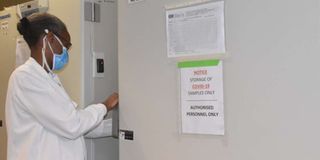
Kemri-Wellcome Trust Programme head of bioscience Isabella Oyier at their lab in Kilifi on May 21, 2020.
She described the situation as alarming, noting that the prevalence of these mutations in the affected counties is more than 10 per cent. This is particularly worrying, she noted, because the malaria burden is highest in children aged 10 and under.
There is currently no immediate replacement drug on the market, though new treatments are in the development pipeline.
"This is why early detection of these mutations is important and a cause for alarm. Confirming their impact on treatment in malaria-endemic regions like western Kenya should be a priority," the scientist said.
Routine diagnosis
To stay ahead of the threat, Prof Oyier and her team are building an early warning system by integrating malaria molecular surveillance into routine diagnosis at health facilities across the country.
The system works through a network of sentinel health facilities linked to the National Malaria Reference Laboratory, with support from research laboratories.
Their platform tracks both drug resistance and diagnostic resistance markers using blood samples collected from at least three sentinel sites in 15 malaria-endemic counties. The team uses next-generation sequencing technology to detect resistance markers from the samples. The data generated is then shared regularly with the National Malaria Control Programme to track patterns and shifts over time.
"We need to stay ahead of the parasite with a high level of vigilance, a strong surveillance system and strict adherence to early diagnosis and treatment following a confirmed test," she noted.
Prof Oyier stressed that despite the findings, there is no evidence that current malaria drugs have stopped working, urging patients to continue taking the full three-day dose as prescribed.
"If fever persists after completing the full treatment, seek medical advice, as second-line treatment may be required," she explained.
However, she said the Health ministry should consider setting up clinical trials to determine whether Kenya's first-line drugs are eliminating the parasite effectively, given that the mutations have already been detected.
All malaria-endemic countries, including Kenya, are required to conduct therapeutic efficacy trials every two years to test whether their first-line and second-line drugs are still clearing the parasite. Prof Oyier said that when mutations such as these are detected, targeted assessments must be carried out in the specific areas affected.
Her findings are consistent with what has been detected in Uganda, Rwanda, Tanzania, Ethiopia and South-East Asia.
Follow our WhatsApp channel for breaking news updates and more stories like this.