From hope to hostility: Machakos team’s struggle to deliver life-saving antivenom

Snake antivenoms are the only effective treatment to prevent or reverse most of the venomous effects of snakebites.

What you need to know:
- Machakos innovators claim extortion, sabotage, and patent theft are blocking their high-efficacy Muthea Antivenom from reaching Kenyans.
- Petitioners accuse senior research officials of obstructing development of a Kenyan-made antivenom amid thousands of annual snakebite deaths.
It began with a neighbour's death at Machakos Level 5 Hospital after being bitten by a snake. Shortly afterwards, the Ministry of Health published the 2019 Snakebite Policy, stirring the resolve of Kenyan innovators from Machakos County to develop a super antivenom to ensure no other Kenyan would lose their life or limbs because of a snakebite.
What followed was a five-year journey that would test not just their scientific abilities, but their faith in the very institutions meant to support them.
"After reading the policy paper, we concluded that we stood a good chance of innovating and registering our traditional antivenom to the Pharmacy and Poisons Board's aesthetic standard by switching the excipients and mode of drug delivery," the team told a Senate committee.
The innovators from Wamunyu, Machakos County, had reason to be optimistic. Their invention—the new generation Muthea Antivenom—registered 80 per cent efficacy in saving lives and limbs, as demonstrated by the Kenya Medical Research Institute (Kemri).
However, they were unprepared for what awaited them in their quest to save thousands of people in snake-infested areas, not only in Kenya but across Africa.
Extortion, denial of services, dispossession of patent rights, unauthorised use of licensed samples, threats, injustice, outright sabotage and frustration are just a glimpse of the obstacles the Kenyan innovators have endured over the past five years.
Despite their invention's proven success, the team has encountered prejudice and hostility. The innovators, under their company SB Alexa, have now turned to Parliament after unsuccessfully seeking intervention from the Ethics and Anti-Corruption Commission (EACC), the Ombudsman and the Directorate of Criminal Investigations (DCI).
"All our efforts to engage the Kenya Medical Research Institute and the Institute of Primate Research (IPR) regarding a mutually beneficial partnership to develop Muthea Antivenom have been met with hostility, to the extent that we have been verbally banned from entering Kemri premises without due process," the team stated.
"The public record of a bold attempt to invalidate our industrial property through threats of arrest exists at the National Commission for Science, Technology and Innovation registry, Kenya Industrial Property Institute archives, DCI complaints record, and EACC. The atrocity is also known to public witnesses," they stated.
The petitioners have also faulted the State Department for Public Health and Professional Standards for failing to honour its promise to Kenyans regarding antivenom when it represented the Ministry of Health during the African Snakebite Alliance in March last year
Patrick Musilu, the lead developer and innovator, asked: "Where is the antivenom that PS Mary Muthoni Muriuki promised Kenya and Sub-Saharan Africa within nine months—some 16 months ago?"
"Have the actions of PS Mary Muthoni Muriuki, in abetting the attempted seizure of industrial property, delayed the development of life-saving antivenom? To what extent can an official be held liable for deaths caused by reckless acts leading to the death of Kenyan citizens? Did the PS know that the industrial property and marketing concept had been stolen? What action did she take after the truth came to light?"
The team has appealed to Parliament, through the Senate, to help them "protect and propagate commercialisation of the new generation Muthea Antivenom in Kenya."
Petition to the Senate
A petition submitted to the Senate Health Committee links senior officials of research institutes under the Ministry of Health with blocking the development of the life-saving antivenom, consequently causing the deaths of thousands of Kenyans in contravention of the law.
The officials mentioned include key figures in Kemri, the National Commission for Science, Technology and Innovation (Nacosti), the Kenya Institute of Primate Research, and the Kenya Snakebite Research & Intervention Centre.
"We are citizen innovators of non-animal plasma antivenom who, for the last five years, have been working to commercialise a new generation antivenom from the chemically synthesised traditional Muthea Antivenom," reads the petition.
"Although we are lawfully engaged in snakebite treatment in Wamunyu, our initiative to research, innovate and commercialise our patented traditional medication nationwide is facing serious maladministrative challenges created by known employees of MoH medical research institutions through false narratives, as recorded in the public domain."
The Committee, chaired by Senator Jackson Mandago (Elgeyo Marakwet), heard that Muthea Antivenom—described by petitioners as "better than average"—is under the protection of the Ministry of Culture, Kipi and Universal Health Coverage.
Mr Musilu, author of Essentials of SB-Elixa Supervalent Antivenom, accused key public officials of propagating neo-colonialism by locking out local antivenom innovators in favour of internationally sponsored entities for personal gain.
He claimed a senior Kemri official rejected their samples after they declined to pay Sh100,000—contrary to the Public Health Act, which exempts traditional and herbal medicine developers from punitive charges and validation fees.
The petitioners have appealed for Parliament's support to protect their right to research, innovate and commercialise the traditional antivenom to Pharmacy and Poisons Board aesthetic standards.
Mr Musilu argues that this would enable SB Alexa to move "Kenya from being a net importer of inferior animal plasma antivenom to the largest exporter of chemically synthesised antivenom in the world."
The innovators want Parliament to launch a preliminary inquiry to establish the reality of unlawful denial of service through impunity, and the complicity of management in flouting service delivery norms and regulations governing public research institutions.
They also want suspension of the most culpable officials from office to facilitate investigations into criminal conduct in the attempted invalidation of their industrial property; intervention by law enforcement agencies to investigate criminal abuse of office and sabotage; and development of regulated guidelines to make it easier for indigenous African inventors to access research facilities through structured partnerships with publicly funded research bodies.
The petition comes amid alarming statistics on snakebite-related deaths and paralysis in Kenya, an active participant in the Global Strikeout Snakebite campaign to minimise disability and mortality from snakebites.
At least 20,000 Kenyans are bitten by snakes annually, according to a 2024 report by IPR. Each year, about 4,000 Kenyans die from snakebites, whilst a further 7,000 are left paralysed or suffer permanent health complications.
Whilst Kenya needs at least 100,000 vials of antivenom annually, only 10,000 to 30,000 are available.
Understanding snakebites
What is a snakebite?
It occurs when one is bitten by a snake. A bite from a venomous snake is critical and it is important to seek treatment promptly.
Symptoms
Victims show bruising, sharp pain, swelling, breathing difficulties, nausea, vomiting, paralysis and muscle weakness.
Snakebite envenoming
A medical condition that occurs when a venomous snake injects its venom into a person by biting them using their fangs.
Who is more affected?
Children are more affected than adults because their bodies are smaller, allowing the venom to be absorbed quickly.
Treatment
Antivenom is needed to treat snakebites. It contains antibodies which neutralise poisonous substances transmitted by snakes.
How antivenom is made
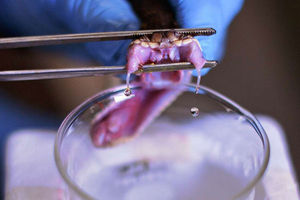
Venom is extracted from snake fangs, diluted and injected in small doses into animals like horses to produce antibodies for human use.
Best time to use antivenom
Experts recommend using antivenom immediately after a bite when it is most effective.