From Kenya to European wards: The AI doctor fighting antimicrobial resistance
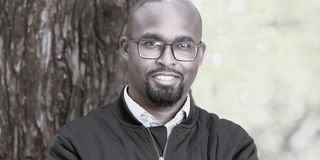
Dr Fred Mutisya, innovator of a tool on antimicrobial resistance called antimicro.ai which uses Artificial Intelligence (AI) to analyse data. He is a medical doctor and an award-winning AI innovator.

What you need to know:
- Antimicrobial resistance (AMR), which is classified as one of the emerging public health threats.
- The World Health Organization data predicts that by 2050, AMR could lead to about 10 billion deaths.
As the Covid-19 pandemic upended daily life globally, Dr Fred Mutisya, was holed up in Narok where he worked as a medical doctor. He was one of the essential service providers who needed to show up to work every day.
He tells Nation that at the time, he worked at a rural facility where people shunned going to hospital for fear of getting a coronavirus infection.
“I had a lot of free time and nowhere to go,” he says.
He took advantage of the spare time he had to learn new skills in programming, website design and use of data. He didn’t have a goal in mind but to gratify his curiosity in technology.
In one of the programming Whatsapp groups that he was part of, a member shared an opportunity from the Wellcome Trust and Vivli Centre for Global Clinical Research that became an epiphany for his career in Artificial Intelligence (AI).
The two research institutions had data collected for 16 years by big pharmaceutical organisations on antibiotic use and resistance patterns from about 80 different countries, including Kenya. They were looking for innovators to use the data for analysis and share insights that could help in improving healthcare.
He says that while it was almost like an academic exercise at first, he opted to take it to the next level and make a product out of it.
“I made web and Android applications that basically helped determine which antibiotic is appropriate to use,” he says.
That way, he added another feather to his cap as an AI expert.
To put context to his innovation, he explains that not every antibiotic works well with bacteria. When some patients go to hospital, a clinician can either over-treat them or under-treat them.
“It means they can either give you something that doesn't work for you and so you don't get better. So you incur an additional cost and this can sometimes lead to an admission, which results in loss of income and the worst case scenario, it could lead to death,” he explains.
He says that sometimes, patients could go to a hospital with just a cold and they are given an expensive antibiotic that could not only raise the cost of care but also lead to resistance to the drug.
This phenomenon is called antimicrobial resistance (AMR), which is classified as one of the emerging public health threats. The World Health Organization (WHO) data predicts that by 2050, AMR could lead to about 10 billion deaths.
Dr Mutisya explains that there exists thousands of bacteria and when one gets an infection, those can be treated with antibiotics. Sometimes though, some of these bacteria get used to the drugs to a point that they try to dodge potency, making patients not get better when given the medicine.
“It is like police and robbers. When robbers know how police dress and are familiar with their routes, they will try to evade the police and the ripple effect is that criminal activities will go on until the police find new tactics,” he explains.
“Bacteria also find ways of evading antibiotics which previously worked on them,” he adds.
Also read: Alarm over rising antibiotic resistance
His solution was picked up by the research organisations and together with his co-founder, they received the grand prize. Winning the award meant that they had to publish their findings in the journal Wellcome Open Research and travel to Barcelona to present it at the European Society of Microbiology and Infectious Diseases.
He explains that AMR is not for bacteria-causing diseases alone, it also comes about in parasites like malaria, fungal diseases as well as viruses like HIV.
“All these organisms are changing faster than we are able to produce new drugs so we have to preserve the existing new drugs,” he says.
Only 10 per cent of the data shared by the research organisations was from Africa, one that Dr Mutisya says points out the inequities for research capacity in the continent.
From the analysis that he did, he found out that most Kenyan hospitals misuse Ceftriaxone, a drug used to treat any serious infection like meningitis or pneumonia.
When he was presenting his project in Barcelona, a start-up company in Europe offered to work with him and implement his tool called antimicro.ai.
This is even as his tool remains open source for any researcher who wishes to analyse data on AMR.
“We wanted to show people that they can develop a tool and deploy at zero cost,” he tells Nation.
“The beauty of open source is that you build something and put it out in the wild. You don't care who uses it, you don't care how many times they download it but you make it as best as possible for them to use,” he explains.
This solution has, however, not been picked up in the country. He says that it was difficult for him to get a mature market in Kenya where hospitals can actually pay for these solutions.
“In Kenya, I realised that having a viable business model for health for an application is quite slow,” he worries.
In France, on the other hand, his innovation is used in hospitals and microbiologists are using it to analyse and find best practices that will reduce unnecessary use of antibiotics.
“It’s a bittersweet thing because you ask why I have to go and get an opportunity out there instead of launching something here,” he asks.
“Unfortunately for a lot of innovators, their good ideas remain in their laptops because they don't get an opportunity like what I got,” he says.
A WHO report on Kenya’s action plan on antimicrobial resistance published in 2021 shows that the country aimed at having at least 30 facilities linked to the national AMR surveillance system and database by the end of 2022.
The Ministry of Health aims to have around 30 facilities connected to the national AMR surveillance system and database by the end of 2022. AMR surveillance in the animal health sector began in May 2021, with six laboratories reporting data to a separate national database. Latest data published in the scientific journal Frontiers in March this
year shows that Kenya now has about 22 sites.
Procure efficiently
In France, Dr Mutisya integrated AI into an existing system. They use his tool to help doctors who are in charge of deciding what antibiotic patients use in hospital.
“It's almost like business intelligence but now for antimicrobial use. It helps hospitals to procure efficiently instead of blindly getting drugs just because they're cheap,” he explains.
“Antimicrobial resistance and quality of care is a metric that is tracked in France and Europe. The level of a hospital is determined by metrics like how many outbreaks they record, their level of infection prevention control and this trickles down to the amount of money they get from insurance. With the tool, they are incentiviSed to have better quality,” he adds.
Since their AI tool has a creative common licence, users can only attribute the original licence but they don’t need to pay the innovators when they create something out of it.
In March, Kenya launched the National Artificial Intelligence Strategy 2025-2030. Dr Mutisya says health is one of those topics that need to have a strong voice in the strategy.
He says the sector has a delicate approach when it comes to AI because it involves human life.
“Health is a good way of looking at the irreducible minimums in terms of AI ethics, implementation and performance. There is no greater cost than human life,” he says.