From misdiagnosis to amputation: Angeline Gituto’s brave battle with bone cancer
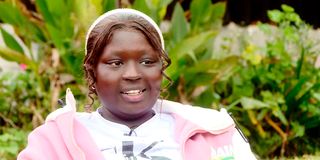
Angeline Gituto, a third-year Karatina University student suffering from osteosarcoma, a rare bone cancer disease, at her home in Giakaifei village, Nyeri County, on August 3, 2025.

What you need to know:
- Angeline Gituto’s resilience through cancer, amputation, and education shines as a beacon of hope for many.
- Despite immense challenges, Angeline’s story highlights the urgent need for cancer awareness, funding, and early detection.
At the heart of Giakaifei village in Nyeri, about 152 kilometres from Nairobi, I meet Angeline Gituto. Despite her challenges, she welcomes me with a warm smile while leaning on crutches.
The 21-year-old, a third-year Bachelor of Education Arts (English and Literature) student at Karatina University, has emerged as a beacon of resilience and hope. She has not only battled with osteosarcoma, a rare and aggressive bone cancer, but also endured misdiagnosis and profound physical and emotional challenges. Today, she is a passionate advocate for cancer awareness.
Her journey began subtly in 2021, when she was in Form Four. She noticed tiny, painless swellings just below her right knee. Initially, these symptoms were dismissed. After seeking medical attention, she was misdiagnosed with arthritis at the first hospital and prescribed medication that proved ineffective. The swelling grew, eventually causing her to limp. This period of misdiagnosis, coupled with a lack of proper facilities and specialists, significantly delayed her true diagnosis, which came almost a year after the first symptoms.
A turning point came when her family sought a second opinion, and doctors recommended a biopsy. The initial results indicated chondrosarcoma, prompting an MRI scan. However, an oncologist later noted discrepancies, leading to a second biopsy. It was then that Angeline received the life-altering diagnosis of osteosarcoma, a rare type of bone cancer that primarily affects young people and teenagers aged between 12 and 25.
The news devastated her. She had always associated cancer with older people or film characters and never imagined facing such a diagnosis in her teenage years. Seeing her father’s pain deepened her grief, but through tears she eventually found strength and acceptance. Her oncologist explained that the tumour was aggressive and growing rapidly. The recommended treatment plan was immediate chemotherapy followed by amputation. Though devastating, amputation was presented as the best option to prevent the cancer from spreading.
After her surgery, tests confirmed that the cancer had not spread, a moment of immense relief for Angeline and her family. Yet the treatment has come with challenges. Chemotherapy has weakened her immunity, lowered her blood counts, and caused complications with her veins, necessitating the use of a chemo port.
The illness has also forced her to adopt strict dietary habits, prioritising costly proteins and greens while avoiding sugary foods. Financial strain has weighed heavily on her family, as the Social Health Authority covers only part of her treatment costs. Expenses for scans, such as PET scans, often fall entirely on her parents.
Beyond the physical and financial struggles, Angeline has faced social isolation and stares in public. Initially painful, she has chosen to turn these moments into opportunities to educate others about cancer.
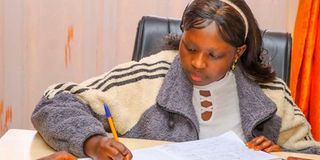
Angeline Gituto, a third-year Karatina University student suffering from osteosarcoma, a rare bone cancer disease, at her home in Giakaifei village, Nyeri County, on August 3, 2025.
Her academic life has been significantly disrupted. She often misses classes for chemotherapy and sometimes takes exams from her hospital bed. Despite these obstacles, her determination to pursue education remains unshaken. Support from classmates has been vital, as they share notes, collect assignments, and ensure she does not fall behind.
Acceptance, Angeline believes, is the first step toward healing. She draws strength from her parents, friends, and palliative care nurses, and finds counselling helpful in coping with overwhelming emotions. Her journey has transformed her perspective on life, teaching her to appreciate even the simplest moments and to live with hope rather than fear.
She challenges the widespread misconception that cancer is always a death sentence, emphasising that there is life after diagnosis. She also calls for increased awareness, especially in schools, to dispel myths and ensure young people understand that cancer does not only affect the elderly.
Dr Nicholas Okumu, an orthopaedic oncologist at Kenyatta National Hospital, notes that osteosarcoma is rare but aggressive, primarily affecting young people during periods of rapid growth. He stresses that early detection is vital, improving survival rates and enabling limb-preserving surgeries. Misconceptions, such as linking cancer to witchcraft or relying on herbal remedies, often delay crucial treatment.
Encouragingly, research is exploring the use of artificial intelligence (AI) to improve early detection of tumours and to design affordable prosthetics using 3D printing. These innovations, Dr Okumu says, could transform care and outcomes for patients.
Angeline’s powerful appeal is to the government. She urges greater investment in cancer care, more affordable access to essential scans, and the removal of limits on coverage by the Social Health Authority. She also calls for more awareness campaigns in schools and communities, with young survivors sharing their experiences to inspire and educate others.