From tears to triumph: Raising a child with autism

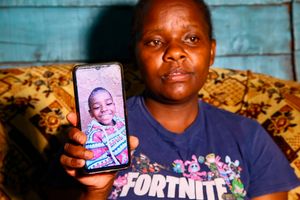
Barbara Amondi with her son, Mich, whose autism diagnosis at 18 months set them on a journey of care, learning and steady progress.

What you need to know:
- A mother’s journey through autism reveals resilience, grief, hope, and the power of early intervention.
- Facing diagnosis with courage, she finds strength, builds community, and redefines her son’s future.
- Family’s story shows how support transforms a child’s autism journey from uncertainty to progress.
Every morning on the way to school, Barbara Amondi sings with her son, Mich. His name means ‘gift’ in Dholuo, a word that captures exactly what he is to her.
Barbara loved singing long before Mich, her second child, came into her life about four years ago. Her pregnancy was far from smooth; she was diagnosed with hypertension and was on medication throughout.
"I was always on medication," she tells Nation.
When she finally gave birth, the relief of being out of danger was matched by the joy of holding her gift.
Mich was only 18 months old when he was diagnosed with autism spectrum disorder (ASD), a confirmation of what Barbara had long suspected, though she had not yet sought a clinical opinion.
"I noticed that he would cry a lot. He loved staring at lights and did not like any form of noise," she says.
"My son did not have any awareness of danger and rarely maintained eye contact," she adds.
At first, she dismissed her concerns, assuming he would be fine as he grew older. But when unusual symptoms kept appearing, she decided to seek an expert opinion from a developmental paediatrician.
"I remember entering that room and just telling her that my son is autistic. She asked me how I knew that. I told her that it was just a suspicion. She took some tests, starting with a hearing test, and my son was just okay. They did a series of other tests that eventually confirmed it," she notes.
The doctor told her that her son had level two autism, meaning he needed substantial support.
Barbara immediately started him on different forms of therapy, a decision she describes in retrospect as "the best decision ever."
"When you have such a child, you grieve a future you thought you would have with them, but it is important to wipe your tears and be there for them," she says.
After the diagnosis, Barbara became her son's full-time caregiver. She immersed herself in learning about his condition to the point that she now has information about autism by rote, including the latest research and the misinformation that circulates widely.
It took time, but at four years old, Mich has made significant progress and can now read the alphabet.
"Apart from singing, he enjoys swimming. He loves spelling out the alphabets and he is still learning, but I believe early interventions have helped him a great deal," she says.
Barbara believes caregivers should talk openly about their children's condition and educate those around them. She has recently founded a community called Growing Minds, which supports parents of autistic children and connects them through social media.
Beyond therapy
Over time, she also learnt that managing her son's condition goes beyond therapy. Diet has been a key part of his care.
"I don't give him sugar or wheat. He takes plant-based milk only, which is a bit expensive, but that is his option for now," she says.
The interventions have paid off. Mich has outgrown several symptoms, including agitation and being picky with food, and can now utter some words.
"The kind of person my son was two years ago is quite different from who he is now," she tells Nation.
Barbara does not navigate this journey alone. Her family and friends have been a steady source of support on the days when the load felt too heavy. She acknowledges that autism care is generally expensive.
She attends therapy herself and has a clear wish for the government: "I wish the government could incorporate most of the management options for autism under the Social Health Authority," she says.
Globally, the World Health Organisation estimates that about one in 127 people are diagnosed with autism, a lifelong neurodevelopmental condition affecting social interaction, communication and behaviour. It is among the top ten brain health conditions contributing to health loss globally.
Dr Florence Oringe, a neurodevelopmental paediatrician at Beacon Children's Centre, explains that while there is no scientific evidence of a cure for autism, early intervention can significantly improve a child's quality of life.
The earliest screening for autism is recommended at around 18 months, when children are expected to have achieved key developmental milestones in language and social skills. If a child misses that first screening, it is likely to be repeated at 24 or 30 months.
Dr Oringe explains that a full diagnostic evaluation goes well beyond screening.
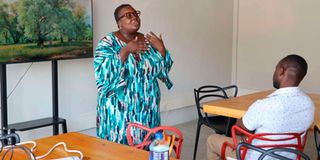
Barbara Amondi, a mother to an autistic child and founder of a support group called Growing Minds.
"When we encounter children who have been referred to us because a red flag was raised at screening, then we have to do a comprehensive understanding to know what the level of that child’s autism is. We also check associated conditions and explain the likely cause of the autism while figuring out if a child needs additional interventions," she explains.
About 60 per cent of autism cases are caused by an underlying genetic disorder. Other contributing factors include the mother's health during pregnancy, conditions such as diabetes or hypertension, certain infections and some medications. Incidents that interrupt blood supply to the placenta can also affect the developing baby.
Screen time
On the question of screen time, Dr Oringe is clear: screens do not cause autism, but they can make it worse. Excessive screen time is associated with delays in development, particularly in language, socialisation and attention, and it limits human interaction.
"When children are already predisposed to autism and then they get excessive screen exposure, they're likely to manifest symptoms earlier and it's likely to make it worse," she says.
Autism spectrum disorder is classified into three levels: level one is the least severe, level two is moderate, and level three presents the most severe symptoms.
For a diagnosis to be made, a child must show delays in language and socialisation, as well as repetitive and restrictive behaviours. These can include not responding to social cues, failing to smile back when smiled at, or preferring to play alone. Some children display vocal mannerisms such as shouting, humming, mumbling or laughing alone. Others have a strong need for routine, perfection and order, and can be rigid and fixated on particular objects.
Dr Oringe notes that early intervention has proven to help such children, and those with level one autism can grow up to be highly intelligent. Early management also allows clinicians to identify and address overlapping conditions, which may include sleeping disorders, tummy issues, constipation and epilepsy.
Nutrition plays a significant role in managing autism, she adds. Children on the spectrum are prone to food allergies and tend to be selective eaters, making dietary management important. Without it, a child may develop gluten intolerance — a reaction to a component of wheat — or cow's milk intolerance, both of which can cause bloating and skin rashes, and worsen autism symptoms.
"If a child gets something like cow milk and they're intolerant to it, then obviously, their symptoms will worsen," she says.
Sugar is also a concern. High sugar intake raises energy levels in the body and brain, making a child more hyperactive. At the same time, certain micronutrients are essential for nervous system function.
"We know folic acid, omega-3, omega-6, omega-9, zinc and several other micronutrients are key in how their brain functions," says Dr Oringe.
She also addresses a widespread misconception: that all children with autism carry toxic metals in their bodies and require regular detoxification. Most compounds used as detoxifiers, she cautions, can be harmful to children's brains.
"In some children, there are certain compounds like lead, which is a toxin that used to be present a lot in paints before, and in places like dump sites. High lead exposure has actually been associated with autism, but it's one of the very rare cases, and it's not so common in our environment anymore," she explains.
She warns that detoxifiers may damage children's kidneys and liver, leaving them worse off than before.
On leucovorin, a supplement that some parents have been using, Dr Oringe urges caution.
"The American Academy of Paediatrics recently sent out a communication that leucovorin is not approved for use in autism, because the studies they were doing did not show any benefit. So it's still something that's controversial," she says.
Her message to parents is to treat misinformation with scepticism and to seek guidance only from qualified experts. She also urges caregivers to prioritise their own mental health — and calls on families to offer that support.