From the first call to clearance: How Ebola contact tracing works in Kenya
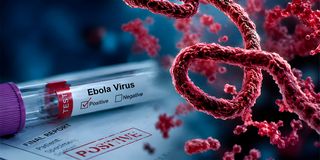
Blood sample drawn from patients suspected to be infected with Ebola should be tested within a short time to avoid further transmission.

On October 3, a Kenyan man stepped off a flight from Entebbe in Uganda into Nairobi. He had lived in the Democratic Republic of Congo for seven years, had been unwell for about a month, and had been treated at several hospitals before travelling by road to Kampala. He was isolated and treated at Nairobi Hospital, where he showed symptoms of a haemorrhagic fever and tested positive for Ebola. He died late on Monday, October 5.
On October 6, Health Cabinet Secretary Aden Duale announced Kenya's first imported case of Ebola Bundibugyo virus disease. The question that mattered was who had been near him. Within hours, the Ministry had identified 28 contacts, including relatives and the health workers who cared for him, and was tracing another 23 passengers from his flight. By Sunday, October 11, the list had grown to 122 verified contacts, 108 of them in quarantine and checked daily. None have shown symptoms so far.
Behind those numbers are people who got an unexpected phone call. Many Kenyans are unsure what tracing, quarantine and clearance mean, or what would happen if their name appeared on the list. Dr Ahmed Kalebi, an independent consultant pathologist and researcher in public health of infectious diseases, explains how it works.
What do contact tracing, quarantine and clearance mean?
Contact tracing is the work of finding people who may have been exposed to a person with Ebola, recording the circumstances, and following them daily so any illness is picked up quickly.
Quarantine restricts the movement of an exposed person who is still well. Isolation is for someone ill with suspected or confirmed Ebola.
Clearance means a contact has completed 21 days of follow-up after their last relevant exposure, remained well, and passed the final assessment. Being identified as a contact does not mean someone has Ebola.
How are contacts found?
The team first establishes when the patient became ill. They interview the patient, if alive and able to talk, or relatives, caregivers and others who know what happened. They then reconstruct the patient's movements from symptom onset: where they stayed, who visited, who transported them, which health facilities they attended and who cared for them. Home and site visits help find people who touched the patient, met body fluids or contaminated belongings, or handled the body after death. Each person is interviewed, their exposure assessed, and their details entered into a confidential register.
How soon are contacts told, and what do they hear?
Contacts should be reached immediately, ideally within hours or on the same day. Guidance calls for tracing to begin within 24 hours of a case being detected. It can take longer if contact details are incomplete, which is why accurate information from patients, families and travellers matters.
Kalebi says the message should be clear that "being listed as a contact does not mean you have Ebola. It means you may have been exposed, and we need to follow your health so that if you become unwell, you can receive care immediately." People should know who will check on them, which symptoms to report and whom to call. Someone who remains well is not considered infectious through ordinary contact, but any new illness must be reported at once.
How is risk judged, and who is quarantined?
Sharing a flight or being nearby does not by itself establish risk. Investigators look at what happened while the patient was symptomatic: direct physical contact, exposure to body fluids or contaminated items, and whether protective equipment was used correctly. A needlestick injury, a splash into the eyes or mouth, unprotected nursing care, cleaning soiled bedding and handling a body without protection are higher-risk exposures. Proximity without direct exposure, or properly protected care with no breach, is lower risk. Household members need careful assessment, because living in the same household does not show what exposure occurred.
The decision on quarantine also weighs whether safe, reliable follow-up is possible: can the person be reached daily, do they have suitable accommodation, and can they get immediate care if symptoms develop? Some contacts may need supervised quarantine, while others stay at home under active monitoring. There is no universal requirement to admit every contact to a facility.
What does quarantine look like, and who supports contacts?
It means staying at the agreed-upon designated facility, limiting visitors and avoiding unapproved contacts, with health checks every day. People need to know why the restriction is necessary, when it ends and how to get help. Restricting movement creates a duty to meet basic needs: food, safe water, hygiene supplies, essential medicines and suitable accommodation. Income loss, childcare and dependent relatives also need attention. The Ministry of Health should confirm the support package, including any financial assistance.
People with chronic conditions keep their usual care. Someone needing insulin, dialysis, HIV treatment or cancer care needs an individual plan, including safe transport.
How is the 21-day clock counted?
Ebola's recognised incubation period is two to 21 days, so monitoring covers 21 complete days after the last exposure that could have transmitted infection. The last exposure date is day zero and the next day is day one. If the last exposure was on October 5, day one is October 6 and day 21 is October 26. The countdown does not begin on the day the contact was found or admitted to quarantine.
The clock restarts if another relevant exposure occurs, such as unprotected care over several days. A properly protected interaction with no breach does not automatically restart it.
When are contacts tested, and when are they cleared?
Testing is mainly done when symptoms develop. There is no standard requirement to test every well contact on a particular day, and a negative test in a well person cannot replace the full monitoring period.
To be cleared, a contact must complete 21 days after their last relevant exposure, remain free of Ebola-compatible symptoms, and have no further exposure that starts a new countdown. The surveillance team makes a final assessment and records it. If symptoms occurred, they must have been properly investigated first, including Ebola PCR testing. Under standard guidance, someone who stays entirely well does not routinely need a negative PCR test to leave follow-up.
What happens if a contact falls ill?
Early signs are fever, unusual weakness or fatigue, headache, muscle aches and sore throat. Vomiting, diarrhoea and abdominal symptoms may follow. People should not wait for bleeding, which may never occur, and should report any new illness, even without a measured fever. Early reporting allows prompt supportive treatment, including correction of dehydration, and reduces the chance of exposing family members and health workers.
A contact who falls ill should alert the monitoring team at once and avoid close contact with others. They should not use public transport or walk unannounced into a crowded clinic. The response team arranges transport with trained, protected staff and takes the person to a designated assessment or isolation unit for testing and care. If the first sample is negative but was collected within 72 hours of symptom onset, repeat testing is generally required on a sample collected more than 72 hours after onset, and the person stays isolated meanwhile. If Ebola is confirmed, investigators trace anyone exposed after the person became symptomatic.
How is stigma handled?
Authorities must protect contacts' confidentiality and explain repeatedly that being a contact does not mean having Ebola. A well contact should not be labelled an Ebola patient or publicly identified. Trusted community and religious leaders can help correct rumours and support affected families. Counselling and practical help matter, as does helping people return to work and community life afterwards.
Follow our WhatsApp channel for breaking news updates and more stories like this.