Goodbye matatus: It’s time for Africa to shift to sustainable transport systems
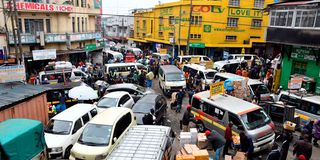
Public Service Vehicles in Nyamakima, Nairobi. The matatu industry is the largest transportation service provider in Kenya.

What you need to know:
- In Kenya, for instance, road transport accounts for nearly 90 per cent of passenger and freight movement. Matatus, privately owned minibuses, serve as the most common means of transport, particularly in cities.
- Alongside them are boda-bodas (motorcycle taxis), tuk-tuks, and a mix of taxis and ride-hailing services like Uber and Bolt.
- Yet the dominance of these modes has come at a cost: congestion, traffic fatalities, air pollution and infrastructure wear.
Africa’s rapidly growing cities and economies are driving increased transport demand, yet much of the continent depends on informal, carbon-intensive systems like minibuses, shared taxis, and ageing diesel trucks. This reliance risks worsening air pollution, deepening social inequities, and undermining climate goals.
Informal public transport remains central to mobility, but with rising urban populations and vehicle imports, Africa must shift to sustainable transport, systems that reduce emissions, ensure equitable access, and enhance public health.
In Kenya, for instance, road transport accounts for nearly 90 per cent of passenger and freight movement. Matatus, privately owned minibuses, serve as the most common means of transport, particularly in cities. Alongside them are boda-bodas (motorcycle taxis), tuk-tuks, and a mix of taxis and ride-hailing services like Uber and Bolt. Yet the dominance of these modes has come at a cost: congestion, traffic fatalities, air pollution and infrastructure wear.
Nairobi's air quality regularly exceeds World Health Organization (WHO) guidelines, with annual average PM2.5 concentrations reaching over 21 microgrammes per cubic metre, more than four times the recommended limit. This persistent pollution is primarily attributed to vehicle emissions and dust from unpaved roads. It contributes to respiratory illnesses and reduced life expectancy in the city.
Across Africa, road networks are often underdeveloped, poorly maintained, and congested. In rural areas, poor road access limits economic opportunities, while in urban centres, surging vehicle numbers outpace infrastructure capacity. Walking and cycling, still widespread for short trips, are hampered by a lack of pedestrian-friendly and cyclist-safe infrastructure.
Some relief
Rail and air transport offer some relief. The Standard Gauge Railway (SGR) between Mombasa and Nairobi has boosted freight and passenger efficiency, while the Nairobi Commuter Rail provides essential connectivity. Air travel, too, remains critical for reaching remote areas, with hubs like Nairobi's Jomo Kenyatta International Airport playing a central role. But these options are costly and limited in reach.
Challenges hindering sustainable transport
Transitioning to low-carbon transport has its obstacles. The high initial cost of electric vehicles (EVs), infrastructure gaps like insufficient charging stations, and limited supply chains for components like batteries remain significant hurdles. Africa also lacks standardisation across borders, making the regional rollout of new technologies complex.
Funding constraints slow sustainable transport adoption. Public transport upgrades and investments in non-motorised transport infrastructure like footpaths, bike lanes, and smart traffic systems, require long-term commitment. For many cities, fiscal pressure and competing priorities stall these efforts. Even where infrastructure exists, behavioural change is slow. Many commuters prefer private cars, viewing public or shared options as less reliable or safe.
Across the continent, a new wave of e-mobility startups is emerging to address these challenges. Kenya's BasiGo is assembling electric buses locally and pioneering a pay-as-you-drive model for operators, while Roam is manufacturing electric motorcycles and building charging infrastructure.
In Rwanda, Ampersand provides battery-swap stations for e-motorcycles, and in Nigeria, MAX and Metro Africa Xpress are rolling out electric two- and three-wheelers with integrated digital payment systems. These ventures reduce emissions and create new jobs and local supply chains, demonstrating the potential for Africa-led innovation in the EV sector.
Digital solutions are easing the transition too. Ride-hailing apps have revolutionised urban mobility by providing convenience and traceability. Startups are using GPS tracking and mobile payments to streamline minibus networks elsewhere.
Still, such innovations often remain confined to urban elites, raising questions of access and equity.
A climate, health, and equity imperative
Transport is a major source of greenhouse gas emissions and a driver of urban air pollution. Shifting to sustainable modes such as public transit, cycling, walking, and EVs can significantly cut emissions and improve air quality.
Affordable and accessible transit enables people from low-income and marginalised communities to access jobs, education and services. For women, children, and persons with disabilities, safe and reliable public transport is key to autonomy and dignity.
Active transport reduces the risk of chronic diseases, while cleaner air cuts asthma and respiratory illness rates. Noise pollution, often overlooked, can also be reduced by quieter EVs and better urban planning.
To shift gears, African governments must prioritise integrated planning. Cities should embed transport policies within broader land-use strategies to shorten commutes and promote mixed-use development. Regional cooperation is essential to harmonise standards, share data, and build cross-border networks.
Investment in Bus Rapid Transit (BRT) systems, commuter rail, and cycle infrastructure should be scaled up. If well executed, they offer a viable solution for high-capacity, low-emission mobility. Similarly, the growing presence of e-mobility startups across Africa signals that local innovation can grow if supported by policy and finance.
Public-private partnerships can mobilise capital and expertise and direct it toward sustainable transport, not just energy or agriculture. Equally, subsidies and tax incentives for EVs and e-bikes must be targeted to ensure they benefit a broad cross-section of society, not just the urban elite.