How missionaries shaped Kenya’s healthcare culture and left a lasting crisis

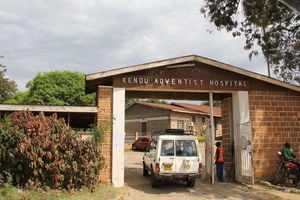
St Mary's Mission Hospital in Kakamega County.

What you need to know:
- Kenya’s modern health system was born from missionary work that offered free treatment, charity-driven care and spiritualised healing.
- This model deeply influenced how citizens and policymakers view healthcare—not as a right or a public investment, but as a benevolent service.
- From traditional healers to missionary hospitals, Kenya’s understanding of medicine shifted dramatically over the past century. The introduction of free care created a culture of dependency, undervaluing health services and the staff who provide them.
Desmond Tutu once said, “When the missionaries came to Africa, they had the Bible and we had the land. They said 'Let us pray.' We closed our eyes. When we opened them, we had the Bible and they had the land.”
The quote is reminiscent of the feeling of many countries that survived colonisation. The takeover was almost always preceded by arrival of the religious missionaries, who implemented a three-pronged approach: the church, the school and the hospital. Worked like a charm all the time!
All the oldest and prestigious public schools in the country were once missionary schools. They slowly transformed from being mission-led and owned to a public-private partnership, and are currently viewed as public, despite the fact that they maintain strong religious tenets based on the church of origin; evidenced by maintenance of school chapels, set church service hours, and a whole school chaplaincy to boot.
While we debate the pros and cons of the church invasion into Africa, I remain curious of the impact of the same on the introduction of modern medicine by the same entity. More specifically, the effect on the perception and culture around health behaviour.
The first ever modern health services in Kenya, like most other colonised countries in Africa, was by the missionaries. Their mode of operation was similar, irrespective of denomination. The missionaries arrived in remote, mostly impenetrable locations, and set up shop in whatever little space they had, and worked with whatever limited resources they had. Over time, the impact was seen by the community, and loyalty started to take root.
Every once in a while, there would be a saviour moment where an important person, who was thought to be pretty much gone, would recover, and the entire community would be converted by this miracle. The demure missionaries would decline payment for the miracle but would accept bigger donations in favour of the ministry.
They would accept, most especially, land donations to set up shop, and bam, they were here to stay! Most of this land, viewed as remote and distant back then, has turned out to be the most lucrative right now. There would be generational protection, as their mission thrived and expanded, and now, over a century later, they remain the sole source of care for most populations around them.
In traditional African cultures, the medicine men, traditional healers, and seers were revered. They performed their healing craft to the communities over generations. Their services were never rendered for free. They cost a pretty sum, paid in animals, grain, traditional brew, cowrie shells or other local currency. Oftentimes, the payment was done upfront before consultation. No one expected free services from the healer. It was considered disrespectful.
Then came the missionaries with their free medical services. They treated all who came at no charge, even when they remained admitted to their little sanatoriums for days. The cost of care was met by the church. The doctors and nurses were compensated by the church from back home, or were missionaries doing their time in free service to their God. As long as they had a meal, clothes on their back, and a place to lay their heads, they provided their expertise for free.
Suddenly, the sick received with treatment at no cost; seemingly able to recover from medical conditions that had proved impossible for the healers they knew. Babies survived severe diarrhoea and chest infections, people recovered from malaria and mothers who laboured for days could be cut open, babies delivered and the mothers lived to tell the story!
As demand increased for healthcare services, the missionaries needed more staff, specifically, more nurses, as doctors were mostly rotational, working for short periods and going back home as they were replaced. Volunteers from the community were plenty, but they needed the right skills to provide proper care. Right beside the hospitals were mushrooming nursing schools.
Due to inadequate resources, the nurses learnt mostly by apprenticeship and were quickly pulled into the workforce to support the exhausted trained nurses. Their pay was so diminutive, as the attitude was one of giving to God through service to man, and this was just a little stipend as a token of appreciation.
Healing became strongly associated with God, giving, and sacrifice. This is the foundation on which the health sector was built. This is the culture that was adopted by the government as it took over health service provision at Independence; and this is the mentality of most Kenyans, regarding healthcare.
Despite massive growth in the sector over the last six decades, certain things remain the same. It had to take over two decades of Kenya Medical Association advocacy; and 15 years of tough action and strikes by the doctors’ union, for doctors to be regarded as professionals and be appropriately paid for their skills. Nurses still remain grossly under-remunerated, overworked and underappreciated for the work they do, yet they are the backbone of healthcare.
More importantly, the health system remains grossly underfunded, under-resourced and poorly planned for. There is no standardisation of quality of care in a sector that should never have the variances we see between the public and private sector.
How did we get here? At the individual level, Kenyan’s hardly ever prioritise health unless their lives are threatened by a medical condition. This is the time they will revisit their tax-funded health benefits and realise how limited they are. They have accepted that government-funded healthcare will always be below par, and that is OK.
They will accept that delays in care are the norm; and that lack of medication, non-pharmaceutical supplies such as gloves and catheters is the standard. They will not protest about these failures because they have accepted that tax money is not prioritised for health, hence they will understand the lack of funding to the public hospitals.
At a planning and policy level, decision-makers will budget for bare minimum, a mentality that is purely driven by the notion that healthcare is a charitable service. Yet, their counterparts in other sectors, such as transport, command astronomical sums for infrastructure development without blinking.
The legislators will happily sign off on billions worth of roads budgets, but will slash budgets for child health without a second thought. They shall be at pains to ensure foreign contractors are paid, yet arrears for medicines and vaccines will not keep anybody up at night.
Currently, the top three public level six hospitals are owed about Sh10 billion, grinding operations to a halt; but this is not an emergency. We expect the suppliers to continue supplying on credit as they should understand that the healing sector is a service to God. Even God is ashamed of our ignorance!
The writer is an obstetrician & gynaecologist.