How Uganda beat Ebola and what Kenya can learn
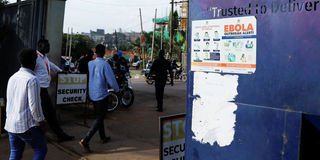
People walk past an advocacy poster against the spread of Ebola virus in Kampala, Uganda, on May 26, 2026.

The 2026 Bundibugyo outbreak in Uganda started with a 59-year-old Congolese man. He was already unwell when he was admitted to Kibuli Muslim Hospital in Kampala on May 11.
Uganda’s Ministry of Health’s (MoH) head of surveillance for public health emergencies said the man had travelled from the Democratic Republic of Congo (DRC) through Hoima, in western Uganda. At Kibuli, he had difficulty breathing, fever, abdominal pain and nausea. Days later, he developed bleeding symptoms and died on May 14.
A sample taken after his death was tested the next day. On May 15, it came back positive for Bundibugyo ebolavirus. That made him the index case of Uganda's 2026 outbreak, and the clock started ticking.
Seventy-four days later, on July 28, the MoH declared the country free of the disease. The World Health Organisation (WHO) confirmed the end of the outbreak in late August.
In that period, Uganda recorded 20 cases. Eighteen patients recovered, and two, both Congolese, died. Fifteen of the infections were imported from DRC, while five were Ugandan health workers who were infected while caring for patients.
The situation across the border is different. The outbreak in Ituri Province has become the second-largest Ebola epidemic ever recorded, with 9,704 cases and more than 4,687 deaths, according to the WHO.
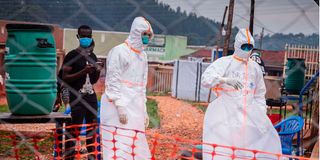
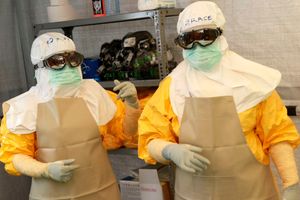
Doctors at an Ebola isolation centre. The current Ebola outbreak in DR Congo is caused by the Bundibugyo virus, a rare Ebola strain.
Bundibugyo is one of the Ebola species that infect humans. It has no licensed vaccine or specific treatment. Uganda's containment, which both the WHO and the Africa Centres for Disease Control (Africa CDC) have described as a model for other countries, therefore rested entirely on public health fundamentals.
Dr Abel Walekhwa knows these fundamentals from the inside. He is a senior epidemiologist at the Science, Technology and Innovation Secretariat in the Office of the President. He also co-leads a mathematical modelling unit at Makerere University's School of Public Health. He holds a US$300,000 (about Sh38 million) grant from the Coalition for Epidemic Preparedness Innovations (CEPI) to support the MoH's Bundibugyo response.
In an interview with Nation, he explained what he believes made the difference. His answer is not a single masterstroke but a stack of decisions, the first of which was political.
When the outbreak was confirmed, Dr Walekhwa said President Yoweri Museveni set up a scientific committee. He was briefed at State House on a strain Uganda had not faced since 2007. That briefing, the epidemiologist argues, turned the president into the public champion of the response.
"He immediately constituted a scientific committee. That scientific committee was of seven people. If the President is the champion, it means that resources are going to be mobilised. It means he will make some radical decisions, because he believes there is a problem and there is a threat," he explained.
President Museveni addressed the nation three times. According to Dr Walekhwa, every television and radio station was required to carry the broadcasts. When the president went to inaugurate the new Parliament, he declined to shake hands. Legislators were hugging and greeting one another, and he reminded them that Ebola was in the country.
Uganda's success also came with practice. The country contained a Sudan virus outbreak in Kampala in 2025 in 87 days. In 2022, it faced another Sudan virus outbreak in Mubende and Kassanda districts. The epidemiologist says that the outbreak lasted about five months.
"There is that history, there is that experience, there is that infrastructure, and there are coordination and resource mobilisation systems that already existed and that we built on in responding to this 2026 disease outbreak," said Dr Walekhwa.

A health worker at Mubende Regional Referral Hospital after an outbreak of Ebola in Uganda on September 20, 2022.
Laboratories were another strength. Uganda's reference laboratories can sequence the virus and detect it. This allows scientists to rule out the Sudan and Zaire strains. They can also compare the virus with the one in DRC and with those from earlier outbreaks. The epidemiologist says results came back in three to six hours. The Health ministry has said Uganda has moved from waiting weeks for overseas confirmation to diagnosing Ebola within hours. Genomic analysis identified a distinct Bundibugyo variant.
"The laboratory capacity is very strong," he noted.
Behind the president sat an Incident Management Team (IMT). The expert said a soldier appointed by the head of state chairs it. It brings together senior figures, including the prime minister, the health minister, the director general of health services and the permanent secretary. It meets twice a week.
The team received reports from 11 "sub-pillars" covering surveillance, laboratory work, infection prevention and control, risk communication, research and other areas. Partners such as the US CDC, the WHO, Africa CDC and USAid also attend, along with other strategic partners that fund the response.
Beneath it sat a National Task Force, which brings together ministries, agencies and academics every Thursday on Zoom.
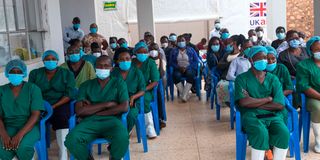
Doctors and nurses, working at an isolation centre attending a brief at the Mubende referral hospital, Mubende, Uganda on October 27, 2022. Uganda has lost four healthcare workers to Ebola, among the 30 fatalities and 109 cases that the country has recorded.
Dr Walekhwa explained that the incident team makes the big-picture decisions, while the task force deals with the technical details on the ground. The task force asks how the field investigation is going, how many contacts have been found and how many have disappeared. It then passes its recommendations up to the incident team for decisions such as closing a border, raising a budget or deploying more staff.
"The recommendations from the National Task Force are taken to the IMT for decisions, for example, close this border, close this area, check this one here, and increase the budget for this," he explained. He noted that the military flavour was deliberate.
"A soldier does not listen to explanations; they take decisions, and sometimes radical decisions," he said.
The radical decisions came fast. On May 17, two days after the first Bundibugyo case was confirmed, Museveni postponed the Uganda Martyrs' Day celebrations at Namugongo.
The June 3 pilgrimage usually draws large crowds who walk from across the region, including eastern DRC. The president said the decision followed consultations with the national epidemic response task force and religious leaders.
He noted that Uganda receives thousands of pilgrims from eastern Congo every year. At least 1,500 pilgrims from eastern DRC had already crossed into Kasese District. WHO Director-General Tedros Adhanom Ghebreyesus later thanked Museveni for stopping the celebrations and called the decision courageous.
"People normally walk from over 30 countries, including DRC, Sudan, Kenya and Ethiopia, to come and commemorate that event. This year it was blocked. That reduced the spread greatly. If they had allowed it, the disease would have spread like wildfire. The president made that radical decision after meeting the committee," said Dr Walekhwa.
Stopping the pilgrimage had a price. Transport operators, hotels and vendors who depend on the pilgrimage season lost income.
Uganda also announced a temporary closure of its border with DRC. The MoH first said it would last about four weeks. The epidemiologist said ordinary traffic across the border stayed blocked for about two months, but essential goods kept moving. Food trucks travelling from Mombasa to Kinshasa were allowed through. They were, however, tracked from the moment they entered at Malaba or Busia. That way, officials could see where the drivers stopped and whether the trucks carried sanitiser.
Screening posts were placed using network analysis and movement data. The data came from the International Organisation for Migration and from ports of entry. People who slipped across the border illegally and were detected were returned to the DRC. Dr Walekhwa said this happened about five times.
Uganda also went where the patients were. Many people crossing the border were seeking medical care, so Uganda sent clinical and laboratory teams to Aru in the DRC. The expert said they are still there. Museveni told WHO Director-General Dr Tedros that the MoH had identified four locations near the border for medical camps inside DRC. The president also said he had spoken with DRC President Félix Tshisekedi about working together.
"Uganda had to deploy clinical and laboratory services in DRC. Up to now, those people are still there in Aru," he said.
Then came contact tracing, testing and treatment at the government's expense. Field epidemiologists traced contacts, and the WHO says more than 800 were followed. Contacts completed a 21-day quarantine. Confirmed patients were isolated and treated at the government's expense. Dr Walekhwa said they were tested every three days and received supportive care, including fluids and food.
"They kept following up. Who are you in touch with? Whom have you been talking to, and whom have you been engaging with?" he said of the contact tracers.
"That was very useful in nailing down and pulling down the outbreak. If you are confirmed, you have the disease; we pick you from the population. We keep you in one place at the expense of the Government of Uganda. You are fed, put on fluids and managed," he said of patients in the treatment units.
His unit at Makerere University then built four mathematical models to project case numbers and test interventions. Two have been published.
"I was able to build four mathematical models that were very resourceful to the response. I would analyse the data, build the model and predict the numbers. That was very important because you are making decisions using information which is coming through."
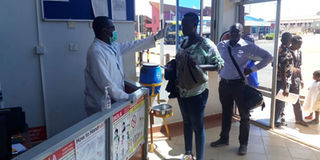
Travellers are screened for the Ebola virus before getting into Kenya at the Busia One Stop Border Post on June 12, 2019. Experts have asked Kenyans to be vigilant, not fearful, as Ebola cases in neighbouring Uganda continue to rise.
He said another model examined the chances of Uganda experiencing a new outbreak.
"I built a mathematical model to try to show the possibility of Uganda having another Ebola outbreak. I did that in September (last month).
The model was able to predict that the ports of entry, especially international airports, had a 60 per cent chance of having a new entry of Ebola into Uganda because people are crossing from various parts through that area. The screening can happen, and it's still happening right now.
However, this particular Ebola is very stubborn. It is not as fatal as the classic signs of Sudan and Zaire, of bleeding from body openings like the ears, the nose, and the mouth," said Dr Walekhwa.
"Because it is mild, a person can enter the airport without showing any signs or symptoms, yet be sick inside the body. It is also possible to pass through while in the incubation period. This is when someone has the disease in the body, but nothing is showing yet. That is a big issue, and it is where we need to tighten the screening," he added.
On screening, the expert said Uganda's checks at entry points rely heavily on questions, such as travel history. He believes this is "not the best way of screening people" and argues that travellers should instead be tested using accurate diagnostic methods and then monitored.
"The screening should not involve asking me, 'Are you feeling anything? Are you seeing any signs?' It should involve taking samples from people, testing them using very accurate diagnostic tests, and monitoring them to see how they are doing.
"Kenya is currently at risk of having many imported cases. It could revise its travel advice. Before travelling through Kenya’s international airports, you must have taken a test within the last 12 hours and confirmed that you are negative. This applies especially if you are from Uganda, DRC or Nigeria. Test yourself, and be sure you have the results before you begin travelling," said Dr Walekhwa.
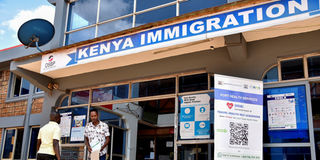
Travellers walk at the Kenya immigration services to access port health services at the Busia One Stop Border Post, a crossing point between Kenya and Uganda. A man who had been living in the Democratic Republic of Congo travelled and died of a new Ebola outbreak involving the Bundibugyo species at the Nairobi Hospital on October 8, 2026.
Many airports rely on temperature checks. Because the early symptoms are mild, officers may miss infected people and let them in. Last week, Uganda's Minister of Health received a thermal scanning machine for checking travellers' temperatures. However, the epidemiologist argues that countries should go beyond temperature checks. He said they should test travellers' blood using rapid diagnostic tests called PCR to establish whether they are infected.
His answer to the airport problem is rehearsal. Entebbe International Airport and Jomo Kenyatta International Airport are both under heavy pressure from travellers. He said the two should run field simulation exercises now. He was part of a team that conducted one at Entebbe in 2019 to test how well the airport would catch an Ebola case.
The drill was simple. His team recruited a volunteer to play a sick traveller. They smeared tomato sauce on the person's face, eyes, nose and ears to imitate the bleeding associated with advanced Ebola. They then sent the volunteer through the airport to see what officials would do.
"No one intercepted this person. That showed us that our screening was really low. But that was 2019. We need to do that now to see where the infrastructure, processes and personnel at our airports are likely to miss a real patient, and so where to strengthen them," he said.
Communication also ran on several channels at once. Within a week, the ministry produced standard operating procedures explaining how citizens could protect themselves, including how to wash their hands and where to find handwashing facilities. Leaflets, some translated into local languages, were shared on paper and on social media.
Radio stations were encouraged to carry Ebola messages at prime time. The ministry also hosted a toll-free line that allowed citizens to report sick people or strangers.
Dr Walekhwa said soldiers from the Uganda People’s Defence Force ran the quarantine centres and treatment units, so people could not simply leave.
However, the government soon noticed a weak point in health workers’ protection. The first infections, announced on May 25, were among health workers at a private facility in Kampala.
"In most of the first cases, the health workers had a low suspicion index. They couldn't suspect that maybe this person is suffering from Ebola," he said, noting that the pattern is predictable.
Early symptoms such as fever and joint pains resemble those of malaria. Clinicians may therefore treat malaria first and fail to put on protective equipment. He added that most patients also preferred private to public hospitals.
Uganda's answer was refresher training for health workers on Zoom, immediate restocking of protective equipment and a heavy emphasis on infection prevention and control. The government is now considering giving health workers antivirals to protect them and boost their immunity.
Despite being declared Ebola-free, Dr Walekhwa stressed that Uganda was not out of danger.
"People are crossing from eastern DRC into Uganda for tourism, trade, family and work. The support Uganda is giving to DRC in the Aru area, through clinical and laboratory services, must continue. So must the screening of people crossing at various ports of entry, especially Mpondwe. The training, health education and employment of people in the border areas, especially in western Uganda, must also continue. So must the vigilance along the border," he told Nation.
"The Ebola burden is still here. The outbreaks continue because bats, the reservoir where the virus potentially hides, are found in DRC, Uganda and Kenya. If we want to manage and minimise the future effects of Ebola, we must sustain surveillance, tracing, follow-up and engagement as much as possible. We must test the rodents, bats and the sperm of the recovered people," he advised.
Follow our WhatsApp channel for breaking news updates and more stories like this