Kemri study: Only 14 pc of parents clean their children's teeth despite widespread health campaigns
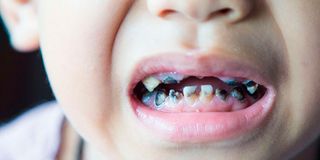
Dental caries.

What you need to know:
- The researchers highlighted a 2015 national oral health survey, which showed that almost all under five-year-old children had at least one oral health issue.
- Additionally, one in every two children had untreated dental caries while 99.6 per cent suffered from bleeding gums.
Kenyan children under the age of five continue to exhibit poor oral health outcomes despite widespread awareness campaigns promoting early dental care. This is according to a new study by the Kenya Medical Research Institute (Kemri) in collaboration with the University of Nairobi and Health ministry.
The study found that there is a disconnect between public health initiatives and actual household practices, with most parents only starting to clean when teeth emerge, ignoring gum care in infancy—a critical period for preventing bacterial build-up.
The researchers highlighted a 2015 national oral health survey, which showed that almost all under five-year-old children had at least one oral health issue. Additionally, one in every two children had untreated dental caries while 99.6 per cent suffered from bleeding gums.
The Kemri study, which was conducted in February 2023, delved into specific child oral healthcare practices of parents attending child welfare clinics in Murang'a County. Some 357 parents of children aged six to 18 months were surveyed.
The findings, published in the African Journal of Health Sciences, reveal a concerning reality of infrequent teeth cleaning, feeding of children with foods particularly high in sugars, missed dental visits, underutilised resources and harmful practices.
Piece of cloth
Only 14 out of every 100 parents reported cleaning their children's teeth, with nearly half of them doing so only occasionally. A piece of cloth was the preferred cleaning tool, with toothbrushes and toothpaste rarely used. This is in stark contrast to national surveys indicating high tooth brushing rates among older children, suggesting a significant initiation gap in oral hygiene practices for infants and toddlers.
Over 32 per cent of parents admitted to providing their children with cariogenic foods (sweets, biscuits, soda, juice, or sweetened milk) in the 24 hours preceding the survey, highlighting a persistent challenge in dietary habits that contribute to dental decay.
“None of the parents had ever presented their child to a dental clinic. However, only four indicated that the nurse at the child welfare clinic had informed them to attend the index dental visit by one year. Nevertheless, none of the four had attended the index dental clinic visit,” says the study.
The mother-child booklet, a key resource containing dental health notes and a tooth development chart, was rarely referenced by parents, with a majority unaware of its oral health section. Some children had also undergone uvulectomy, a traditional practice where uvula, a small, fleshy tissue hanging from the back of the throat, is removed. “In our study, 6.7 per cent of the children had undergone uvulectomy despite risks like infection, anaemia, and choking hazards,” say the researchers.
The study also revealed that the child's age significantly influenced teeth cleaning practices, with older infants more likely to have their teeth cleaned. This suggests that parents might begin cleaning as more teeth emerge, rather than starting with initial gum care. Dentists recommend gum cleaning even before teeth appear to reduce bacterial colonisation.
Interestingly, the parents' age, sex, or level of education did not significantly impact teeth cleaning practices, which contrasts findings from other countries.
The study notes that oral health information appears too late in the mother-child booklet timeline after many children have already developed early dental problems. Additionally, many nurses and community health volunteers lack formal training in paediatric oral health, missing opportunities to educate parents..
“Most of the children have their index visit when they develop a dental problem. They are usually presented late, necessitating more expensive treatment, emergency extractions, medication for dental infection and lost school hours. This ultimately affects the oral health-related quality of life for the child,” the study adds.