Kenya injects Sh1bn to slash maternal and child deaths ahead of global health summit
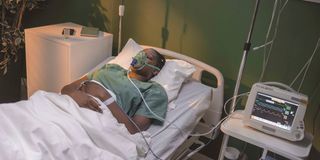
A mother is diagnosed with PPH if she loses over 500ml of blood after vaginal birth or 1,000ml of blood during a caesarean section.

What you need to know:
- Counties such as Kiambu, Kajiado, and Makueni, which have already adopted heat-stable carbetocin, are reporting notable improvements in maternal outcomes.
When Eunice Atsali walked into the hospital to give birth to her second child, she hoped the experience would be as seamless as her first delivery. Having done it before, she was confident everything would go well. As a lecturer in midwifery and a practising nurse-midwife, she had checked all the boxes and felt ready for the birth.
But when the time came, complications arose that required a cesarean section. Shortly after delivery, the healthcare professional realised she was bleeding too much.
“I mentioned it to the person taking care of me in the recovery area, and she confirmed it,” Eunice told Nation.
“It was a scary moment, especially when you know what’s coming if the bleeding doesn’t stop,” she added.
Her doctor had already left after confirming that she was stable following the successful delivery. The sudden turn was unexpected.
“I thank God I was in one of the country’s largest referral hospitals. They swiftly brought in blood for transfusion. I left the theater with some underlying issues, but I recovered,” she said.
“I saw death. It came so close to me during that experience.”
After surviving the ordeal, Eunice added another cap to her qualifications. She now advocates for better management of postpartum hemorrhage (PPH); excessive bleeding after childbirth, defined by the World Health Organization (WHO) as blood loss of 500 milliliters or more within 24 hours of delivery.
Unlike Eunice, who was fortunate to survive, many mothers are not as lucky. According to data from the Kenya Demographic Health Survey, Kenya loses approximately 5,000 women to preventable maternal deaths every year.
In an effort to reduce these deaths, the government has allocated Sh1 billion (USD 7.8 million) to purchase essential drugs and equipment for the prevention and management of PPH. The funds will be used to procure Heat-Stable Carbetocin, a drug that helps prevent PPH; calibrated drapes, which enable healthcare workers to accurately measure blood loss during delivery and respond quickly; and caffeine citrate, a medication used in neonatal intensive care units to help premature babies breathe more easily.
These items were selected from a list of 22 priority maternal and newborn health commodities. The Kenya Medical Supplies Authority (Kemsa) has already procured them and will distribute them to all 47 counties based on their individual orders.
Through this procurement, the government secured access pricing, dramatically reducing the cost of heat-stable carbetocin from Sh2,700 to just Sh95 per dose. Plans are already underway to train healthcare providers in 26 priority counties, with support from the Ministry of Health.
In 2019, WHO added heat-stable carbetocin to its essential medicines list. In Kenya, it was first introduced as a pilot programme in Makueni County in 2022, and it is set to conclude later this year. The government’s new national procurement marks a significant step toward scaling up this intervention and reducing maternal and newborn deaths across the country.
Michael Mwiti, Jhpiego’s senior regional advisor for the AMPLI-PPHI project (Accelerating Measurable Progress and Leveraging Investment for Postpartum Haemorrhage Impact), told Nation that before the introduction of heat-stable carbetocin, available options had significant drawbacks. Many required refrigeration, posing a challenge in areas with unreliable electricity, and some faced quality concerns. He cited studies indicating that certain brands of oxytocin and misoprostol in low- and middle-income countries may not always meet quality standards.
“A medicine that does not require refrigeration is a game changer. We have heard stories from Makueni of cleaners saying the wards are now dry; and mothers are not bleeding as much.” He added that health workers have since nicknamed the drug kausha, meaning “to dry.”
Counties such as Kiambu, Kajiado, and Makueni, which have already adopted heat-stable carbetocin, are reporting notable improvements in maternal outcomes.
As Kenya celebrates the wider availability of this lifesaving drug, Mwiti also emphasised the continued need for quality-assured oxytocin. While heat-stable carbetocin is used specifically for preventing excessive bleeding after birth, oxytocin remains essential for both prevention and treatment.
This progress comes just days before Kenya hosts the International Maternal Newborn and Child Health Conference 2026, set to bring together over 1,800 delegates from approximately 95 countries. The conference will be held at the Edge Convention Centre in Nairobi, starting Monday next week. The inaugural event took place in Cape Town in 2023, and this year’s theme is “Moving Forward Together.”
Dr Edward Serem, Head of the Division for Reproductive, Maternal, Newborn, Child and Adolescent Health at the Ministry of Health, told journalists on Thursday that the upcoming conference is key to helping Kenya learn from countries with more progressive health outcomes.
“In Kenya, maternal and newborn deaths are still unacceptably high. This conference will help sensitise leadership to the fact that there is a problem: that mothers should not die during delivery, and newborns should not die before seeing their first birthday,” he said.
“We have seen stagnation for over a decade. By the end of the conference, we expect to have gained knowledge on which interventions need to be prioritised,” he added.
Dr Serem noted that national indicators show gradual improvement. Data shared monthly through the Kenya Health Information System points to a decline in maternal deaths compared to the last national survey conducted in 2022. Preliminary assessments suggest the number of deaths has nearly halved, now standing at approximately 2,500 lives lost during childbirth annually.
Dr Loise Nyanjau, who leads maternal health programming at the Ministry of Health, emphasised that quality of care significantly influences maternal outcomes. Data shows that far-flung counties with the fewest health facilities often record the poorest outcomes. She called on county governments to consider employing specialists who can help save the lives of mothers at risk.
Dr Nyanjau also announced that the ministry has established maternal health champions in underrepresented counties to advocate for local needs and hold the government accountable.
Children, too, continue to die from preventable causes. Dr Juliet Omwoha, head of Newborn and Child Health at the ministry, revealed that four newborns lose their lives every hour in Kenya.
“The numbers are going down, but slowly, not as fast as we want. The top three killers are birth asphyxia (where a baby does not receive enough oxygen), prematurity, and sepsis. All these conditions are preventable. We need to work four times harder to achieve our goal of reducing child deaths,” she said.
Speaking on behalf of the local organisers of the upcoming conference, Dr Njeri Nyamu, programme director at Jhpiego, noted that Kenya has stagnated in advancing maternal and newborn health outcomes. She described the convening as an opportunity to learn from other countries and find ways to implement existing solutions.
“We need to capture solutions to issues that have been persistent pain points, yet are preventable, including mothers dying from postpartum hemorrhage. Translating policies into action is what will make us a progressive country,” she said.
Dr Hellen Barsosio, a researcher at Kemri and head of Maternal and Newborn Health, is tasked with measuring the country’s progress against global goals. She acknowledged that while progress has been slow, Kenya is performing better than some other countries. She noted that most women in Kenya attend at least one antenatal clinic visit and are likely to deliver in a health facility.
“Where we are struggling is in the quality gap. A mother may show up to a facility and still not receive the interventions she needs,” she said.
“This conference coming to Kenya signifies the country’s stance as a global leader trying to address maternal deaths. We have a real digital tracker that shows our progress. We are not running away from the challenges; we are taking leadership. Kenya truly charts the path,” she added.