Kenya joins global push to double energy efficiency by 2030
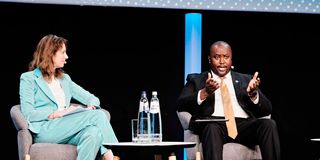
Energy PS Alex Wachira at the 10th IEA Global Energy Efficiency Conference in Brussels, Belgium on June 12, 2025.

What you need to know:
- The Brussels conference was a critical juncture in global energy policy, coming after the historic COP28 agreement, where nearly 200 countries pledged to double the global rate of energy efficiency improvements by 2030.
Representatives from 47 governments recently issued a joint statement reaffirming their commitment to treating energy efficiency as the cornerstone of global energy security and climate action. This was during a two-day conference at the International Energy Agency's 10th Annual Global Conference on Energy Efficiency in Brussels, Belgium. Held on June 12-13, the conference brought together nearly 700 participants from almost 100 countries, including dozens of ministers and CEOs.
The joint ministerial statement outlined comprehensive commitments to place people at the centre of clean energy transitions, focus on fair policies, and leave no one behind. Ministers pledged to "harness innovation and deploy digital technologies to maximise the benefits of energy efficiency - using less energy to perform the same task or achieve the same outcome- putting digitalisation at the heart of modern energy systems, particularly our industrial facilities, buildings, and electricity systems."
The conference was a critical juncture in global energy policy, coming after the historic COP28 agreement, where nearly 200 countries pledged to double the global rate of energy efficiency improvements by 2030. This ambitious target has gained renewed urgency following the energy crisis triggered by the war in Ukraine, which accelerated the need to reduce dependence on fossil fuels, particularly Russian gas.
Co-chaired by European Commissioner for Energy and Housing Dan Jørgensen and IEA Executive Director Fatih Birol, the event built on momentum from its predecessor, held in Nairobi in 2024, the first hosted by an African country.
It highlighted compelling economic data supporting energy efficiency investments, like every euro invested in efficiency can translate into up to 12 euros of household savings. However, the latest IEA data reveals that progress remains well below the 2030 doubling goal, creating an urgent need for accelerated action.
Mr Birol stated that energy efficiency is at the heart of energy security, adding, "I'm encouraged by the unity among the many high-level participants at this efficiency conference, as demonstrated by the joint statement from nearly 50 governments from around the world."
Commissioner Jørgensen emphasised the multifaceted benefits of efficiency measures. "Energy efficiency is a key solution for all of the defining challenges of our time, like energy security, affordability, and climate change. We will double down on our actions both at home and globally to make sure no energy unit goes to waste."
He further announced the European Commission's renewed commitment through a 10-point action plan. The plan covers support for implementation, mainstreaming efficiency in policymaking, strengthening sector-specific standards, facilitating financing, and creating tradable energy efficiency markets. Key deliverables for 2025-2026 include establishing an "Efficiency Action Forum 2030" with EU countries and launching guarantee schemes for small and medium-sized enterprises.
Addressing the social aspects of the energy transition, General Secretary Atle Høie of IndustriALL Global Union emphasised the need for genuine trade union participation and justice-based approaches. "Without genuine trade union participation and a justice-based approach, the process will not gain the necessary support from workers," he warned.
Kenya's participation
Representing Kenya, Energy PS Alex Wachira demonstrated the country's commitment to ambitious climate and energy goals. "Kenya remains steadfast in its pursuit of affordable, clean energy for all," PS Wachira stated during the ministerial roundtable on Energy Efficiency. "Our revised emissions reduction target of 35 per cent reflects our determination to prioritise energy efficiency and clean cooking solutions for our people."
He emphasised the collaborative approach needed for success: "Achieving a significant shift in energy efficiency demands strong alignment between governments, the private sector, civil society, and international partners. No single actor can deliver this transition alone."
Kenya is currently reviewing its National Energy Policy (2025–2034) to promote reliable access and resilience while leveraging Minimum Energy Performance Standards, efficient appliances, smart grid investments, and decentralized renewables.
The conference underscored energy efficiency as what the IEA calls "the first fuel," ahead of any other energy source, with significant economic returns for households and businesses. The focus on efficiency measures addresses multiple challenges simultaneously, including reduced energy costs, industrial competitiveness, enhanced energy security, and reduced emissions.
PS Wachira reiterated Kenya's commitment to peer-learning platforms and harmonising regional standards and policies, describing them as "critical in catalysing collective progress as we work to double our energy efficiency gains in line with our national development goals and global climate commitments."
As the conference concluded, participants acknowledged that achieving the COP28 goal requires a rapid acceleration of current efforts. The joint statement emphasised the need for "stronger collective and national actions, and technological improvements across all sectors" to deliver on the historic agreement to double energy efficiency progress by 2030.