Kenya rolls out twice-yearly HIV prevention jab as demand outstrips supply
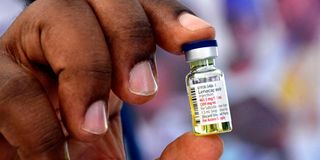
A vial containing Lenacapavir, the first-ever long-acting injectable HIV prevention drug.

What you need to know:
- The biannual Lenacapavir injection is transforming HIV prevention for Kenyans who previously relied on daily pills, but stock shortages are limiting access.
- Despite new prevention options, young people remain disproportionately affected by HIV, while gaps in paediatric treatment and donor funding threaten progress towards ending Aids by 2030.
For nearly two decades, staying HIV-negative meant one non-negotiable daily habit for Peter Wakali*: swallowing a pill every day. In a discordant marriage, forgetting even a single dose of oral Prep carried a quiet, lingering anxiety.
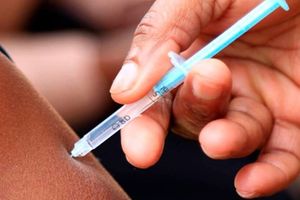
That daily pressure ended in March this year when Peter walked into the Nakuru County Teaching and Referral Hospital and became one of the first Kenyans to receive Lenacapavir, a groundbreaking, biannual HIV prevention injection rolled out across 15 high-burden counties.
“You know with the tablets, there were days I could forget to take them. That’s a risk. But now with this injection. I can go about my life and my relationship without pressure. I have already got the second dose and I am happy with my life right now.”
Injected every six months into the abdomen or thigh, Lenacapavir slowly releases medication into the bloodstream to block HIV infection. For Peter, the shift marks the latest chapter on a journey that began shortly after the birth of his first child.
“My wife became ill on and off after she gave birth and my mother-in-law called her home to take care of her. It’s while they were in the countryside that my wife learnt about her HIV status. I remained in the dark, but when she came back home, I noticed she had changed,” he says.
Months of unexplained coldness and depression followed before his wife finally persuaded him that they get tested together. “We got into a VCT centre; we were counselled and tested. I was the first to be tested and my results came back negative, but when my wife was tested, the results came back positive. I was in shock.”
Through counselling, Peter chose to stay, accompanying his wife to support groups and relying on condoms until Kenya introduced daily oral Prep in 2015. Years later, that same resilience was tested again when one of his adult sons contracted the virus.
“It was tough to learn about his HIV status, but my wife was the one to notice that he had changed, he had lost so much weight and was unwell. We supported him through his diagnosis and now he is married and has a family.”
Elsewhere in Nakuru, Wilson Ng’ang’a* is experiencing the same liberation. Two years into a relationship, he noticed his partner’s sudden anxiety after they had unprotected sex. When he pressed her, she revealed she was HIV-positive, though her undetectable viral load meant she could not transmit the virus.
“I was in shock. It took me a while to accept her revelation. I had grown up in the 1990s when HIV/Aids was a pandemic and I saw what the disease did to people. Never did I imagine that I would fall in love with someone with HIV,” he explains.
Like Peter, Wilson turned to daily oral Prep before switching to the biannual injection early this year. “I am happy that now there are options when it comes to the types of HIV prevention methods one can access,” he said.
At the same Nakuru facility, sex worker Caroline Kemunto* arrived for her first dose on a peer’s recommendation. After testing HIV-negative, she received two injections in her thighs, swallowed two oral loading tablets onsite, and took two more home to complete the regimen 12 hours later.
“I usually have multiple sex partners and while some of them agree to self-testing for HIV before we have sex, some refuse and that puts me at a high risk of contracting HIV,” she says. “I now feel confident that I cannot contract HIV as I go about my work.”
County distribution
According to Nakuru Aids and STI Coordinator Martha Kahura, the county received 2,300 doses for distribution across public hospitals and drop-in centres in Naivasha, Gilgil, Mai Mahiu, Nakuru East, Bahati, Nakuru West, Njoro, Rongai, and Molo. “We have issued 2,200 doses of Lenacapavir at the selected facilities. The demand is high and most of the clients have got their second doses for this year,” she says.
Nationally, Kenya distributed an initial 21,000 doses across 158 health facilities in 15 counties: Mombasa, Kisumu, Kisii, Kiambu, Siaya, Nairobi, Busia, Migori, Kajiado, Nakuru, Kakamega, Machakos, Uasin Gishu, Kilifi, and Homa Bay. Data from the National Aids and STI Control Programme (Nascop) shows that between February and July 2026, over 14,446 people received their first dose, with nearly nine in 10 being first-time Prep users.
“These numbers are telling us that Lenacapavir is bringing new people into HIV prevention, and not just the existing oral Prep users. Uptake peaked in April 2026 at 5,075 and then declined as initiation stock ran short, with stock-outs reported at facilities from April onwards,” says Dr Mulwa, the head of Nascop.
To bridge the shortage, Kenya expects 12,000 additional doses from the Global Fund amidst accelerated efforts to bring affordable generic versions. “The United States Food and Drug Authority granted tentative approval to Dr Reddy's Laboratories for the first generic twice-yearly Lenacapavir injection,” Dr Mulwa says.
“Under an agreement with Unitaid, Wits RHI and Chai, the generic versions will cost $40 (Sh5,204) per person per year in the 120 low- and middle-income countries covered by Gilead's voluntary licence, including Kenya. The first supplies are expected before the end of 2026, with wider availability in 2027.”
Despite breakthroughs in prevention, 2026 estimates from the National Syndemic Diseases Control Council paint a sobering picture. By the end of 2025, Kenya had 1,481,853 people living with HIV, recording 13,936 new infections and 19,434 deaths.
Alarmingly, 62 per cent of new infections occur among people aged 15–39. In Nakuru alone, adolescents and young people accounted for 39 per cent of the county's 609 new infections. “We are having a challenge with young people aged 15–24. Most of them are victims of sexual gender-based violence, which we now know happen within the family setup,” says Dr Oluga Ouma, the Principal Secretary for Medical Services.
“It gets complicated when an uncle is said to have sexually assaulted his teenage niece and when the chief wants to arrest the perpetrator, the family withholds necessary information. This year, over 200,000 teenage pregnancies were reported in the country and that should be a cause for alarm.”
Even with Kenya’s ongoing “triple threat” campaign, targeting teenage pregnancies, new HIV infections, and gender-based violence, youth uptake of Lenacapavir remains low, partly skewed by early stock-outs.
“About 1 in 5 clients on Lenacapavir are under 25 years, and more than eight in 10 of these are adolescent girls and young women. A further six in 10 clients are aged 25–34. However, around three in 10 new HIV infections occur among young people, so these are the under-25s, and especially adolescents aged 15–19 are still under-represented. The data may not yet tell the full story because initiation doses ran out at one point, and young people who were turned away have not been captured in the data,” Dr Mulwa says.
Mother-to-child transmission also remains an unmet target. No county has hit the World Health Organisation’s recommended five percent threshold, with the national rate sitting at 8.04 per cent. While 93 per cent of HIV-positive adults are on treatment, only 60 per cent of children living with the virus receive medication—and just 52 per cent achieve viral suppression, leaving one in five undiagnosed.
Challenges
“We have challenges in terms of adherence and viral suppression in the paediatric population and what we need to work on is vertical transmission to ensure no mother transmits the virus to the child,” Dr Oluga says.
Kenya’s prevention push comes amidst major funding disruptions following the January 2025 US Government Stop-Work Order, which halted USAID’s two-decade-long procurement and distribution of free condoms.
“Kenya needs approximately 400 million condoms annually, but the government distributes about 200 million. We have now partnered with manufacturers to provide low-priced condoms alongside free condoms, while we advocate for a total market approach. Partners are also lobbying for the removal of taxes on condoms to make them more affordable,” Dr Mulwa says.
To reduce reliance on global supply chains, Kenya is preparing to become the first African nation to locally manufacture Alamatravir, a monthly Prep option joining an arsenal that includes oral Prep, the Dapivirine vaginal ring, Cabotegravir, Lenacapavir, and Pep.
“We spend 45 per cent of the cost of medication on freight alone that is shipping the medicine from the country of origin to here. Manufacturing locally is making the money do more as a financing response. Local manufacturing is an agenda for the African continent and President William Ruto is a champion for this because we are looking at this from the broader perspective of health sovereignty,” Dr Oluga explains.
Simultaneously, the Ministry of Health is integrating HIV care into the Social Health Insurance fund under the Kenya Aids Integration Strategic Framework (2025–30), backed by a five-year, Sh200 billion Kenya-US Health Cooperation Framework aimed at transitioning the country to full domestic health financing.
“Ending Aids by 2030 requires finances, we must have a capable workforce, and we must have indicators that show improvements in prevention and treatment. In our UHC agenda, we are keen on ensuring no Kenyan is left behind in terms of access to high quality effective healthcare provision including people living with HIV,” says Aden Duale, the Cabinet Secretary for Health.
“As we protect the gains, we have made a country and close the gaps in paediatric treatment vertical transmission, prevention of HIV in adolescents and young we are looking at we translate the commitments beyond 2030 because this doesn’t mean HIV will have disappeared from the world by then.”
*Names changed to protect the medical privacy of the men.