Kenya’s Ebola response: Top expert flags border checks, mixed messages and looming floods
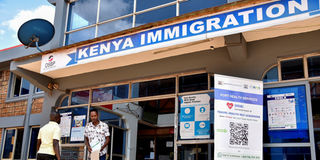
Travellers walk at the Kenya immigration services to access port health services at the Busia One Stop Border Post, crossing-point between Kenya and Uganda, after a man who had been living in the Democratic Republic of Congo travelled and died of a new Ebola outbreak involving the Bundibugyo species at the Nairobi Hospital, in Busia, Kenya October 8, 2026.

Kenya got the first hours of its Ebola response right. It secured the patient and began listing contacts straight away. Now, it must fix three things: border checks, public communication and preparations for the rains.
This is according to Dr Ahmed Ogwell, the former deputy director-general of the Africa Centres for Disease Control who has fought Ebola, Marburg and cholera outbreaks on the continent.
Although it was new to Kenya, the first 24 hours had been handled well. He singled out the swift containment of the patient and the listing of contacts.
“The first 24 hours are critical in any response. As soon as an individual has been confirmed to have Ebola, the first thing is to contain them so that their interaction with the rest of the public is completely removed. Did Kenya do that? Yes,” Dr Ogwell, who is currently the CEO and president of international health NGO VillageReach, said.
“The government secured the patient and began listing contacts within the first hours, so that is good,” he said.
He also credited the incident management system, which allows officials to make decisions quickly.
“An incident management system is in place so that decisions are made quickly. Kenya has established that. They don't have to be second-guessed, and they don't have to go and ask for permission. A decision is made and action is taken.”
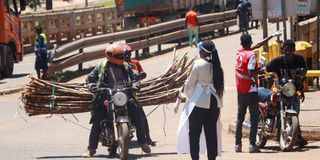
Members of the Kenya Red Cross response team direct travellers at the Malaba crossing-point between Kenya and Uganda after a man who had been living in the Democratic Republic of Congo travelled and died of a new Ebola outbreak involving the Bundibugyo species at the Nairobi Hospital, in Malaba, Kenya October 8, 2026.
He believes the health system is a strength.
“The health system is relatively strong compared to other places and much better placed to be able to accommodate a few patients and look after them and then also stop any further spread than in many countries, especially on the continent of Africa. That strength needs to be put to good use.”
The first gap, he said, is surveillance. Kenya must make it active so that people cannot slip through.
The man at the centre of the first case travelled by road from the Democratic Republic of Congo to Kampala before flying to Nairobi. He passed through three countries.
“For someone to travel by road that far while there are flights, it raises many question marks.”
Dr Ogwell said he did not know the reason. He noted that a traveller from Uganda, which had no outbreak, would have faced only basic checks.
“Someone arriving from Uganda, which did not have an outbreak, would have met only basic checks, and that the patient came through Uganda suggests that maybe avoidance was in place.”
Asked about reports that border checks consist of little more than temperature scans and handwashing, he said effective screening depended mainly on information. Nobody can diagnose Ebola on the spot.
He described three layers of screening. The first is providing information to travellers and the public, which he called the most important step. The second is temperature checks, the quickest way to screen a crowd. The third is interviewing travellers about where they have been in the past 21 days. This allows officials to rate the risk as high, low or none.
The available tools are also limited. Samples must be sent to a laboratory.
“We don't often have rapid tests, and so the samples need to go to the lab for confirmation. We don't have vaccines that have been licensed, and we don't have treatment for Ebola.”
He said this was no reason to despair.
“However, we know Ebola. We know how to deal with Ebola. We know how to control it, and we know the risks that are associated with Ebola.”
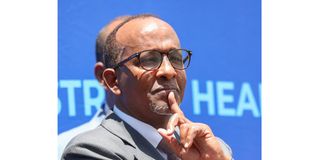
Cabinet Secretary for Health Aden Duale addresses journalists at Afya House in Nairobi on October 6, 2026, following Kenya’s first Ebola death.
The second gap is communication. The authorities, he said, need to do more to build public trust.
He pointed to mixed signals. Ministry officials and the national public health institute's live dashboard have at times given different figures for the number of people screened and confirmed cases. Videos of responders in white protective gear entering apartments have circulated on social media without explanation.
In one case, a police brief described a suspected patient as showing every sign of the disease. The person was later confirmed to have malaria. This emerged only after journalists pressed the Ministry.
“Trust is difficult to build and very easy to lose. And it is all based on the timing of communication.”
By the time a correction is issued, he noted, a rumour may already have reached hundreds of people.
His solution is a single source of information.
“The role of the incident management system is central to building that trust so that you have one source of information, it is regular, and when it comes out, it's trusted.”
The rest of the government should wait, he said.
“The incident manager should brief the public daily. Other persons and sectors speak afterwards.”
Speed matters.
“Speed must be measured in hours. Communication should be within hours, never days.”
On October 12, Health Cabinet Secretary Aden Duale declared Ebola a formidable epidemic disease. He did not declare a public health emergency.
Dr Ogwell said the Ministry must explain the difference before Kenyans draw their own conclusions.
“The distinction is not semantic. WHO and Africa CDC have both declared emergencies for the wider outbreak in the DRC, a step taken when an outbreak is active, and it unlocks money, personnel and supplies. Kenya has made no such declaration.”
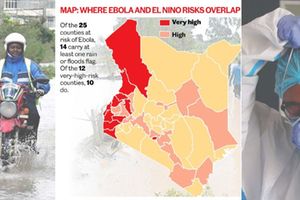
With El Niño rains expected, Dr Ogwell said Kenya must quickly close all gaps in its Ebola response because flooding could complicate the effort.
The Ministry's list of counties at high risk of both Ebola and flooding runs largely along the northern transport corridor. Public health officers, who would normally lead both mosquito control and contact tracing, are on strike.
He explained how floods could affect contact tracing. Normally, people remember who sat next to them. Floods change that.
“During flooding, I probably have no idea who I sat next to.”
Roads also pose a risk.
“In this country, we largely use the road. If there is flooding, and some areas have been cut off, it means that very life-saving health products will not be able to move and reach these places in good time.”
His advice is to finish one task before another begins.
“Let's nail down this Ebola case and related cases quickly before we start dealing with any other issues, especially around El Niño.”
He also called for coordination.
“Let's just get a single incident management system working well and good coordination within both levels of government so that we have people contacted, traced, secured, until they are clear.”
The United States, China and other partners are sending assistance. Dr Ogwell said how the aid is managed will matter as much as the amount provided.
He wants a response plan with clear pillars, showing what is covered and what is missing so that donors can fill the gaps.
“Now, we need to have a mechanism to follow up and show the money came here and the in-kind came here, and that is how it was used.”
Sharing that information with the public would build trust, he said.
Dr Ogwell said community health promoters were Kenya's best early-warning network. They provide decision-makers with real-time information and should be engaged in the response.
He offered an example from Tanzania.
“During the Marburg outbreak in Tanzania, a community health worker is the one who jumped on a motorbike and rode for six hours to go and tell the local district head that this and that is happening in our community.”
Dr Ogwell said Kenya could care for Ebola patients. The risk now, he said, was stigma.
“The Kenyan health system is able to handle an Ebola patient. What we need to do is to stop stigmatisation and ensure that whoever it is that needs help gets it quickly.”
If the gaps are addressed, he said, the outlook is good.
“We just need to make sure that those who have it are supported to recover, and those who are contacts are quarantined until the days are past, and we can clear them.”
Then, he said, the rest of the country could continue with its commercial and social activities.
Follow our WhatsApp channel for breaking news updates and more stories like this.