Kenya’s youth grapple with surging HIV, pregnancies and sexual violence

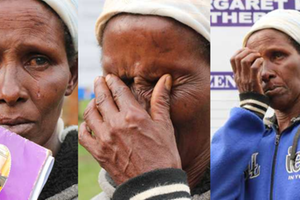
Maono Africa Centre for Transformation Young mums representative Annette Kirimi, during the interview at the institution in Nairobi on November 24, 2025.

What you need to know:
- A key issue at the community level is a lack of awareness among young people about HIV prevention. Even among those who are informed, many are not embracing these methods.
Kenya is in the middle of a crisis. New HIV infections are rising, teen pregnancies remain stubbornly high, and cases of sexual and gender-based violence continue to climb.
This intersection, known as the ‘triple threat’, is hitting adolescents the hardest. According to Loise Atieno, programmes manager at Maono Africa, Centre for Transformation and a frontline worker in youth issues, a key issue at the community level is a lack of awareness among young people about HIV prevention. Even among those who are informed, many are not embracing these methods.
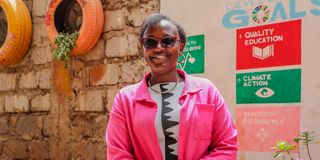
Maono Africa Centre for Transformation Programme Manager Loise Atieno during the interview at the institution on November 24, 2025.
She adds that sexual and gender-based violence (SGBV) and HIV are closely linked, yet many survivors hesitate to share their experiences due to fear, stigma, and trauma. In many communities, SGBV is widespread but under-reported, and it significantly increases the risk of HIV, especially when survivors cannot negotiate safe sex or access timely care.
Addressing this issue requires confidential and survivor-centered services, stronger legal protections, community education, empowerment of vulnerable groups, and active engagement of men and boys in prevention efforts. Even when stories are not shared, the silence itself highlights how urgent and sensitive these issues remain.
In Nairobi's Dandora estate, we meet Christopher Amuyunzu, a 28-year-old youth advocate who is rewriting his own story through HIV/Aids awareness and advocacy. Reflecting on his childhood, he recalls a life marked by longing for effective treatment for a persistent skin condition, longing to overcome depression, and longing to accept his status as a person living with HIV. It could go on, and on.
“I was born and raised in Nairobi for three years. After my mum died, we moved to Mombasa County with my sister and grandmother, and it didn’t take long before we were taken to an orphanage,” he shares.
As a child, he suffered from recurring skin infections that wouldn't go away. These were, in fact, mild symptoms consistent with the World Health Organization's (WHO) stage 2 classification of HIV.
Christopher recalls his first HIV test at six years old, though the result didn’t make sense to him at that time. A core memory from that time is being separated from his sister because of his status; he was sent to an orphanage for children living with HIV, while his sister went to a different one.
No one to turn to
Tragedy struck again when his grandmother was killed, leaving him with no family to turn to once he outgrew the orphanage. He says his father was never informed of their whereabouts.
It took the intervention of a well-wisher who was visiting the orphanage to help in getting him drugs that worked.
“I am a testimony of what medicine can do. I’d like to encourage young people to accept their HIV status and live a full life. Stopping medication will expose you to serious health risks and consequences,” he advises.
At 19, Annette Kirimi’s life changed abruptly when she became pregnant. “I felt I was not ready and could not do it. Since the age of five, I had been under the care of my father. I didn't know how to be a mother," she says.
That experience broke her, and after giving birth, she sank into postpartum depression, a mood disorder that affects at least 10 per cent of women globally in the first year after childbirth. She found solace in a mentor who encouraged her not to give up.
After that session, she rebranded her life and pursued a short course in beauty therapy. While Annette is not living with HIV, she has learned about it through the Maono Centre, which uses art to make advocacy more accessible.
“I feel like the same way we keep getting information about family planning is the same way we should be cautious about HIV prevention,” she adds.
Mary* (who requested anonymity) grew up taking daily medication without understanding why. In grade 7, she gathered the courage to ask her mother why she needed the drugs if she wasn't sick.
“My mum was hesitant. She told me the drugs were for blood pressure,” she says.
Skeptical, Mary kept insisting until her mother finally revealed the truth: the drugs were antiretrovirals (ARVs).
“I was shocked and in denial. I asked so many questions, and it was so hard to accept my situation,” says Mary. The news led her to stop taking her medication. The withdrawal negatively impacted her health, resulting in a hospital admission where doctors convinced her to resume treatment. “That is when I decided to accept my situation,” she says.
Mary, 21, is a mother of one and married to a man who is HIV negative. “My husband is so supportive; he even reminds me when to take the drugs. My child also takes preventive ARV drugs, and I adhere to post-natal clinics just so that she is safe,” Mary tells Healthy Nation.
Loise explains that stigma has evolved from external parties to family set-ups and calls for the harmonisation of policies to address the rising infection rates.
Douglas Bosire, acting chief executive officer at the National Syndemic Disease Control Council (NSDCC), tells Nation that despite a rise in new infections last year, there has been progress over time.
“One of the campaigns that we are having is to increase the reporting rate for sexual and gender-based violence. We are trying to work with the Ministry of Interior as well as the community health promoters such that we have timely reporting of these cases once they occur in the community,” he offers.
“If you are defiled and probably exposed to the risk of a HIV infection, you need to seek care within 72 hours and be put on what we call post-exposure prophylaxis for you not to seroconvert and have the virus develop in your body.”
According to Bosire, they receive cases that show a nexus between HIV infections, adolescent pregnancies, and sexual and gender-based violence.
In his telling, one of the practical strategies for ending the triple threat is knowing one’s HIV status. “Through the national government administrative structures, we are also working with chiefs and assistant chiefs to continue passing these messages on a day-to-day basis,” he offers.
Against the backdrop of dwindling donor funding and a growing young population that is lacking knowledge and information on the triple threats, the state corporation launched the ‘Maisha Youth’ initiative across the counties.
“These are youth champions who go to schools, social places, and religious places to advance this conversation,” he notes.