Dear female legislators, stop failing Kenyan women on health issues
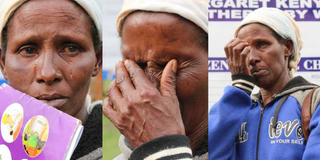
Anna Cheptonui,50, weeps outside the Margaret Kenyatta Mother Baby wing in Nakuru County Referral and Teaching Hospital on October 2, 2024 after her 18 year-old daughter who had given birth at the facility under the Linda Mama programme was detained until she pays Sh7,500.

What you need to know:
- In the recent past, the only reason we have heard these women’s voices is from a negative perspective, scandal and political sucking up; not only destroying their credibility, but also the credibility of women’s voices in decision-making spaces.
The past few weeks have been rather shocking if media reports are anything to go by. We have seen an unprecedented number of women politicians make public comments that would wake Prof Wangari Maathai from the grave. Even worse is how they have allowed male misogynists to make comments that are disrespectful to them, and to the female population at large on the podium.
For the most part, many women in Parliament have lived out their terms quietly without being seen or heard, wondering what their intended impact in this key decision-making organ is intended to be. In the recent past, the only reason we have heard these women’s voices is from a negative perspective, scandal and political sucking up; not only destroying their credibility, but also the credibility of women’s voices in decision-making spaces.
Also read: SHA plans to charge teenage mothers
How is a female politician supposed to be taken seriously when she takes to the podium and proudly declares how she will willfully desecrate the election process, without an ounce of shame? Or proudly compare a presidential term to sexual performance. Or willingly puts her body on display for the public on a podium at the cue of a man who has no respect for the female gender other than their usefulness in bed.
From the health sector, we have been grossly unsupported by these women walking the halls of our seat of democracy and national decision-making. Let me elucidate the ways in which we had hoped female representation would have brought health equity for all in the August house; had these female politicians made an attempt at demonstrating leadership.
For the last three Parliaments, there has been a spirited attempt by various members to bring the Reproductive Health Bill to the floor of the House. This bill, which addresses the vast inequities especially facing women, has never seen the light of day as it has faced undue opposition under false pretences by parties interested in driving the disparities that have resulted in poor outcomes for women and girls in healthcare.
Boys and girls
Throughout childhood, there is little gender disparity in relation to health for boys and girls. As they get to adolescence, the disparities set in. As we worry about the triple threat to adolescents (HIV, adolescent pregnancies, and sexual and gender-based violence), the conversation is centered on the girl child, the one truly affected.
With these disparities being normalised at such a young age, the girls grow into women who remain disadvantaged as they don’t even realise they deserve better. They survive 40 years of their reproductive age, dodging threats that disproportionately affect them as a result of gender, from maternal mortality, menstrual challenges, uterine fibroids, reproductive tract cancers and menopause; conditions that men don’t experience.
From this perspective, you would imagine that our women legislators would be at the forefront advocating for laws that ensure equity in access to healthcare. It is an absolute shame that Millie Odhiambo has been fighting this war single-handedly for years, as if she is the only woman who is cognizant of this gap. When Governor Susan Kihika made a spirited attempt at getting this bill passed into law, the kind of backlash she faced was enough to make one run for the hills.
Now we have a watered-down version of the bill, talking about family yet the real issues requiring address are reproductive health in nature. Our valiant soldiers have been forced to succumb to pressure in order to make the bill palatable, yet this does not address the issue of quality reproductive health services for all. All this while, the voice of our female representatives is mute.
Away from the reproductive health bill is the whole debacle of primary health care (PHC), social health insurance and emergency and chronic disease funding. The biggest target for primary healthcare services are women and children. This cannot be overstated. The lack of foresight to strengthen these Acts of Parliament to ensure the social protection that they are expected to address is regrettable.
Not once did female legislator seek to ringfence financing for PHC, a service that addresses the majority of the needs of women and children. Section 15 of the Primary Healthcare Act is crafted in a manner that makes it optional for the National Government to provide financing for this critical sector, which is implemented by county governments, a major loophole in ever improving quality of services provided to key populations.
It is disheartening that despite the numerous times the Social Health Authority has been summoned to both Houses to respond to queries about the implementation of PHC and the Social Health Insurance Fund, I have never heard one female legislator question how a caesarian section, a major surgical procedure, involving the lives of two humans, where women have been known to die of possible complications, is priced at Sh30,000; yet a myomectomy, a surgery on the woman to remove fibroids, with no involvement of a second life, is priced at Sh120,000.
Our female legislators need to get their priorities right quite urgently. They are not political flower girls. The presence of 82 female members in the National Assembly is a force to recon with. We expect a better fight for equity when it matters. The Senate female population may consist of just a third of the membership, but where voting for important issues is called upon, this is enough to sway the votes significantly.
It is time to get off stage if what you are going to say; or allow to be said about you, puts women’s autonomy down. What we expect is an amplification of voices such as Gathoni Wamuchomba’s when she speaks of obstetric violence; of Millie Odhiambo when she defends the Assisted Reproductive Technologies bill to protect our young girls from exploitation as ovum donors and surrogate mothers, while defending those who need help to start their parenting journey.
We want to see all women legislators standing up to defend the health budget from being torn down in favour of building roads, because dead people don’t drive. We want to see the education budget being defended, because the academic accolades the same women hold, which have enabled them to sit on that platform, was a result of a well-funded education system; in a country where education remains a key driver in achieving gender equity.
Our dear female legislators, you are embarrassing the women of Kenya. Take a leaf from your predecessor, Prof Wangari Maathai; or the few among you who have steadfastly remained rooted in the quest for true representation such as Crystal Asige. That Honorable title you love to flash, earn it! Otherwise, you continue to prove every single day why that seat named “Women Representative” is not needed!
Dr Bosire is a gynaecologist/obstetrician