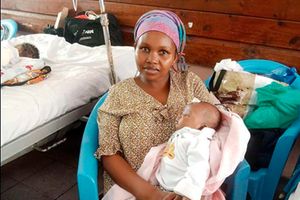
Kenyans warned of surge in respiratory illnesses amid intensifying cold weather
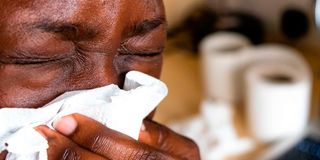
Medics have noticed a sharp rise in flu cases.

What you need to know:
The cold wave will extend into early August.
The Ministry of Health (MoH) has urged Kenyans to heighten their disease prevention behaviour, keep warm and ventilate their homes amid increased risks of respiratory diseases.
The advisory comes in response to the Kenya Meteorological Department's (KMD) July Outlook Report, which highlights increased risks of respiratory illnesses such as asthma, pneumonia, and flu due to prevailing weather conditions.
Speaking to Nation, Dr Sultani Matendechero, the deputy director-general for Health at the ministry, explained that MoH’s disease surveillance division has historically observed a surge in respiratory illness cases every July, and this year is no exception
“We continue to look at the trends because flu, for example, follows a seasonal variation. The ministry has a network throughout the country that monitors and generates data and informs us whenever there is an upsurge; apart from detecting new strains,” he said.
Dr Matendechero noted that viruses survive better in cold, dry air, and indoor crowding facilitates transmission.
“While the cold can impair the body's immune response, people tend to spend more time indoors, facilitating the spread of these viruses.
“The cold air can dry and cool the airways, causing them to constrict and making it harder to clear mucus as well as other irritants,” he told Nation.
More intense
Dr David Gikungu, KMD director, said Kenyans should prepare to brave for a more intense cold season compared to last year’s July.
He added that the cold wave will extend into early August.
“July 2025 will be colder than 2024, which was colder than 2023, with subpar temperatures continuing through August’s first week. This prolonged cold weakens the body’s defences against infections.”
Normally, July is Kenya’s coldest month due to the sun’s southern shift, reducing direct heat. Strong high-pressure air masses from the north amplifying the cooling effect. These systems block warm air, trapping colder conditions for longer.
Dr Alex Ng’eny, a physician at Mogotio Sub-County Hospital, said he had noticed a sharp rise in flu cases. He noted that cold air can impair the function of cilia, the hair-like structures that help clear mucus and pathogens from the airways.
“A recent study by John Hopkins Medicine highlights that cold temperatures may hinder the ability of the nose to produce antiviral proteins, further increasing vulnerability to respiratory infections,” Dr Ngen’y told Nation, adding that close-range transmission of flu viruses from one person to another thrives in drier, colder conditions
He explained that the nose is one of the first points of contact between the outside environment and inside the body, and as such, a likely entry point for disease-causing pathogens.
“Pathogens are inhaled or directly deposited (such as by the hands) into the front of the nose, where they work their way through the airway and into the body, infecting cells, which can lead to an upper respiratory infection,”the physician added.
July 2025, KMD further highlights, will see the country receive near- to above-normal rainfall expected over the Highlands West of the Rift Valley, Lake Victoria Basin, Central and South Rift, parts of Northwestern Kenya, and parts of the Highlands East of the Rift Valley (including Nyandarua and western Laikipia.
“Cool, cloudy conditions with occasional light rains expected over Nairobi, Central Highlands, parts of the Southeastern lowlands, and Western Kenya. Generally dry and sunny weather likely in Northeastern and Southeastern Kenya, though some isolated areas may see light rainfall,” KMD states in it’s July 2025 forecast while observing that warmer-than-average temperatures are expected across most of the country—except Turkana and West Pokot, where slightly cooler conditions may prevail.
Dr Matendechero explained that these weather conditions will propel the breeding of mosquitoes and snails, thereby further burdening the country with diseases such as malaria and typhoid, which is caused by a bacterium Salmonella Typhi that is spread through contaminated food and water.
On other potential impacts, KMD predicts that there will be favourable conditions for agriculture in western Kenya and parts of the Rift Valley, risk of fog and slippery roads, which is why they are urging motorists to drive cautiously, especially around Kinungi and Naivasha.
“There will also be water scarcity concerns in dryland areas that conserve water as well as favourable conditions for tree planting in the west and central highlands.”