KMPDU, HIV lobby groups lose bid to lift Sh200 billion American aid freeze
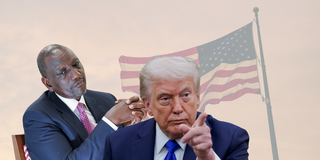
Kenya-US health deal, meant to fund Universal Health Coverage, is facing two separate court challenges over its legality and implementation.

The High Court in Nairobi has rejected attempts by a doctors’ union and HIV advocacy groups to lift orders freezing a Sh200 billion Kenya–United States health cooperation framework, keeping the deal on hold as judges weigh its constitutionality.
The court ruled that it lacks jurisdiction to review or vary the conservatory orders issued on December 19, 2025, after the State filed a notice of appeal against that decision. The judge stated that the challenge to the freeze must now be pursued on appeal.
“At this point, without jurisdiction, I cannot probe this particular issue further,” the court held, rejecting applications by the Kenya Medical Practitioners, Pharmacists and Dentists Union (KMPDU) and advocacy groups to revisit the orders that halted implementation of the framework signed on December 4, 2025.
However, KMPDU and the HIV groups secured a seat at the litigation table after the court allowed them to join the case as interested parties.
The framework, signed by Prime Cabinet Secretary and Foreign Affairs Cabinet Secretary Musalia Mudavadi and witnessed by President William Ruto, commits the United States to provide $1.6 billion (Sh206 billion) over five years.
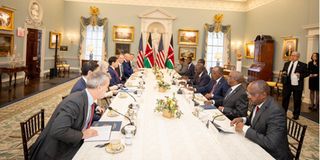
Kenya and US delegations during the signing of the historic Health Cooperation Framework between the two governments.
The funds are earmarked for medical equipment, health commodities, workforce expansion, and health insurance coverage.
Busia Senator Okiya Omtatah moved to court days later, arguing that the executive acted unilaterally. He contended that the agreement was adopted without parliamentary approval, public participation, or a transparent fiscal impact assessment, while also raising concerns about data protection. The senator asked the court to halt implementation pending a full hearing of the petitions.
A parallel petition was also filed by the Consumers Federation of Kenya, challenging the framework on grounds of data privacy and alleged violations of the Data Protection Act.
On December 19, the High Court agreed to freeze the deal. In its ruling, the court stated that the petition raised “arguable constitutional and legal issues” and warned that implementation could cause “irreversible constitutional harm” before the case is decided. The court added that “there can be no greater public interest than to demand compliance with the Constitution.”
Faced with the freeze, KMPDU, alongside a coalition of HIV advocacy groups and activists, sought to join the case as interested parties and requested urgent relief. KMPDU argued that the framework underpins the procurement of essential medical commodities for 2026 and provides for the transition of 515 frontline workers to the government payroll by 2028.

KMPDU Secretary General, Dr Davji Atellah, at a past event. He says doctors in Homa Bay will down their tools if the county fails to honour its statutory and contractual obligations within three weeks.
Its secretary-general, Dr Davji Atellah, warned that stopping the deal would lock Kenya out of funding windows and trigger medicine stockouts. He told the court that donors operate on rigid “use-it-or-lose-it” cycles and that freezing the framework in December would shut Kenya out of the January 2026 disbursement window. He added that even a later lift would still cause “a minimum of a three-month national stockout.” The union also argued that the document is a non-binding arrangement, not a treaty.
“The conservatory orders issued have catastrophic implications owing to the dire status of the Kenyan health sector. These orders have created a functional vacuum in the health sector at the most volatile time of the year, characterised by high population mobility, including minors and expectant mothers, which correlates with a spike in infectious disease transmission,” argued Dr Atellah.
The court further heard that the conservatory orders disabled the 7-1-7 outbreak detection metric—an international performance target—leaving the country vulnerable to undetected infectious disease outbreaks during this season.
HIV networks, including the National Empowerment Network of People Living with HIV and Most At-Risk Young Mothers and Teenage Girls Living with HIV Initiatives (MOYOTE), said the orders threatened access to treatment, diagnostics, and community health services. They argued that their members’ “health, dignity, survival, and livelihood” were directly at stake and urged the court to allow limited implementation of life-saving components.
Mr Omtatah opposed both applications, stating that the bids amounted to a collateral attack on a reasoned ruling and sought to re-argue issues already decided. He insisted the case was about legality and process, not policy desirability, and argued that “constitutional compliance, public participation, parliamentary oversight, data protection, and devolution cannot be subordinated to administrative convenience.”
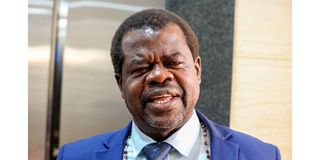
Busia Senator Okiya Omtatah.
In its ruling on the applications, the court took a mixed approach. It allowed KMPDU and the HIV groups to join as interested parties, stating they had shown a “direct practical bearing” on their rights and interests. “Allowing their participation will give them a voice to articulate their concerns… to enable the court to reach a just determination,” it said.
However, it rejected their request to lift the freeze, noting that the respondents—including the Attorney General, Prime CS, and the Cabinet Secretaries for Health and National Treasury—had already filed a notice of appeal against the December 19 ruling.
Under the Civil Procedure Act and rules, the court stated that its power to review is “extinguished if an appeal is preferred.” On that basis, it declined to vary, set aside, or discharge the conservatory orders.
The court also refused, for now, to consolidate this case with a parallel petition filed by the Consumers Federation of Kenya challenging the framework on data privacy grounds. It stated that ordering consolidation without first hearing the parties in the other case would be improper.
The effect is that the framework remains frozen, despite warnings of disruption to health programs. The court reiterated the reasoning of its earlier ruling, which stated that if implementation proceeded and the deal were later found unconstitutional, any decision would be “merely academic since violation of the Constitution… cannot be reversed once it occurs.”
At the heart of the legal dispute is whether the framework amounts to a treaty requiring parliamentary approval, whether there was meaningful public participation, and whether safeguards on data protection, public finance, and sovereignty were followed.
Follow our WhatsApp channel for breaking news updates and more stories like this.