Labelled ‘disease carriers’: Long-distance lorry drivers decry stigma along East African highways
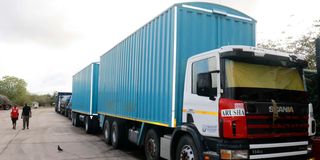
Long-distance lorries on the highway on October 30, 2025.

What you need to know:
- Long-distance lorry drivers say they face discrimination and restricted access to healthcare along the Northern Corridor, often being labelled disease carriers during outbreaks such as Mpox and Marburg.
- Health officials warn that poor physical and mental health, fatigue and stress among drivers contribute to road accidents, with 690 crashes and 802 deaths recorded in 2024 alone.
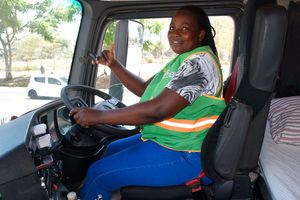
Lorry drivers play a key role in moving cargo from one point to another, but while on duty, they face significant challenges of stigmatisation by being called “disease carriers”.
The group is now denied treatment and sidelined by local communities or some government agencies whenever there is an outbreak of disease along the highway. A lack of harmonised national government policies has worsened their situation, with some drivers forced to travel several kilometres to seek medication.
“We have been discriminated against along the highway, especially in Uganda and South Sudan. We are asking governments of countries along the northern corridor to harmonise their health policies to help us get medication on time anywhere,” says George Mutua, a lorry driver.
Kenya Long Distance Truck Drivers Union secretary general Roman Waema said the latest cases of discrimination relate to Mpox, where drivers are not allowed into Uganda unless they receive a special jab. “Currently in Uganda, we are not allowed to operate unless you are vaccinated with what they term a special jab to prevent Mpox, but we ask ourselves, ‘Why is the vaccine only in Uganda?’” says Mr Waema.
He adds that governments, through the Northern Corridor Transit and Transport Coordination Authority (NCTTCA) and North Star Alliance, have been trying to set up special clinics to provide first aid services in areas where drivers cannot access health services. However, challenges persist. Logistics stakeholders raised concerns about poor health among more than 3,500 drivers in the northern corridor, calling for interventions to tackle economic and social issues.
Border towns and roadside stations where drivers reside remain susceptible to different communicable diseases, even as governments invest in emergency response and surveillance to curb cross-border infections. According to Health Cabinet Secretary Aden Duale, NCTTCA and North Star Alliance highlighted the need to decisively address severe challenges of mental health, stress, fatigue, and the threat of drug and substance use among high-stress mobile workers.
“In 2024 alone, we documented 690 accidents and 802 fatalities, with many linked to fatigue, poor visibility, and the pressures of long-distance travel. These figures affirm that corridor health is not merely a health sector concern; it is a regional security, economic productivity, and development imperative,” Mr Duale said. “We recognise that corridor health is a multi-faceted security concern. It encompasses not only communicable diseases like HIV, TB, and malaria but also the critical issues of non-communicable diseases such as hypertension and diabetes.”
Since last year, lorry drivers have been identified as a risk in spreading communicable diseases, with the latest being Mpox and Marburg. To address cross-border diseases, the government has activated joint coordination structures with Ethiopia for the Marburg response at the Moyale One-Stop Border Post, ensuring joint risk assessments, real-time information sharing, and harmonised interventions.
A study on the health of long-distance drivers by NCTTCA shows more than 60 per cent of drivers face multiple health complications such as mental health issues, diabetes, high blood pressure, and eyesight problems. Dr John Deng, the authority’s executive secretary, said increasing cargo throughput comes with health challenges that transport and public health systems must address collaboratively.
Complex challenges
“Health challenges along transport corridors remain diverse and complex. They include persistent communicable diseases, rising non-communicable diseases, mental health conditions among transport workers, and service access gaps for migrant and mobile populations,” Dr Deng said.
“The Covid-19 pandemic demonstrated that when mobility is disrupted by health emergencies, trade, livelihoods, and entire economies are affected. It also showed that coordinated border health protocols, data sharing, and surveillance systems are indispensable. These realities compel us to strengthen the health dimension of corridor development.”
Dr Deng said addressing mental health issues, which are linked to poor working conditions among drivers, will help enhance safety standards and reduce fatality rates.
Read: Truck drivers count losses in long wait for Covid-19 tests
He noted the need to rework financing models through public-private partnerships for health-smart corridor infrastructure by mobilising blended finance and partnerships for health facilities, road safety systems, diagnostic centres, and wellness hubs along the corridor. North Star Alliance, which operates mobile clinics along the corridor, said their clinics last year handled more than 200,904 people, 50 per cent of whom were lorry drivers.
“Between January and October 2025, we reached 100,637 people. Behind these numbers are real stories: drivers who discover they have high blood pressure before it is too late; sex workers who access prevention and treatment in a safe, respectful environment; roadside communities who now have a reliable point of care,” North Star Alliance Chairman Bernard Kadasia said.
As the number of users increases, Mr Kadasia raised concerns about budget cuts by the government and withdrawal of some key partners, leading to reduced services and medical supplies. “Our model is built on partnerships – with governments, corridor authorities, transport companies, worker unions, community organisations, donors, and the private sector. Without these partnerships, our blue boxes would simply be blue containers,” he said.