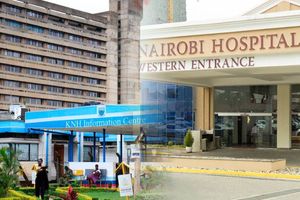
Lifeline for cancer patients at Kenyatta Hospital with new radiotherapy machine
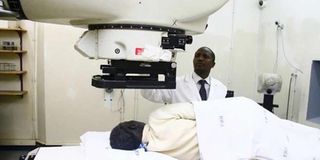
A patient undergoing radiotherapy at KNH, Nairobi, in the past.

For years, cancer patients at the country's largest public hospital had nowhere to go after the only machine they relied on for treatment kept breaking down.
Some travelled hundreds of kilometres. Others simply stopped treatment. Now, finally, the machine is here.
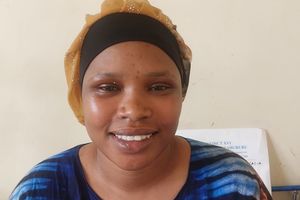
Ms Veronicah Nyambura was halfway through her radiotherapy sessions when the older machine broke down. She had been diagnosed with cervical cancer two years earlier and had fought her way through surgery and chemotherapy to reach this point. Radiotherapy was supposed to be the final stretch. Then Kenyatta National Hospital's linear accelerator, the only one at the country's largest public referral hospital, broke down.
"I did not know what to do," she says. "The doctors told me to wait. But you cannot just wait when you have cancer."
She waited three weeks. Then she borrowed money to continue her treatment at a private facility. The cost wiped out her family’s savings and then borrowed money. She is still paying back the debt.
However, for Jackson Mulinya, his story was different. When he was referred to KNH for radiotherapy for prostate cancer, he arrived to find the machine out of service. He was placed on a waiting list. Weeks passed. Then months.
"I thought I was going to die waiting," he says. "Not from the cancer. From the waiting."
Both patients were among hundreds caught in a crisis that Nation first reported in 2010, when KNH's linear accelerator, known as a Linac, broke and repairs stalled for months. The breakdown exposed the fragility of Kenya's cancer care infrastructure in stark terms: a country of 55 million people, served by a handful of radiotherapy machines, could not afford for even one to fail.
Now, after months of patient suffering, delayed treatment, and sustained public pressure, that chapter appears to be closing.
KNH has commissioned a new Linac machine, restoring radiotherapy services at the hospital and giving thousands of cancer patients renewed access to treatment they could not get elsewhere.
The Nation's coverage of the Linac breakdown documented what the numbers alone could not fully capture. The first story captured patients suffering and what the breakdown meant for their treatment.
The stories drew responses from the Ministry of Health and KNH management, who acknowledged the breakdown and promised a solution. The last break down was recorded sometime in January 2026, and since then, patients have been on and off treatment as they waited for the new machine to be installed.
Human cost
In the meantime, patients made do. Some went to the Moi Teaching and Referral Hospital in Eldoret. Some sought treatment at private oncology centres in Nairobi, where a single session can cost upwards of Sh13,500 per session, yet at KNH, it costs lower than around Sh3,600. Some stopped treatment entirely and hoped for the best.
The human cost of that period has never been fully counted. KNH has not released data on how many patients missed sessions, how many experienced disease progressions during the gap, or how many died before the machine was restored.
Those are questions that remain unanswered. But for patients like Nyambura and Mulinya, the commissioning of the new machine is, at minimum, a reason to breathe.
"I kept telling myself: just hold on," Nyambura says. "Now I feel like maybe the holding on was worth it. I thank God that when I went for my PET scan last month, the cancer cells had not spread despite stopping treatment for two weeks.”
The newly commissioned Linac at KNH, in full operation, treats up to 50 patients per day, with the potential to scale to 120 patients per day. A standard radiotherapy course runs between 15 and 35 sessions, depending on cancer type and stage.
LINAC machine works like a special X-ray, targeting radiation to destroy cancer cells without hurting healthy tissue around them. The machine can shape radiation energy beams to exactly match the tumour's shape, even if oddly shaped, thus protecting healthy parts of the body.
For some small tumours, it can deliver very strong doses of radiation in just a few sessions, with incredible accuracy.
KNH was not alone in the upgrade. A second Linac has also been installed at Coast General Teaching and Referral Hospital in Mombasa, expanding radiotherapy access in the coastal region and reducing the burden on Nairobi-based facilities.
Radiotherapy waiting times at KNH more than doubled in the financial year ended June 2025, jumping to an average of 37 days from 18 days the previous year, more than twice the hospital's own target of 17 days. The hospital attributed this directly to frequent equipment breakdown and increased demand.
When the machine broke down in March, the recent breakdown, KNH Acting CEO Dr Richard Leyisampe told a parliamentary committee that 50 per cent of patients could not access radiotherapy services during the breakdown, with most being referred to Kenyatta University Teaching and Referral Hospital.
In May 2025, the then acting CEO Dr William Sigilai, confirmed the Linac Elekta machine had suffered an unexpected technical failure, forcing KNH to activate referral protocols and fall back on its Cobalt radiotherapy machine, which had itself previously been out of service nd could not handle many patients.
“This marks a significant step commissioning marked a significant step in restoring and strengthening the hospital's cancer services,” Dr Lesiyampe said.
The Kenya Network of Cancer Organisations (Kenco) has welcomed the commissioning as part of a broader set of improvements to cancer care in Kenya.
Kenco Executive Director Phoebe Ongadi said the investments in radiotherapy infrastructure, combined with recent changes to SHA's oncology benefits package, represented meaningful progress.
SHA recently gazetted an increase in the annual cancer benefits package from Sh550,000 to Sh800,000. The Emergency, Chronic and Critical Illness Fund allocation raised from Sh150,000 to Sh400,000 and commissioning of the machines means a lot, as it reflects the reality of long-term and complex cancer treatment.
"The new machine provides renewed hope to thousands of patients and families across Kenya," Kenco said in its statement. It demonstrates that meaningful progress is possible when government institutions, healthcare providers, civil society organisations, patient advocates, and development partners work collaboratively towards a shared vision of equitable cancer care."
Already, the list of those in need of the services has been booked. The machine is now here. The question Kenya must now answer is whether it will stay working and what it will do for the patients who could not wait.
In Kenya, cancer is a significant public health concern, ranking as the third leading cause of death after infectious and cardiovascular disease.
Follow our WhatsApp channel for breaking news updates and more stories like this.