Little warriors, big hearts: The power of peer support in a cancer ward
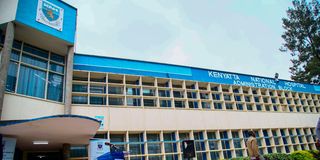
Kenyatta National Hospital.

What you need to know:
- In the darkest of times in the fight against this monster called cancer, the spirit of resilience in children is above board.
- How they support each other through it all, mourn their departed, and celebrate their progress and recovery is heartwarming.
Barry* was the typical middle child. It did not help that he was born after a responsible first-born brother and before an adorable little sister. He did not have to play the protective big brother as that role was already taken; and he was no longer the family baby who needed protection. This left him to his devices a lot of the time, which he spent getting into mischief.
Barry’s chief partner in crime was his beloved dog, Sport, making the two an ungovernable duo! Barry was an outdoorsy boy, spending all his free time exploring the farm, climbing trees, eating all manner of berries and fruit out there, and swimming with Sport in the nearby creek, which may have been too small to swim in but creative Barry had dammed it downstream, creating his very own little swimming pool.
He drove his mother crazy. He was never home for lunch during school holidays as he could never be found. He showed up in the evenings, a dirty little imp with a lost shoe or a torn T-shirt, mostly muddy or dripping wet; with Sport looking no better beside him. Every evening, the routine was the same; mum would lament his poor state as she banished him to the bathroom, threatening to let him walk barefoot and live shirtless. All Barry wanted was a hot meal for himself and his dog, and a bed.
Also read: Understanding childhood cancer in Kenya
Despite all of his mum’s admonishing about Barry catching disease out there, he was the only child in the house who hardly got sick. His colds lasted a day, and he had never had a fever in his life. Nothing could hold him down. His dad always said that the wild berries he ate out there gave him a sterling immune system. As a result, the day his mum found him on the couch in the middle of the afternoon, she knew instinctively that he was not OK. With a burning forehead and glassy eyes, she grabbed him and headed straight to hospital.
Barry was admitted at the local district hospital and basic tests done. He was initiated on antibiotics and antimalarials since he grew up in a malaria zone. Despite the medication, intravenous fluids and paracetamol for the fever, Barry showed no improvement in the next two days. He was transferred to the provincial hospital, where he stayed for a week.
When the hospital’s paediatrician reviewed Barry during his ward rounds, he noted that Barry had an enlarged liver and spleen, coupled with anaemia and a very high white blood cell count. His fevers were unremitting, his heart was failing and his feet were swollen. He was not convinced that this was malaria.
He suspected that Barry had childhood leukaemia; but he lacked the necessary facilities to confirm the diagnosis. The eight-year-old boy was transferred to the regional referral hospital.
His mother had to remain behind to watch Barry’s siblings while his father, a teacher at the local high school, took leave from work to travel to the referral hospital with his son. Barry arrived at our rhospital weak and quite sickly. He urgently needed blood transfusion as the severe anaemia was causing his heart to overwork, in an effort to keep his organs oxygenated by the little blood he had, causing it to fail. He was started on third line antibiotics, which were limited in variety at the time and used with extreme caution; and he underwent a raft of tests, not only to ascertain diagnosis but to also establish his body’s current status.
As a medical student, I spent a lot of time with Barry. As his heart settled after the blood transfusions; he had the energy to sit up in bed and regale me with stories of his dog Sport, and their wild adventures. I would tease him about how he clearly missed Sport more than any other family member. His dad concurred and reported that Sport was in even more distress at home.
Barry’s diagnosis was confirmed as acute lymphoblastic leukaemia; a childhood blood cancer that commonly affected children aged five to 15 years of age. He soon made friends with other children in the ward who were there on treatment for various cancers, quickly building a kinship. They would have to do that for company until he was ready to get back to Sport.
With his anaemia resolved by blood transfusion and his infection under control, Barry was initiated on his first round of chemotherapy. It was rough on his frail body; causing him severe vomiting, fatigue and weakness. He could not eat, spending the day on intravenous fluids. While his father fretted on how to help his son, support came from the most unlikely quarters; the other children in the ward facing a similar fate.
A high five
These youngsters cheered Barry up in a way that only they could. They teased him, officially inaugurating him into ‘club chemotherapy’. They gave him a high five when he was able to start sipping water; brought his bowl closer when he had to throw up for the umpteenth time and emptied it as necessary; rubbed his back when he bent over to wretch; and put a cool flannel cloth on his forehead when he lay back to catch a breath.
These little ones were battle-hardened. They were into their multiple chemo courses and had survived it all. Most of them had never left the ward for months to years as they could not afford to go home and be back in time to get their next round of chemo. There was no guarantee they would be safe from infections at home, especially considering their compromised immunity. A few were onto second-line chemotherapy as their cancers had resisted their first-line treatments, with a whispered prayer for success this time round.
Within weeks, Barry had learnt the names of his chemotherapeutic drugs by heart, could interpret his blood counts; and understood the importance of avoiding infections. He had also made a new friend, Michael*, a boy nine-year-old, five months into treatment for Burkitts Lymphoma, having come to the ward with an orange-sized swelling on his jaw. Though Barry missed Sport greatly, he had acquired a new partner in crime. We were in for a rough ride as the only thing that would slow those two little rascals was their chemo day.
Hundreds of children across the country’s cancer centres share Barry’s experience, with some never having the opportunity to narrate their experiences.
Thankfully, Michael and Barry did leave us and rejoined their families. I bet Sport gave the warmest welcome. I always wonder whether they ever reconnected. In the uniqueness of their childhood, they showed us the power of standing together in the face of adversity; winning as a team!
In the darkest of times in the fight against this monster called cancer, the spirit of resilience in children is above board. How they support each other through it all, mourn their departed, and celebrate their progress and recovery is heartwarming.
Even as care transitions from inpatient care to a mostly day-care model, the health systems must find ways to protect this spirit of Ubuntu among the little cancer warriors as its benefits are beyond question. Small adjustments such as group care, group scheduling for chemotherapy sessions, and hospital-led patient care groups that bring the children together both physically and online, will do wonders for their spirit in this tough journey.
The children have shown us the power of standing together in the face of adversity; and they are winning as a team!
The writer is a gynaecologist/obstetrician