Why Kenya's children are losing to a beatable foe, and the way forward
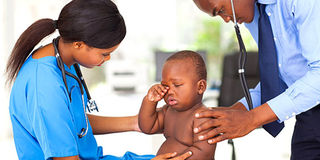
One of the risk factors for childhood cancers is being HIV-positive. HIV lowers a child’s immunity, making him or her vulnerable to cancers such as Kaposi’s sarcoma. PHOTO | FILE
What you need to know:
- Paediatric cancers progress rapidly, require specialised paediatric oncology expertise, and respond best to timely, intensive treatment.
- But in Kenya, specialised services are concentrated in a handful of tertiary hospitals, mostly in urban areas.
Childhood cancer in Kenya is a profound crisis that exposes critical weaknesses in our health system, social protections, and national priorities.
Over the past years, Kenyan health policy has rightly focused on fighting infectious diseases and improving maternal and child health. Yet, the growing attention to non-communicable diseases has not meaningfully translated into robust services for children with cancer. This neglect is not an abstract policy failure; it is a series of avoidable family tragedies.
Also read: Understanding childhood cancer in Kenya
Paediatric cancers progress rapidly, require specialised paediatric oncology expertise, and respond best to timely, intensive treatment. But in Kenya, specialised services are concentrated in a handful of tertiary hospitals, mostly in urban areas. The consequence is that many children from rural and marginalised communities endure long journeys, multiple referrals, and costly delays before they are seen by a specialist. This late presentation to care drastically reduces a child's chance of survival and makes treatment more complex and expensive.
The economic toll turns an already difficult situation into a catastrophe. The costs of diagnosis, chemotherapy, supportive medicines, transport, and accommodation near treatment centers quickly overwhelm families.
Even when public programmes subsidise core treatment, ancillary costs drive households into debt or force them to abandon therapy. Treatment abandonment is not a medical inevitability; it is a predictable outcome of poverty and a patchy social safety net.
To achieve equity, we must design systems that prevent families from being forced to choose between a child's survival and their own basic subsistence.
The harms extend beyond the physical. Children with cancer and their families suffer profound psychosocial strain- long hospitalisations separate children from school and peers, while painful procedures and uncertain prognosis cause lasting trauma.
Chronic fear
Parents and siblings live with chronic fear and financial stress long after treatment ends.
An effective response to childhood cancer, therefore, demands a holistic approach: accessible psychosocial support, school reintegration programmes, and caregiver networks that provide practical and emotional solidarity.
There are practical, high-impact steps that policymakers can take now. We must empower frontline health workers to recognise early warning signs—a persistent fever, unexplained lumps, abnormal bleeding, or prolonged bone pain —to reduce dangerous diagnostic delays.
Counties must strengthen their diagnostic capacity, particularly in pathology and imaging, to prevent unnecessary referrals. We must also establish clear referral pathways and improve travel and accommodation support for families, removing predictable non-medical barriers to care.
For long-term success, partnerships must be strategic and oriented toward sustainability. International donors, NGOs, and academic partners have been indispensable in building paediatric oncology capacity in Kenya, supplying training and equipment; and supporting patient care.
Short-term projects that are not embedded in a national strategy risk creating uneven services and dependence. The government must take the lead by integrating childhood cancer into national health planning, allocating predictable budgets for paediatric oncology, and coordinating partners around long-term capacity building: workforce development, supply chain reliability, and resilient data systems.
Data is the foundation of progress.. A national childhood cancer registry and investment in operational research would allow policymakers to track outcomes, identify geographic gaps, and measure the impact of interventions. Without reliable data, resources will be scattered and progress will be slow.
With good data, Kenya can adapt treatment protocols to local realities, scale what works, and concentrate limited resources where they will save the most lives.
Equity must be central. A child’s chance of survival should not depend on their county of residence, the education level of their parents, or family income. Decentralising basic diagnostic services, subsidising travel and lodging for families, and including paediatric cancer care under universal health coverage will narrow the gap between urban centres and underserved counties.
Social protection measures that prevent medical impoverishment are essential complements to clinical interventions.
Cultural factors also shape outcomes. Stigma, fear, and misinformation about cancer can delay care-seeking and isolate families. Community-based education in local languages, delivered by trusted leaders such as community health volunteers, teachers, and faith leaders, can dispel myths and encourage early referral. Amplifying the voices of survivors and their families, with consent and sensitivity, can reshape public perceptions and foster communal support.
Ultimately, responding effectively to childhood cancer is a matter of political will and moral clarity. Kenya has the professional talent, civic energy, and international partnerships needed to make rapid, measurable gains. What is needed is consistent prioritisation: predictable financing, integrated policies, workforce investment and an unwavering commitment to equity.
When a child survives cancer, a family is spared grief, communities retain hope, and the nation benefits from an investment in its future.
We must move from rhetoric to action by funding paediatric oncology units, training multidisciplinary teams, and embedding psychosocial and social protection services into standard care. This is achievable with deliberate planning. It is morally inexcusable to postpone. Kenya must act now to give every child a fighting chance.
This is achievable with deliberate planning and political commitment. It is morally inexcusable to postpone. Kenya must act now to give every child a fighting chance.
Mr Ochieng is the executive director at Hope for Cancer Kids. Ms Muthiora is the Board chairperson