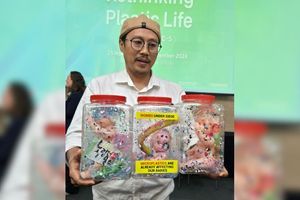
Microplastics found in every donkey tested in Lamu, sparking health fears
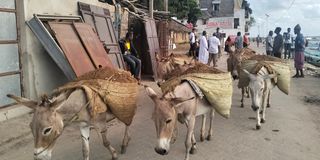
Donkeys carrying sand head to a construction site in Lamu Island.

What you need to know:
- The county’s donkeys, beloved by both culture and tourists, now face a grim reality: with their natural grazing lands disappearing, they are increasingly forced to scavenge for food at waste sites littered with plastic.
Veterinarians in Lamu have long warned that donkeys were dying from plastic ingestion. Now, a new study provides stark confirmation, finding microplastics in every single faecal sample tested.
Vets at The Donkey Sanctuary’s clinic have consistently raised alarms over numerous donkey deaths linked to suspected plastic-induced colic (abdominal pain).
The new research, conducted in collaboration with the University of Portsmouth’s Revolution Plastics Institute, The Donkey Sanctuary, The Flop Flopi Project, and the Kenyan Marine and Fisheries Research Institute, exposes the severe impact of plastic pollution on livestock, the environment, and human health in the coastal community.
Alarmingly, every cattle sample tested also contained microplastics, indicating the severity of plastic pollution across Lamu's livestock.
The county’s donkeys, beloved by both culture and tourists, now face a grim reality: with their natural grazing lands disappearing, they are increasingly forced to scavenge for food at waste sites littered with plastic.
Until now, most studies on plastic pollution have focused on marine life, leaving its impact on land-based animals largely unexamined.
“Most plastic pollution originates on land, yet its impacts on land-based animals remain chronically understudied. Our findings show how urgently this knowledge gap needs to be addressed,” said Prof Cressida Bowyer, deputy director of the Revolution Plastics Institute.
The researchers measured microplastics in donkey and cattle faeces, observed natural foraging behaviour, and surveyed residents to gauge their attitudes toward plastic pollution and donkey welfare.
The findings were stark: every single sample of donkey and cattle faeces contained microplastics. This confirms the long-held suspicions of vets at the Lamu clinic, who recorded 108 colic cases and 14 deaths in 2024; a trend continuing into 2025 with 91 cases and 16 fatalities so far.
The loss of donkeys cripples the island's economy. In a place with almost no motorised vehicles, donkeys are the essential engines of daily life, transporting everything from water and tourist luggage to building materials through the narrow streets of Lamu Old Town.
“When donkeys fall sick or die from ingesting plastic, it is not only a household loss but a disruption to the island’s entire transport system. Traders struggle to move goods. If we lost our donkeys, even construction projects would stall,” observed Mbwana Wallid, a businessman in Lamu.
Roam for food
Half of the surveyed donkey owners reported they could not consistently feed their animals due to fluctuating prices, leaving the donkeys to roam for food. Researchers analysing this foraging behaviour found that at least 5-10 per cent of items ingested at waste sites were plastic.
According to the researchers, the study, released on November 11, raises significant concerns for human health.
Microplastics consumed by animals can enter the food chain through meat, milk, or manure used as fertiliser, potentially contributing to inflammation, cancer, reproductive disorders, and other health issues in humans.
Instead of restricting donkey movements, researchers and community members are advocating for clean-up campaigns, improved waste disposal systems, and government investment in recycling and plastic alternatives.
“This study is a wake-up call for collective action to end the plastics crisis here in Lamu,” said Dr Obadiah Sing’Oei, programme manager at The Donkey Sanctuary in Lamu. “We see firsthand the terrible, but preventable suffering caused to donkeys. This research provides hard evidence of the scale of the problem. Together with our partners, we will continue working toward a joined-up solution to create a safer environment for all.”
Prof Leanne Proops of the University of Portsmouth issued a broader warning: “Pollution harms donkeys and livestock, which in turn affects human health and livelihoods.
Microplastics are now present across an entire animal population, with serious implications for the ecosystem. This problem extends far beyond Lamu and underscores the urgent need for holistic approaches to tackle the global plastic crisis.”