Ministry of health explores collaboration to end malaria in Kenya
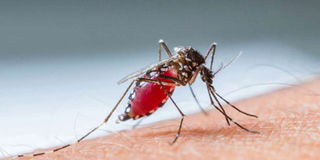
Turkana has transformed from a region of seasonal malaria outbreaks to an endemic malaria zone.

What you need to know:
- Last year, according to PS Muthoni, 22 counties had received 15.3 million nets in a bid to fight malaria after Kenya recorded a total of 5,447,220 malaria cases
- Distribution of mosquito nets has concluded in 13 counties
The Ministry of Health (MoH) is partnering with Malaria No More Japan as well as the Kenya Medical Research Institute (KEMRI) to monitor malaria drug resistance as well as conduct research on the effectiveness of mosquito ceiling nets.
Public Health and Professional Standards Principal Secretary Mary Muthoni says this is after scientists reported key mutations associated with Plasmodium falciparum resistance to sulfadoxine, pyrimethamine and chloroquine, which are used to make some malaria drugs as well as mosquito-based insecticides.
The exercise, PS Muthoni says, will start from Homabay and then move to other malaria-endemic areas around the country as MoH aims to leverage innovative interventions in high-burdened areas.
“The engagement reinforces ongoing efforts under the Kenya Malaria Strategy 2023-2027, including targeted innovations in high-burdened regions, research on ceiling nets in Homa Bay and strengthened partnerships with Kemri to advance diagnostics, drug resistance surveillance and evidence-informed policy making,” she told Healthy Nation.
This also comes after last year, Anopheles funestus, one of the major malaria vectors in the country, is genetically mutating to develop a resistance to a type of insecticide called dichloro-diphenyl-trichloroethane (DDT.
DDT was developed as one of the first modern synthetic insecticides in the 1940s. It was initially used to combat malaria, typhus, and other insect-borne human diseases among the military and civilian populations.
However, the insecticide was banned by the Kenyan government for use in livestock in 1976, was subsequently banned for agricultural spray in 1986, and was only restricted for use in disease vector control.
In a 2024 peer-reviewed study published in Molecular Ecology and led by the University of Glasgow and the Ifakara Health Institute in Tanzania, researchers found a mutation that is closely associated with resistance to DDT.
They explained that the discovery of ‘knock-down resistance’ (kdr) – a major insecticide resistance mechanism in insect pests – is the first time such a mutation has been documented in this species, which is a major vector for malaria transmission in Eastern and Southern Africa.
The ‘kdr’ mutation was found while the researchers were conducting whole-genome sequencing across multiple mosquito populations in Tanzania to better understand genetic variation in Anopheles funestus populations.
This means that the mutation's emergence may be linked to a widespread contamination and historic stockpiles of DDT, a banned insecticide no longer in use, but which continues to affect the environment.
“Our discovery raises concerns for the effectiveness of current malaria control methods, which rely heavily on insecticides. Understanding the development of insecticide resistance is key to combating malaria, a disease that kills hundreds of thousands of people annually, mostly in Africa,” Joel Odero, the lead author of the study, told Healthy Nation.
Fredros Okumu, a Kenyan parasitologist and entomologist, described this as a timely move.
“An urgent follow-up study is required to monitor the evolution of vector DDT resistance and determine whether this type of resistance could occur in other insecticide families which are currently being rolled out in products across the African continent.”
Currently, chemical insecticides are central to the control of agricultural pests and disease vectors, such as mosquitoes.
The control of Anopheles mosquitoes through the distribution of more than 2.9 billion insecticide-treated bed nets (ITNs) has helped avert an estimated 633 million malaria cases, a disease that still claims at least 600,000 people yearly.
A key obstacle to sustainable malaria control, however, is the evolutionary arms race between mosquitoes and insecticide-based mosquito control, the researchers point out.
Last year, according to PS Muthoni, 22 counties had received 15.3 million nets in a bid to fight malaria after Kenya recorded a total of 5,447,220 malaria cases, with Busia County leading with 231,307 cases.
The health ministry, while citing Budalangi, observed that cross-border transmissions along the Busia border, drug-resistant malaria parasites and climate change, which brings about unpredictability of rain patterns and floods, are the key drivers fueling the surge in malaria infections in the country.
According to the ministry data from routine monitoring of insecticide sensitivity and changes, as well as continuous generation of evidence on mosquito behaviour, shows that insecticide resistance by mosquitoes and changes in biting behaviours are another headache the country is grappling with as efforts to eliminate malaria for good intensify.
“Busia has a malaria prevalence of 38.5 per cent against a national prevalence of 6 per cent, which is why we embarked on high-impact indoor residual spraying (IRS) was introduced and which saw 95 per cent of target structures sprayed in March this year,” she said.
“Distribution of mosquito nets has concluded in 13 counties, namely Homabay, Kisii, Nyamira, Kisumu, Siaya, Migori, Mombasa, Kwale, Tana River, Lamu, Taita Taveta, Kakamega, Vihiga and Bungoma,” PS Muthoni told Healthy Nation.