Nairobi Hospital board orders austerity measures as costs surpass revenue
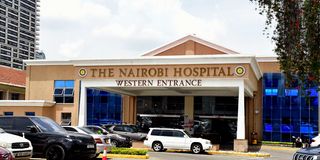
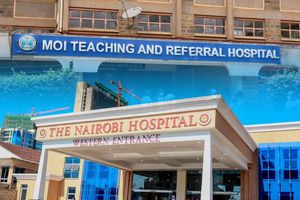
The Nairobi Hospital western Wing entrance as pictured on March 19, 2026.

What you need to know:
- Operating costs have outpaced income, pushing the cost-to-income ratio to 105.9 per cent and driving both earnings before interest and taxes and net profit margins into negative territory, at -5.6 per cent and -5.9 per cent respectively.
The Nairobi Hospital has suspended new recruitment, international travel, and non-clinical staff training with immediate effect following a directive from its Board of Management warning that operating costs have "outgrown what our revenue can sustainably support."
Management has also been instructed to ensure that all future transactions are necessary, essential, and demonstrably beneficial to the hospital.
The directive is contained in an internal memo dated August 28, 2026, titled "Immediate Cost Containment and Austerity Measures." Signed by Board Chairman, Dr Barclay Onyambu, the memo was addressed to the chief executive officer, the senior management team, and the wider Board.
The document highlights several troubling financial indicators. According to the memo, the hospital is spending more than it earns, although its overall debt remains manageable. Its liquidity position is weak, with a current ratio of 0.91 and a quick ratio of 0.68, indicating insufficient short-term assets to comfortably cover upcoming obligations.
Operating costs have outpaced income, pushing the cost-to-income ratio to 105.9 per cent and driving both earnings before interest and taxes and net profit margins into negative territory, at -5.6 per cent and -5.9 per cent respectively. Despite these operational losses and cash flow pressures, the hospital's debt burden remains relatively controlled, with a debt-to-equity ratio of 0.54 and debt accounting for 37.4 per cent of total assets.
"All new recruitment and employment are hereby suspended, except where expressly authorised by the Board. No department or manager should commit the hospital to a new employment obligation without prior board approval.
Replacement of staff, creation of new positions, expansion of the establishment, and engagement of additional personnel must all be subject to this requirement," said Dr Onyambu.
He added: "All international travel undertaken for work purposes is hereby suspended, unless expressly authorised by the Board. Requests for exceptional travel must demonstrate clear institutional necessity, measurable benefit to the hospital, and justification for the expenditure. All training expenditure for non-clinical staff is hereby suspended pending review by the Board. Training that is mandatory for regulatory, statutory, patient-safety, or essential operational requirements should be brought to the Board for consideration where necessary. Clinical training required to maintain safe and competent patient care should continue, subject to appropriate financial discipline."
Beyond these specific freezes, the Board has directed senior managers to review discretionary spending across procurement, overtime, contracted services, utilities, meetings, and consultancy, testing every expense against one question: Is it essential, necessary now, and demonstrably beneficial to the hospital?
Management has also been instructed to produce a monthly cost-containment dashboard tracking actual expenditure against budget by department and category, savings achieved against the 2026 budget, and progress on reducing the cost-to-income ratio. The first dashboard is due at the next Board meeting, with "measurable progress" expected within 90 days.
"We are generating significant revenue, but we are spending more than we are earning in operating income. This is the principal issue that must now be addressed. The Board considers the current situation serious but entirely capable of being corrected. The hospital is not being asked to undertake indiscriminate cuts that could compromise patient care. Rather, management is required to identify and eliminate expenditure that is unnecessary, non-essential, poorly controlled, or insufficiently justified," the memo stated.
The staff
It further read: "We recognise that our greatest asset is our staff. The measures set out in this communication are not aimed at undermining the commitment or dedication of our workforce. Rather, they are aimed at ensuring that the hospital remains a sustainable employer, capable of honouring its obligations and rewarding staff for their contributions. A hospital that cannot control its costs cannot guarantee its future, and a future without financial stability serves no one, not our patients, not our staff, and not our members."
According to Dr Onyambu, the measures "shall remain in force until the hospital's financial indicators and key financial ratios demonstrate sustained stability and an acceptable level of financial resilience, as determined by the Board." The Board will review the hospital's financial performance and the effectiveness of the measures every three months, and may then "relax, extend, or strengthen individual measures as appropriate."
"The measures will not lapse solely because a specified period has elapsed. They will remain in force until the Board is satisfied that the hospital's financial position has stabilised," the memo added.
Beyond cost containment, management has also been tasked with boosting revenue. Planned initiatives include converting multi-bed wards into private, ensuite rooms to raise bed occupancy and maximise billing; strengthening relationships with medical consultants to encourage more referrals; sharpening the focus on cancer care; and improving collection efficiency, particularly on receivables from the Social Health Authority (SHA) and other payers.
Dr Onyambu sought to temper the severity of the message, stating that the memo "should not be interpreted as a declaration that The Nairobi Hospital is financially unstable or facing an existential crisis."
"The hospital has significant strengths: a strong revenue base, substantial clinical capacity, an established reputation, and a resilient patient market. The immediate challenge is that our operating cost structure has outgrown what our revenue can sustainably support. This is a problem we can solve. If we restore discipline in expenditure, improve productivity, eliminate waste, and ensure that every shilling spent creates appropriate value, the hospital can return to sustainable profitability and rebuild its cash position," he said.
However, the hospital's Chief Executive Officer, Felix Osano, insisted the facility remains financially sound and is not, in his words, "in a crisis." He said the memo should be understood against the backdrop of a prolonged Annual General Meeting (AGM) process, which had been delayed by a court case earlier in the year before proceeding successfully. Five new board members joined the institution at the AGM, alongside the unopposed re-election of the board chair, Dr Onyambu, and the vice-chair.
"After the AGM, the first business of the board is to assemble and elect the chair and the vice-chair," Osano said, describing the memo as the new board's way of directing management "to areas of priority that need to be focused on."
Addressing claims that the hospital is spending more than it earns, Osano said the hospital makes an average of Sh1 billion in monthly revenue and recorded Sh1.4 billion in August, a stronger-than-average month, by his account. He explained that about 90 per cent of patients' claims are billed to insurers, with invoices typically settled around 90 days after billing, while monthly collections fluctuate between just under Sh900 million and about Sh1 billion.
On debt, he said the hospital had paid Sh4.1 billion to vendors since January, while payers owed it Sh3.3 billion. Overdue supplier obligations stood at Sh1.2 billion in December 2025 and have since been reduced by Sh272 million to roughly Sh1 billion.
"As patients consume services on credit, I'm also consuming materials on credit," he said, describing the balance as a daily moving figure rather than a fixed shortfall.
On the austerity measures outlined in the memo, Osano explained that the travel moratorium applies "to everyone from the board to all staff," while the recruitment freeze targets non-clinical roles only, with exceptions considered case by case.
"If someone leaves, a doctor leaves, and we need them, we replace them. But we are not firing anybody. We are not doing retrenchment. What we are going to do, however, is that we are going to try and optimise the workforce that we have," said Osano.
"We are not in a financial crisis. The hospital's monthly staff payroll stands at Sh375 million, paid without delay on the 24th of each month. The hospital continues to meet its statutory obligations, staff payroll, and vendor payments as they fall due. We also have investments, combining fixed deposits with banks and a bond portfolio worth about Sh1.54 billion, as a fallback plan should the hospital's obligations ever become significantly more stretched. Do I think from the numbers that I have that I'm reaching there soon, or am I likely to reach there? Absolutely not," said the CEO.
Osano said the hospital is simultaneously pursuing expansion. Plans include repurposing its standalone Covid-19 isolation facility, used during the pandemic and inspected by United Nations officials as recently as the Ebola scare, into a potential mother-and-child or paediatric hospital, to address bed shortages for admitting children.
He also pointed to a new partnership with SHA to receive cancer patients referred from Kenyatta National Hospital whenever its cancer treatment machine is down, alongside investment in a PET scan machine costing an estimated $10 million, as part of a broader strategy to expand oncology and specialist care and grow the hospital's revenue base.
Osano added that the hospital is also setting its sights on medical tourism, expanding its capacity to serve patients travelling from outside Kenya for specialised cardiology, oncology, and renal care. He said the hospital has taken up space in a nearby building to offer serviced apartments for medical tourists and their families during treatment.