New at-home saliva test to help detect prostate cancer
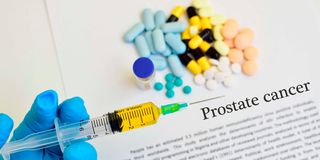
Prostate cancer occurs when there is an abnormal growth of cells in the prostate area, which is part of the male reproductive system and is responsible for making semen. It is located just below a man’s bladder.

What you need to know:
- More than half of the participants (or 55 per cent) were found to have prostate cancer, with about 20 per of them who got cancer treatment.
Men will be able to test for prostate cancer at the comfort of their home, just by using their saliva –a new study has found.
Prostate cancer occurs when there is an abnormal growth of cells in the prostate area, which is part of the male reproductive system and is responsible for making semen. It is located just below a man’s bladder.
UK-based scientists, who published their findings in the New England Journal of Medicine, say that the saliva-based method allows for an analysis of a man’s DNA ,which can indicate their risk of getting prostate cancer. The scientists call this phenomenon a polygenic risk score.
More than half of the participants (or 55 per cent) were found to have prostate cancer, with about 20 per of them who got cancer treatment.
With over 6,000 participants in the study, those who had a high risk score (the 90th percentile or higher), the study found the saliva method was a better tool than the blood test, which measures levels of a protein called prostate-specific antigen (PSA).
“Criticisms of PSA testing as a screening tool include a high rate of false positive results, over diagnosis, complications associated with prostate biopsies, and overtreatment of low-grade disease,” the study explains.
A statement from the Institute of Cancer Research in the UK shows that two men –one who was in the study, and his younger brother who was not part of the study, were found to have cancer just by using the spit test. Their results were genetically inclined.
“With this test, it could be possible to turn the tide on prostate cancer. We have shown that a relatively simple, inexpensive spit test to identify men of European heritage at higher risk due to their genetic makeup is an effective tool to catch prostate cancer early,” said Ros Eeles, Professor of Oncogenetics at the Institute of Cancer Research, London, and Consultant in Clinical Oncology, in a statement.
“Building on decades of research into the genetic markers of prostate cancer, our study shows that the theory does work in practice – we can identify men at risk of aggressive cancers who need further tests and spare the men who are at lower risk from unnecessary treatments,” he added.
Prof Eeles said that an update test dubbed PRODICT will be rolled out to diverse populations – as Black men are twice as likely to develop prostate cancer – and those from younger age groups,
“Those with a genetic predisposition are more likely to be diagnosed at younger ages. We are also currently comparing the saliva test to other potential screening options, as part of the TRANSFORM trial, to assess the most cost-effective and accurate way to screen men for prostate cancer,” he said.
Naser Turabi, director of Evidence and Implementation at Cancer Research UK, said while an internationally recognised method for prostate cancer is still not available, their study helps in early detection of the disease in those people who need treatment.
“It’s encouraging to see that genetic testing might help to guide a more targeted approach to screening based on someone’s risk of developing prostate cancer. More research is now needed to confirm if this tool can save lives from the disease so that it can be rolled out to improve diagnosis,” he said.