New potato variety breaks cycle of blight and debt for farmers
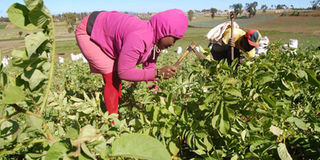
Potatoes are sensitive to diseases such and blights which also thrive under the wet cold climates adapted for potato production. FILE PHOTO | NATION MEDIA GROUP

What you need to know:
- Late blight costs billions of dollars every year in lost production.
- This new resistant variety can reduce losses, cut costs, and strengthen food security.
Nearly two centuries after the Irish Potato Famine, the devastating late blight disease continues to plague farmers worldwide, costing up to USD $10 billion in lost crops every single year.
Now, a breakthrough from the International Potato Center (CIP) in Peru offers a turning point for farmers.
A new potato variety named CIP-Asiryq promises to help smallholder farmers combat the disease and build resilience against climate change. It was unveiled ahead of the COP30 climate conference happening in Brazil.
Developed through a collaboration of scientists, indigenous communities, and international gene banks, the new variety is resistant to late blight and offers multiple advantages that could transform the livelihoods of farmers globally.
“Late blight costs billions of dollars every year in lost production. This new resistant variety can reduce losses, cut costs, and strengthen food security in Peru and around the world,” said Dr Stefan Schmitz, executive director of Crop Trust. The International Potato Center (CIP) is a research-for-development organisation specialising in potatoes, sweet potatoes, and Andean roots and tubers. CIP delivers science-based solutions to improve access to nutritious food, foster sustainable business growth, and build climate resilience within root and tuber agri-food systems.
Headquartered in Lima, Peru, CIP maintains a research presence in more than 20 countries across Africa including Kenya, Asia, and Latin America.
CIP-Asiryq derives its resistance from Solanum cajamarquense, a wild potato relative conserved in the CIP gene bank in Lima, which holds the world's largest collection of potato diversity.
According to Dr Schmitz, this genetic treasure trove, safeguarded for decades, provided the key to developing a variety that requires fewer fungicide sprays, cooks 25 per cent faster than conventional varieties, and meets quality standards for both home cooking and the potato chips industry.
Dr Thiago Mendes, a CIP scientist and leader of the Biodiversity for Opportunities, Livelihoods and Development (BOLD) project—the center’s potato pre-breeding initiative — highlighted the reprieve the new variety will bring to farmers.
Major threat
Noting that late blight is a major threat to Kenyan potato farmers, Dr Mendes said the new variety could offer a lasting solution if widely adopted.
“Late blight has been a huge burden to potato farmers everywhere, so the development of a resistant variety is a major milestone for food systems worldwide,” said Dr Mendes, adding, “CIP-Asiryq is also remarkable for its versatility. Farmers in Huánuco (a city located in the central highlands of Peru) have noted its potential for both fresh consumption and processing, giving producers more flexibility to meet market demand.”
Late blight’s toll on farmers is staggering. In Peru, the disease can wipe out half; or even all of a harvest. Many farmers resort to spraying fungicides up to six times a month, spending as much as a quarter of their income while exposing themselves and the environment to chemical risks.
By reducing the need for costly chemical sprays, CIP-Asiryq could save farmers money and help them adapt to shifting climatic conditions that are driving diseases to higher altitudes. For rural communities that depend on potatoes as a staple food and key income source, the new variety represents more than higher yields as it offers greater food
and financial security.
“This variety was developed for fresh consumption, but it also performs well for processing,” said Raul Ccanto of Yanapai Group, a local partner in the variety’s development. “Small-scale farmers will be happy to earn more by selling to this market, and so will the processing companies.”
Irish potatoes are ranked as the second most important food crop in Kenya after maize. A key staple and cash crop, they are central to the economy and employment. Their popularity is particularly evident in urban areas, where they are widely used to make chips.