Not free, after all: Hidden costs in Ruto primary healthcare plan
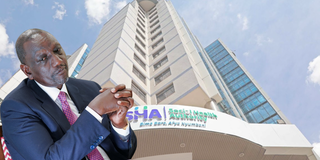
Despite President Ruto's repeated promise and Health CS Duale's affirmations that outpatient services are free under the Social Health Authority (SHA) for registered Kenyans, a nationwide investigation revealed a stark gap between policy and practice.

President William Ruto has made the promise so many times it has become a familiar refrain: Kenyans seeking outpatient services in dispensaries up to sub-county hospitals will receive treatment free of charge. Each time, he warns health facilities of dire consequences should they demand payment from patients.
On August 10, Health Cabinet Secretary Aden Duale reaffirmed the pledge on his official Facebook page, posting one of many clips of the president making the same pronouncement. The message was unequivocal: register with the Social Health Authority (SHA) and access free outpatient services.
Weeks of investigations by the Nation across the country, however, reveal a starkly different picture. Nation found dispensaries without basic drugs, laboratories without reagents, and patients sent away clutching prescriptions instead of medicine. Families travelled long distances to seek help, only to be told to buy painkillers or antibiotics from private chemists.
The Coast: A mixed reality
Mwembe Tayari dispensary in Mombasa offers a window into the gap between policy and practice. A spot check revealed treatment for registered SHA members was not entirely free, while unregistered patients were being turned away.
A haemogram test—which screens for anaemia, haematological cancers, infections, acute haemorrhagic states, allergies, and immunodeficiencies—carried a Sh400 charge.
Payments went through mobile money; patients received receipts. Other routine tests, including malaria screening, urinalysis, and blood sugar checks, were offered at no cost.
Medication proved equally inconsistent. Some drugs were provided free; others were out of stock.
Kashmir Dispensary on Lamu Island adds another layer. Patients pay Sh30 for a branded exercise book where prescriptions are written.
"Those visiting our dispensary for the first time are always treated since some aren't aware of the new changes in SHA," an official at the facility explained. "After that, we advise them to go and register immediately."
The dispensary handles common ailments—colds, flu, antenatal care, family planning and immunisation services. Laboratory tests and other treatments are referred elsewhere.
Shella-Mararani Dispensary offers free laboratory tests, but Clinton Ngonyo, a Mararani resident, describes a familiar frustration: "However, most of the drugs prescribed are not available, so we have to buy them from private chemists."
Lamu Deputy Governor and County Health Executive Dr Mbarak Bahjaj noted that even before the presidential directive, their dispensaries were offering free services through a county-specific initiative that enables hospitals to provide free treatment.
"At the dispensary level, SHA registration is enough," Dr Bahjaj said. "For Level 4, registration must be followed by payment of the SHIF premium."
The Rift Valley: Free consultations, paid medicine
Megwara Dispensary in Siana, Narok West, presents yet another variation. Despite the presidential order, patients are still being asked to pay for certain services.
Some were charged for laboratory tests and maternity services if they lacked active SHA cover. Others were told to buy medicines from private chemists because essential drugs were out of stock.
Joseph K, a resident, had to buy painkillers outside the facility after being told they were unavailable.
Health facilities in the North Rift revealed free services are far from guaranteed. Drug shortages plague facilities such as Kaptimbor in Baringo and dispensaries across Trans Nzoia County. While consultations and admissions carry no charge, patients are forced to buy essential medication from private chemists.
In Trans Nzoia County, the pattern holds. No charges for consultations or admissions, but reality shifts at the pharmacy counter. Frequent drug stock outs mean patients are routinely sent to private chemists.
"Patients get drugs if county supplies are available," said Cyprian Nyakundi, Trans Nzoia chairperson of the Kenya National Union of Nurses and Midwives. "When they are not, we have no choice but to send them to private pharmacies."
Baringo County tells the same story—free services, persistent drug shortages.
Kaptimbor Dispensary near Kabarnet shows good intentions meeting harsh realities. Staff members know the president's order and request no payments. Patients receive help registering for SHA and get consultations without financial barriers.
"We don't ask patients to pay," said a health worker who requested anonymity. "If they're not registered with SHA, we help them register and still serve them."
Yet, critical drug shortages undercut the quality of care. During the visit, only one of three prescribed drugs was available. The rest had to be purchased elsewhere.
Turkana: A rare bright spot
Nabulon Dispensary in Turkana County offers an exception. Patients like Ms Akutan Loger reported consistent access to free care, even without making SHA contributions. Staff confirmed most locals had been registered by community health promoters, ensuring access to treatment.
Turkana County Chief Officer for Medical Services Mr Gilchrist Lokoel said drugs are available where proper requisitions have been made.
"Kemsa seals all consignments and delivers them directly to facilities," he said. "It's up to facility heads to ensure they request what they need."
Nyanza: The entry fee
Most health facilities across Siaya now offer free outpatient services with one exception: first-time patients pay Sh50 for a hospital card.
"I was diagnosed with malaria, and I did not pay for the laboratory tests," said 46-year-old Mary Awino from Karapul village in Siaya town. "The only thing I had to purchase was the medications that were not available at the hospital. I was given what they had and advised to buy the rest elsewhere."
Patients expressed concern over persistent shortages of essential medicines, forcing them to seek drugs from private chemists outside the hospital grounds.
Makongeni Sub-County Hospital in Homa Bay County adds its own twist. Patients pay Sh60 for a branded booklet to keep health records.
Ms Sarah Akeyo, a registered SHA member, was surprised when her husband spent more than Sh1,300 at the facility for laboratory tests when their two-year-old daughter fell sick.
"I came to the facility with just Sh50, which I had intended to use as our fare back home," she said. "I had to call him to help me pay the bill."
Central Kenya: The medicine gap
In Nakuru County, most patients complained that while services were free after paying Sh20 for a booklet, they had to buy medicine out of pocket.
"I paid a meagre Sh20 for the booklet, but I had to spend close to Sh1,000 to buy the prescribed medicines because the health facility did not have them," one patient said.
What the policy says
The Primary Health Care Fund is one of three under the new social health scheme, alongside the Social Health Insurance Fund and the Emergency and Chronic Illness Fund. Unlike SHIF, which relies on member contributions, the PHC and Emergency Funds are fully financed by the exchequer.
According to Health CS Duale, the free services cover "consultation, diagnosis, treatment, prescribed laboratory tests, basic radiological exams—X-rays and ultrasounds—prescription processing, drug dispensing, health education, management of chronic and acute illnesses, NCDs, STIs including HIV/Aids, mental health care, immunisation, reproductive and maternal health services, child health care and minor outpatient procedures."
He urged Kenyans to report any co-charging for these services to the Ministry's Call Centre via 147.
The official response
On Friday, October 10, a Nation reporter called the ministry's hotline—147. It went to a call centre. The reporter stayed on the line for more than five minutes before a representative picked up the phone. On the hospital booklet charges cropping up across counties, the representative said that is not covered under SHA. On facilities asking for out-of-pocket fees for laboratory tests or sending patients to buy prescribed medicine elsewhere, she said, "The patient should call us while at the facility so we can speak to the hospital administration to understand why that is happening. But no patient should pay."
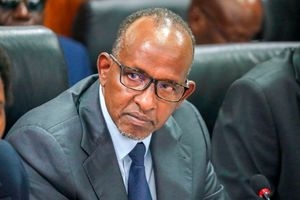
Nation contacted Dr Abdi Mohamed, SHA chairperson, who insisted that all outpatient services in public contracted hospitals are free and no patient should pay.
The pattern emerges clearly across the country: free healthcare remains a promise.
- Reporting by Mishi Gongo, Siago Cece, Kalume Kazungu, Tobby Messo, Evans Jaola, Florah Koech, Oscar Kakai, Sammy Lutta, Kassim Adinasi, George Odiwuor, Waikwa Maina, Mercy Koskei and Lilys Njeru.