One in three widows may get HIV after losing their husbands, study finds
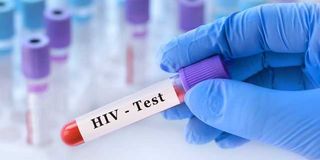
An HIV test kit. Widowhood exposes young women to increased infection risks.
What you need to know:
- A study of 480 widows in Siaya suggests that at least one in three women living with HIV may have acquired the virus after their husbands died.
- Young widows face heightened HIV risks through sexual cleansing, widow inheritance and condomless sex, with poverty and property insecurity limiting their ability to negotiate safer relationships.
For years, studies assumed a widow with HIV caught the virus from her dead husband. A study in Siaya suggests that is not always so.
One in three widows living with HIV in Gem, Siaya, may have acquired the virus after becoming widows, the study has shown.
The researchers warn that the evidence is not conclusive. According to them, the paper, published in the journal Global Health Action in June this year, is one of the first attempts to determine when widows may have contracted HIV. Past studies mostly assumed the virus was transmitted by the deceased husband.
"Yet at least a third of the widowed women with HIV in our study may have been infected after widowhood," the report says.
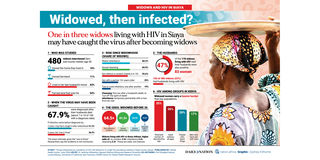
The study was done in Gem, which is the researchers' study area, and it interviewed 480 widows. Of these, 168 were living with HIV and had a diagnosis date in their medical records. Of the 168, 67.9 per cent, about seven in every 10, were diagnosed after their husbands died.
The study is titled "Young widowhood as a predictor of HIV risk behaviours in a high HIV prevalence setting in Siaya County, Kenya". It was led by Dr Jackline Odhiambo, founder and executive director of Nyanam Widows Rising and a researcher at Maseno University.
The paper was co-authored by Prof Elizabeth Bukusi of Kemri and Maseno University and Louisa Ndunyu of Nyanam Widows Rising and Maseno University, with the University of California, San Francisco, and Kemri's Centre for Global Health Research in Kisumu.
Nobody can say exactly when a person caught HIV, so the researchers worked backwards, using a method commonly applied in HIV studies. Studies in sub-Saharan Africa find that people are usually diagnosed two to five years after infection, and the researchers assumed the same.
Using this approach, the paper estimated that if infection came two years before diagnosis, 51.2 per cent of the widows with HIV may have caught it after their husbands died. If it came five years before, the figure falls to 36.9 per cent. The "one in three" comes from the lower estimate.
Of the 480 widows, 105 (22 per cent) had husbands who were living with HIV. Among the 168 widows who were also HIV positive, 83 (47 per cent) said their husbands were too. "This information came from the women themselves," Dr Odhiambo said.
Also read: HIV is on the rise among ‘neglected’ men and women over 40 – lessons from Kenya, S. Africa
According to the study, sexual cleansing and widow inheritance are cultural practices through which women tend to get infected. Sexual cleansing is the first sex after a husband's death, believed to cut the widow off from the spirit of death. Widow inheritance is a temporary partnership between the widow and a man from her late husband's clan.
About 60 per cent of the women had gone through sexual cleansing and 60.2 per cent through widow inheritance. The researchers found that both practices were closely associated with condomless sex. Fifty-six in every 100 widows, nearly six in 10, reported having sex without a condom after their husbands died.
The paper says inheritance is changing. It once meant a relative of the dead man, but now it can mean a non-relative, even a professional inheritor, and earlier research linked that pattern to higher HIV prevalence than inheritance by relatives.
Thirty-five per cent of the women had sex with a partner at least 10 years older, and 19 per cent had two or more inheritors, one after another.
In Kenya, 35 per cent of widowed women of reproductive age are living with HIV. For adult widows of all ages, it is 26 per cent. That is higher than the rate among men who have sex with men (17 per cent) and people who inject drugs (20 per cent).
The women in the sample were not young. Their median age was 58, and most had finished only primary school. Only 16 per cent owned the home they lived in and 11 per cent owned farmland. Sixty-three per cent lived in a home that belonged to their dead husband, and 54 per cent farmed land that was his.
"Most of these women owned neither the house nor the land. A young widow in that position, facing a practice that calls for sex without a condom, has little room to bargain over risk," the paper says.
The researchers compared women widowed young with those widowed at 60 or older. A woman widowed before 30 had 64.5 times higher odds of condomless sex. Her odds of widow inheritance were 34.5 times higher, and of sexual cleansing 41.5 times higher. Her odds of sex with an inheritor who already had a wife were 16.8 times higher.
"An older widow can use her age to argue her way out of these practices. A young widow has less room to refuse. She may also want a new husband, more children or a father figure for the children she has. Inheritance gives her none of the rights of remarriage," Dr Odhiambo said.
Widows who already had HIV were also more likely to go through the same practices. Their odds were 2.9 times higher for condomless sex, 3.4 times higher for inheritance and 3.2 times higher for cleansing.
Sex for gifts
Earlier interviews had pointed to money as a driver, with widows pushed into sex for gifts or sex work after losing income or property.
The researchers are calling for HIV testing, pre-exposure prophylaxis and condom use within cultural practices to be promoted and studied, particularly soon after women are widowed. They also want safer pathways to remarriage that do not expose women to risky cultural practices.
"We need other remarriage options that give widows stable relationships. There is need for safety and income support for widows exposed to violence or sex for money," Dr Odhiambo said.