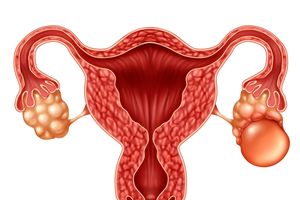
PCOS gets a new name, and doctors say it's long overdue

Polycystic Ovary Syndrome (PCOS) is a common hormonal condition affecting women of reproductive age.

What you need to know:
- Today, the condition affects roughly 170 million people worldwide, and an estimated up to 70 per cent of patients remain undiagnosed.
- As many as 85 per cent suffer from insulin resistance and face a higher risk of type 2 diabetes, obesity, and fatty liver disease, yet they are not routinely screened for these conditions.
For decades, millions of people have been diagnosed with polycystic ovary syndrome (PCOS), a name, it has now emerged, that was never quite right. According to a global science consortium, the condition is now known as polyendocrine metabolic ovarian syndrome (PMOS).
The announcement was made at the European Congress of Endocrinology in Prague following 14 years of collaboration between healthcare experts, patients, and advocates.
Also read: Fertility: Ovaries play a key role in reproductive decline, new research shows
For Dr Felix Oindi, a consultant gynaecologist and obstetrician at Aga Khan University Hospital, the news came as no surprise.
"My initial reaction was that the change was long overdue and scientifically justified," he says. "The new term better reflects the reality that this is a complex hormonal and metabolic condition affecting multiple body systems, not just the ovaries."
A misconception that became a name
The story of how PCOS got its name illustrates how early science and its blind spots can shape medical understanding for generations.
In 1935, two Chicago surgeons investigating infertility noticed that their patients' ovaries were enlarged and contained numerous small, cyst-like structures. When these were surgically removed, some patients resumed regular menstrual cycles. Those "cysts" became the defining feature of the diagnosis.
But they turned out to be something else entirely: ovarian follicles that had simply stopped growing. Today, we know these underdeveloped eggs are not unique to PCOS, do not require surgical removal, and, in some patients, are not even visible on ultrasound.
Dr Oindi explains why the old name caused ongoing confusion. "For many years, the term 'polycystic ovary syndrome' was misleading because many women with the condition do not actually have ovarian cysts, while others may have polycystic-looking ovaries without having the syndrome itself."
Terhi Piltonen, a Finnish obstetrician and gynaecologist involved in the global renaming effort, echoes this concern. She notes that the focus on ovaries meant that symptoms many women experience such as those related to weight, metabolic problems, mental distress, and skin issues were ignored.
More than just a reproductive condition
One of the most persistent and damaging misconceptions about the condition is that it is purely a reproductive issue. While it can lead to irregular periods, abnormal ovulation, excess hair, acne, and sometimes infertility, it is also associated with significant endocrine, metabolic, psychological, and dermatological symptoms. Many of these can persist well beyond a person's reproductive years.
Today, the condition affects roughly 170 million people worldwide, and an estimated up to 70 per cent of patients remain undiagnosed. As many as 85 per cent suffer from insulin resistance and face a higher risk of type 2 diabetes, obesity, and fatty liver disease, yet they are not routinely screened for these conditions.
"In clinical practice, we see many women struggling not only with irregular periods and fertility challenges, but also with weight gain, insulin resistance, diabetes risk, acne, excess hair growth, cardiovascular concerns, and even mental health effects," says Dr Oindi. "Yet, the old name tended to focus attention mainly on the ovaries."
From a medical perspective, he believes the name change is an important step towards improving public understanding, reducing misconceptions, and encouraging a more holistic approach to care.
Fighting for recognition
For those living with the condition, the renaming represents more than a semantic shift. Patient advocate Lorna Berry, who worked on the initiative, expresses the frustration of many: for decades, people with this condition have had to fight for a diagnosis, and misinformation remains widespread even after diagnosis.
The team behind the initiative described the term "PCOS" as having long been recognised as inaccurate and potentially harmful, noting that it reflects only one organ and fails to capture the disorder's multisystem nature.
Dr Oindi emphasises that doctors have a responsibility to communicate this change carefully and sensitively.
Also read: Understanding polycystic ovary syndrome
"Many women have spent years trying to get a diagnosis, and some may worry that the new name means their condition has changed or that they were misdiagnosed all along," he says. "It is important for healthcare professionals to reassure patients that the condition itself has not changed, but rather our understanding of it has evolved."
He views the transition as an opportunity to educate patients further, helping women understand that the condition can affect metabolism, hormonal balance, long-term cardiovascular health, mental well-being, and fertility, not just the reproductive system.
What this means for Kenya
Like many healthcare systems globally, Kenya has been influenced by the limitations of the old name. In many settings, the condition has traditionally been approached primarily as a fertility or menstrual disorder, particularly within gynaecology clinics.
"In reality, many women with PMOS require multidisciplinary care involving gynaecologists, endocrinologists, nutritionists, dermatologists, mental health professionals, and primary care physicians," says Dr Oindi. "We are increasingly recognising the importance of screening for insulin resistance, diabetes, hypertension, obesity, sleep disorders, and mental health concerns alongside reproductive symptoms."
However, he acknowledges that more work remains locally.
"Public awareness remains limited, and many women are diagnosed late, after experiencing symptoms for years. The new terminology may help shift the focus towards earlier diagnosis, lifestyle interventions, metabolic screening, and long-term preventive care, rather than focusing solely on fertility."
The next step
Over the next three years, the strategy is to educate the global public on PMOS and convince international classification bodies to stop using the term
"PCOS." During this transition period, the terms will remain interchangeable, with the ultimate goal being for the World Health Organization (WHO) to update the term in its International Classification of Diseases, a framework followed by 195 nations, including Kenya.
The rationale for the name change and the implementation strategy have been set out in a health policy paper published in The Lancet.
Dr Oindi believes local professional bodies must act swiftly to spearhead the transition.
"Organisations such as the Kenya Obstetrical and Gynaecological Society have an important leadership role to play," he says. "They should start raising awareness among healthcare professionals through conferences, continuing medical education events, webinars, and updated clinical guidance documents.
Collaborating with medical schools and postgraduate training programmes is important to ensure future healthcare workers are trained using updated terminology."
He adds that once the WHO formally adopts PMOS, local societies should support a structured transition across hospitals, insurance systems, laboratory reporting, and national treatment guidelines to ensure consistency throughout the healthcare system.
For the millions of people managing this condition, the hope is that a more accurate name will lead to faster diagnoses, better-informed physicians, and finally, recognised and covered treatments that address the condition properly.