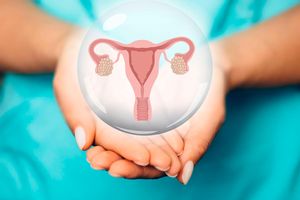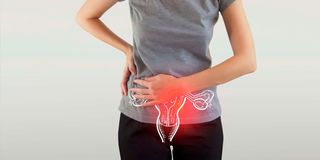
Polycystic Ovary Syndrome (PCOS) is a common hormonal condition affecting women of reproductive age.

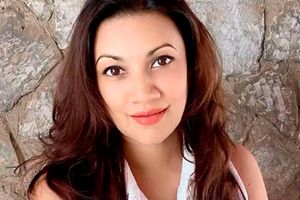
Rose Wambui, 40, is a seasoned finance professional who has lived with Polycystic Ovary Syndrome (PCOS) for years. Her periods have never been regular since she was 14 years old.
“I first heard about PCOS in 2012. I had just gotten married and was struggling to conceive. My periods would disappear for four or five months, then come back,” she says.
Six months after her wedding, she visited a gynaecologist, who told her she had cysts in her ovaries. A cyst is a small pocket of tissue often filled with fluid or pus. Being light-skinned, she had developed severe acne on her cheeks and forehead.
“I had such bad acne that I would get stopped in town by random people who would give me suggestions on how to treat it. They recommended all manner of things, including pawpaw juice,” she says.
Conceiving was a huge struggle, as her body was not producing the hormones necessary to aid in fertility. She started fertility treatment as advised by her doctor, not knowing the intensity of the journey that lay ahead.
“There was not so much information available on what PCOS is. It sounded like a disease that needed treatment,” Rose recalls.
She tried different medications, but nothing worked. Two years later, she consulted another gynaecologist, but the drugs were too strong for her, and came with many negative side effects.
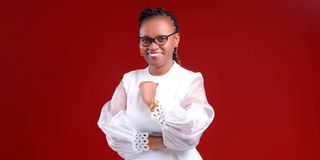
Rose Wambui, 40, is a finance professional and a mother of three boys.
Battle with infertility
Luckily, in 2016, she conceived. She had consulted another gynaecologist who advised her to consider IUI (Intrauterine Insemination), a procedure where sperm is introduced directly into the female’s body during ovulation.
The pregnancy progressed well, but she miscarried at three months. This was as a result of clots in her umbilical cord.
After four months, she conceived again and was put on blood thinners for the entire pregnancy. She had to inject herself with the medication daily until her delivery date.
“One injection cost Sh750 but I had no problem as long as it would help me keep my baby,” she says. “I had countless ultrasounds just to check if my baby was fine.”
The delivery was smooth, and her son is now eight years old. She lost three more pregnancies before conceiving her second child in 2021.
Surprisingly, in 2023, she gave birth to her lastborn without any fertility treatment. During her low moments, she would immerse herself in work to avoid overthinking.
Now a mother of three boys, Rose appreciates her husband and family for supporting her through the ups and downs.
She lost her long and luscious hair
Meet Grace Mbuti, 42, an educator and music consultant. She first heard about PCOS when she was 25 years old when doctors told her she had the condition.
“I was so relieved to know that the condition I had been silently struggling with for years actually had a name. “I felt both relieved and frustrated. Relieved that I wasn’t imagining things, and frustrated that it had taken so long for me to know what I was ailing from.”
For 13 years, Grace had heavy menses, which caused her untold shame and embarrassment everywhere she went. The ultrasound showed several cysts on both her ovaries.
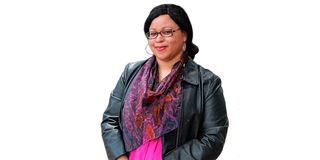
Grace Mbuti, 42, an educator and a music consultant. She lost her hair at the age of 12 as a result of PCOS.
She recalls being told that there was no cure for PCOS; it was a lifelong condition she had to live with.
“I was advised not to delay starting a family because there was a big possibility I would struggle to bear children. Someone even volunteered to convince his brother to marry me because of how urgent my situation seemed. I believe his advice came from the right place, but I often felt lost, confused and alone.”
Grace lost her long and luscious hair, which started thinning out at the age of 12 and has never returned to its original form.
“I felt like I was losing a part of my identity,” she says.
By the age of 14, she had started growing a beard that she would tweeze regularly.
She has also suffered two miscarriages due to hormonal imbalance.
“I am ever grateful to have my rainbow daughter, even though I now face secondary infertility, insulin resistance and high blood pressure,” she says.
Her emotional and mental health had started to drain her.
She had to live in constant fear of leaking blood in public, being humiliated, or getting odd stares from people.
“It all compounded the feeling that I was no longer beautiful or whole,” she says.
The silent, soul-crushing heartbreak of infertility is worse. She has spent years and a lot of money in treatments, medications, injections, and procedures.
“I lost all hope, and despite everything, I came to the painfully realisation that I may never have another child of my own. That acceptance came not in a single moment, but in quiet, weary surrender over time. The strength to try again is gone. My internal reserves have been depleted.
“More than anything, PCOS has been a thief of joy, confidence and simplicity. But I also know now, painfully and beautifully, that speaking about it is a way of reclaiming what it tried to take. There is power in sharing. And although I may not feel strong, I speak because someone else might need the words I’ve long searched for myself,” she adds.
Looking back, she wishes she had allowed herself to go on birth control alternatives for a while to regulate the bleeding.
“I come from a religious background and in those days, birth control was not an option. I was afraid of what people would say. I wish I knew it was okay to go on the pill, even for a while,” she says.
I was afraid of dating
Salome Ayugi, 31, is not married but is in a serious relationship. A few years ago, she experienced irregular menses and insomnia that made her visit a gynaecologist. She was diagnosed with PCOS at 26, after the ultrasound showed she had cysts on her ovaries.
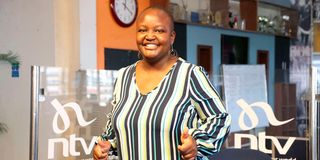
Salome Ayugi, 31, a marketer, during an interview at Nation Centre, Nairobi on May 28,2025.
She remembers the doctor asking her whether she was in a relationship.
“The doctor told me to hurry up if I wanted children because time was running out. I was so scared that my chances of being a mother were limited,” she said.
She was given just a little more information then advised to take contraceptive pills to stabilise her menses.
Because she was not sexually active, she opted to see another gynaecologist after eight months. Several tests were done to ascertain her condition and that is when she was told she was a pre-diabetic.
She sought the help of an endocrinologist who advised her to lose weight.
“I weighed 80 kilos. I had to start eating healthy. No more chips and fried chicken for me,” she says.
Acne was the most challenging symptom she had to deal with. At family gatherings, she would be given plenty of unsolicited advice. Make-up artists would take pity on her every time she sought their services.
This affected her mental health. She was even afraid of courting men as she didn’t know how to explain her condition.
“It was difficult for me to date. My friends would introduce me to male friends but I couldn’t. I used to feel bad. At times I would isolate myself just to avoid meeting them.”
She appreciates her current partner for understanding her condition. During their own time, she educates him on what PCOS is about.
She has also changed her lifestyle. She goes to the gym three times a week and swims once a week for 30 minutes. She has incorporated lots of vegetables with water to help her lose weight.
“I listen to music a lot to help me balance my emotions when I feel low. I have different playlists on my phone that suit my moods even when I am working,” she adds.
I became blind to my weight
Faith Igosangwa, a trained counselling psychologist and an entrepreneur in Kileleshwa, was diagnosed with PCOS in 2012.
She had abnormal and heavy periods after high school, which made her seek solutions.
“I took iron supplements to improve the situation, but nothing changed. The doctors couldn’t figure out what the problem was. I was prescribed hormonal birth control to regulate my period. Nobody mentioned PCOS."
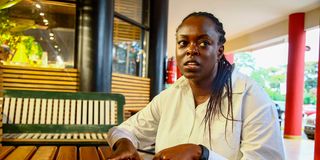
Faith Igosangwa, 32, a trained counselling psychologist and an entrepreneur based in Kileleshwa, during an interview at a restaurant in Nairobi on May 27, 2025.
Later, she visited a gynaecologist who diagnosed her with PCOS. An ultrasound showed she had enlarged ovaries.
“In 2022, I weighed 105 kilos, which was an increase from my previous 60 kilos. I would gain weight significantly, but I ignored it,” she said.
She also developed chin hair. She consulted another gynaecologist who recommended more exercise to balance her hormones.
“It was difficult for me to lose weight. I didn't know how to do it,” she says. She later came across a video about the PCOS Foundation in Kenya, and she joined it. After several meetings, she followed the nutritionist’s advice to eat a healthy diet.
PCOS Foundation of Kenya is a non-profit organisation that provides awareness, information and hope to women diagnosed with PCOS.
“I did my own research on Google to learn about the condition. The doctor I visited gave me little information about PCOS.”
At the moment, Faith is not trying to have children. She trusts that she will conceive when the right time comes. As for her chin hair, she goes for Laser hair removal, which uses a concentrated beam of light to remove hair.
“My chin hair has reduced significantly. I have done six sessions, and I am now waiting for my next one,” she adds.
I turned to creating online content
Mercy Wangui, 27, a content moderator at a tech company in Nairobi, says many people had mistaken her for being pregnant due to her bloated stomach.
She got married in 2019 and had tried to conceive but couldn’t. Like Faith, she had ignored all the signs.
“My relatives told me I had come to eat their brother’s money. My grandmother even said I had had too many abortions,” she recalls. “In church, it was even worse. People talked behind our backs because we did not have children.”
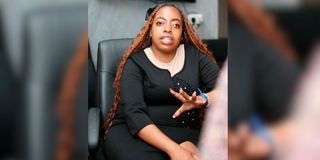
Mercy Wangui Kagwi on May 27, 2025 at Nation Centre, Nairobi.
She later conceived in 2021 and her pregnancy journey was smooth. She was diagnosed with PCOS after giving birth, as she bled continuously for two months.
“Breastfeeding was a problem as my baby was not gaining weight for six weeks. I was advised to stop,” she says. She visited a gynaecologist who explained that her breast milk was not producing enough nutrients for the baby.
She had never heard of the condition before, but it was explained to her. She was advised to reduce her weight from 80kgs to 60kgs but it was difficult.
“Eventually my husband and I separated. He couldn’t understand my condition, my mood swings were all over, and I used to cry all the time. It was a difficult time for both of us but here I am now!”
Her androgen level is above normal, and she is now able to lift heavy weights without feeling any pain. She encourages women to research and learn more about their bodies.
Mercy says missing periods and having extremely painful cramps have been the hardest symptoms to deal with.
She found solace in creating content on her TikTok page. “I enjoy dancing to videos. PCOS has made me try everything,” she says.
Today, people know her as a bubbly person. Anytime she feels low, she lifts up her spirit through watching inspirational YouTube videos.
“My wish is for people to understand that not all plus size women have PCOS. People should stop stigmatising this condition,” she adds.
Polycystic Ovary Syndrome (PCOS) is a common hormonal condition affecting women of reproductive age. The World Health Organization estimates that six to 13 per cent of women of reproductive age are affected. Up to 70 per cent of women go undiagnosed daily worldwide, and one in 10 women suffer in silence. In Kenya, while precise statistics are hard to come by, there is still limited awareness of the condition.
PCOS is a leading cause of infertility in women due to irregular periods or even lack of ovulation.
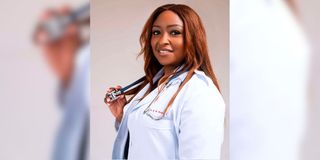
Dr Karen Muthembwa, an obstetrician gynaecologist based at the Nanyuki Teaching and Referral Hospital.
Dr Karen Muthembwa, an obstetrician and gynaecologist, says: “PCOS is a hormonal disorder that affects multiple parts of the body. It is characterised by irregular periods or amenorrhoea, and features of hyperandrogenism, which is a condition where the body produces excess androgens.”
With over eight years of experience, Dr Muthembwa says there is no specific test for the condition.
“We examine the patient’s history, lab tests and ultrasound before diagnosing one with PCOS,” she explains.
PCOS begins from when a woman starts her menses. According to Dr Muthembwa, the symptoms vary from one woman to another and may include irregular or missed periods, excess facial or body hair, acne or oily skin and thinning hair or hair loss on the scalp. Weight gain, darkening of the skin and difficulty getting pregnant are also among symptoms of PCOS.
Anxiety, despair, and a poor body image can also be brought on by PCOS.
“Many women face social stigma as a result of the condition, including obesity, infertility, and excessive hair growth. There are many options for women who have difficulties in conceiving. It can happen naturally without interventions, through In Vitro fertilisation (IVF) and contraceptive pills, depending on the woman’s body,” she says.
Eating a healthy diet with vitamins, especially vitamin D and B12, is essential to a woman’s body. Dr Muthembwa recommends exercise to help lose weight to prevent conditions such as diabetes and pre-eclampsia in pregnancy.
Mental issues such as anxiety and depression commonly affect women with PCOS, although all symptoms can be managed depending on the environment one is living in.
“There is no cure. It can only be managed through lifestyle changes, medication and fertility treatments.”
Dr Muthembwa encourages parents to visit gynaecologists if they have a child or a teenager who is having issues with their menstrual health.
“We need to normalise conversations around menstrual health and reproductive issues,” she says. “Girls should be taught early to identify what a normal period looks like and encouraged to speak up when something feels wrong.”