Pepfar funding survives Trump administration Sh51.6bn budget cuts
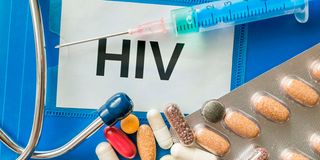
HIV drugs. The US Senate has saved a HIV programme that has prevented 26 million deaths.

What you need to know:
- The US Senate has protected Pepfar from proposed budget cuts, bringing relief to the global HIV/Aids community.
- Despite the Senate's decision, uncertainty remains as the final budget package must still pass through both chambers of Congress.
The global HIV/Aids community has breathed a collective sigh of relief after the US Senate announced it would shield the President's Emergency Plan for Aids Relief (Pepfar) from proposed budget cuts.
The welcome news emerged during the 13th International Aids Society (IAS) Conference on HIV Science in Kigali, Rwanda, where scientists, advocates, and policymakers had gathered to chart the future of the global HIV response. Delegates greeted the announcement with cautious optimism, hailing it as a triumph for science, solidarity, and international advocacy.
"Pepfar has saved 26 million lives over the past two decades, and protecting it could save millions more," declared IAS President Beatriz Grinsztejn during the conference's opening session. "The International Aids Society urges lawmakers to continue supporting this life-saving program and the global HIV response."
Since its launch in 2003 by former US President George W Bush, the programme has channelled billions of dollars into HIV/Aids prevention, treatment, and care across Africa.
Kenya has emerged as one of the initiative's largest beneficiaries, receiving more than $6.5 billion (Sh839.2 billion) to date, according to the US State Department. This funding has supported anti-retroviral treatment for millions, prevention campaigns, and vital infrastructure for testing and counselling.
Today, approximately 1.4 million people live with HIV in Kenya. Thanks to initiatives like Pepfar, the country has achieved dramatic reductions in mother-to-child transmission, witnessed a decline in Aids-related deaths, and seen growing public awareness around HIV prevention.
However, despite the Senate's decision to protect Pepfar from President Trump's proposed $400 million (Sh51.6 billion) rescission package, uncertainty persists. The final budget package must navigate both the Senate and House of Representatives, leaving room for further changes before the statutory deadline.
"Pepfar has been one of the greatest success stories in global health," said Grinsztejn. "But uncertainty remains, with ongoing threats to global health funding. We must stay vigilant."
IAS President-Elect Prof Kenneth Ngure echoed these concerns, particularly from an African perspective.
"This decision gives hope to millions, but we cannot afford to be complacent," said Ngure. "African leadership must remain central in shaping the HIV response, and we must advance serious discussions about sustainable financing—including stronger domestic investments to reduce reliance on global donors."
The recent threat of cuts had sent shockwaves through the HIV advocacy community, with many fearing the rollback of essential services for vulnerable populations. In countries like Kenya, where marginalised groups already face stigma and access barriers, any disruption to HIV services could have devastating consequences.
As IAS 2025 continues in Kigali, health experts and community leaders maintain that the fight is far from over. Sustained funding, political will, and African-led solutions remain crucial to ending the HIV/Aids epidemic by 2030.