Popular baby formulas contain arsenic at levels higher than drinking water standards
For a newborn baby whose body is still developing, even small amounts of these substances can interfere with brain development, immunity, and long-term health.

What you need to know:
- Laboratory tests have found alarming levels of toxic heavy metals including arsenic and lead in nearly half of 41 popular infant formulas.
- Major brands contained arsenic levels exceeding drinking water standards, potentially causing developmental delays and long-term health issues in infants.
A recent investigation and laboratory tests have uncovered alarming levels of toxic heavy metals, including arsenic and lead, in a wide range of infant formulas sold globally. This has sparked concern among Kenyan parents, particularly because many of these products are available locally.
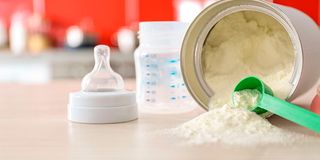
Laboratory tests conducted by Consumer Reports (CR) on 41 popular powdered baby formulas—many of which are available in Kenyan stores—found that nearly half contained unsafe levels of at least one harmful contaminant.
Also read: Study finds every tested plastic toy contains chemicals linked to cancer and reproductive disorders
These included arsenic, lead, bisphenol A (BPA) and acrylamide, all of which are known to pose serious health risks, particularly to infants.
From the findings, Abbott Nutrition’s EleCare Hypoallergenic formula contained 19.7 parts per billion (ppb) of arsenic, while Similac Alimentum had 15.1 ppb—both higher than the US government limit of 10 ppb for arsenic in drinking water.
Though no global standard exists for arsenic in baby formula, health experts argue that the comparison is deeply troubling.
“For a newborn baby whose body is still developing, even small amounts of these substances can interfere with brain development, immunity, and long-term health,” said Dr Mark Corkins, a paediatric specialist at the University of Tennessee Health Science Center.
The report hits hard for parents who rely exclusively on formula for their infants' nutrition, whether due to medical reasons or lack of access to breastfeeding alternatives.
Arsenic, a known poison, is linked to long-term risks such as developmental delays and certain cancers.
“Most parents choose formulas with trust—assuming these products are safe,” said Dr Corkins. “But toxic exposure in infancy could have consequences that last a lifetime.”
The report found that major manufacturers, including Abbott Nutrition (Similac and EleCare) and Mead Johnson (Enfamil), had products that ranged from “Top Choices” to “Worse Choices,” illustrating that even trusted brands are not immune from safety lapses.
In the absence of stricter global regulation, paediatricians are urging caregivers to consult healthcare providers about the safest formula options and to diversify infant diets where possible.
For now, parents like Mary Wanjiru, a first-time mother in Nairobi, are left deeply shaken: “I thought I was giving my baby the best. Now, I am not sure what’s safe anymore.”
Abbott Nutrition and Mead Johnson responded to CR’s test results, challenging the findings and emphasising that heavy metals or chemicals are never intentionally added to their products. They also stated that trace levels of heavy metals in food products are not unique to infant formula.
In response to Consumer Reports’ queries about testing and contaminant thresholds, Abbott defended its products, stating that heavy metals naturally exist in the environment and can be found in trace amounts in various foods, including all brands of infant formula and even breast milk. The company raised concerns about the testing methodology used in the study.
Consumer Reports’ tests also detected BPA and acrylamide in just one formula, Enfamil’s Nutramigen, a commonly recommended alternative for babies sensitive to cow’s milk protein. But Mead Johnson disputed the findings, stating they “contradict hundreds of results from several years of testing” conducted under its food safety programme. The other 40 formulas tested contained no BPA or acrylamide.
Banned from use
Experts noted that while BPA levels in formula have decreased significantly over the past decade, even small amounts remain a concern. BPA, a human-made chemical used to harden plastics, can leach into food and interfere with normal hormone functioning. It has been banned from use in baby bottles and infant formula containers.
Acrylamide, a process contaminant that forms during high-temperature cooking, has been classified as a likely carcinogen by the Environmental Protection Agency. Although the Food and Drug Administration (FDA) has not yet set limits for acrylamide in food, it has previously warned consumers about its presence in high-carbohydrate foods such as fried potatoes and cereal.
To assess the risks posed by contaminants in a formula, CR used internationally recognised health-based exposure limits for lead, arsenic, cadmium, mercury, BPA and acrylamide. The results indicate which products have comparatively higher levels, though they do not assess whether any product exceeds a legal standard, as federal limits for these contaminants in the formula do not yet exist.
Lead was found in nearly all formulas, with levels ranging from 1.2 ppb to 4.2 ppb—below the FDA’s Closer to Zero goal, but still too high according to CR experts.
“It’s virtually impossible to get to zero with lead,” said Dr Steven Abrams, professor of paediatrics at the University of Texas. “Having said that, the lower the better.”
“There is no safe level of lead exposure,” added Hannah Gardener, a neurology professor at the University of Miami who has studied heavy metal contamination in infant formulas. “Babies need to eat. So there needs to be plenty of food and formula choices at the lowest end of the range of contamination. Manufacturers need to do many things to protect consumers, including rigorous and repeated testing of their products and disclosing the contamination levels to consumers.”
CR’s Director of Product and Food Safety Research and Testing James Rogers stressed the need for manufacturers to rigorously monitor contaminants.
“Manufacturers should be continuously testing all of their incoming raw ingredients, their processes, their packaging, and their outgoing products for contaminants like these,” he said.
“The fact that some levels in our tests are lower than others and many are non-detectable just shows that it is possible to make safer food.”
Infant formula regulations primarily focus on nutrition and bacterial contamination rather than chemical contaminants. While the FDA has conducted limited testing, oversight remains reactive. The agency itself has acknowledged that “there is no express requirement for infant formula manufacturers to test ingredients or final products for chemical contaminants such as toxic elements."
“The FDA has had to rely on industry to do the testing of its products,” CR’s report noted, suggesting that this system of self-regulation is insufficient in preventing contamination.
On a positive note, CR’s tests found no detectable levels of mercury in any of the formulas tested, and cadmium levels were too low to be concerning.
Additionally, all formulas met FDA requirements for potassium content. In 2024, the FDA warned about excessive potassium in some formulas, which can be dangerous for infants, but CR’s tests found that none exceeded the regulatory limit.
Despite the concerns raised, CR emphasised that safer infant formula options remain widely available on the market.
“We want these results to be empowering for parents,” said CR’s Manager of Food Safety Research and Testing, Sana Mujahid. “If you are just beginning your formula journey, there are plenty of safer choices from major brands. If you are already giving your child one of the formulas on our list with comparatively higher levels of contaminants, there are several steps you can take.”