Postpartum hemorrhage: Kenya's silent epidemic of preventable maternal deaths
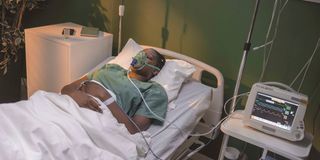
A mother is diagnosed with PPH if she loses over 500ml of blood after vaginal birth or 1,000ml of blood during a caesarean section.

What you need to know:
- The World Health Organization estimates that 14 million women experience PPH every year, resulting in 70,000 maternal deaths.
Victor Ambula’s hands tremble as he recounts the October morning he found his wife Zipporah lifeless in a pool of blood after what should have been a routine C-section. It was supposed to be the happiest day of their lives—instead, it became his worst nightmare.

Mr Victor Ambula, a postpartum hemorrhage (PPH) champion. He lost his wife to PPH.
The trouble began on October 22, 2023, when Victor walked into a private health facility in Kitengela with his heavily pregnant wife. After a medical examination, Zipporah was scheduled for an elective caesarean section—an agreement the couple had reached during their last clinic appointment.
After her admission, Victor left for work, promising to check on his wife’s medical progress the following morning. He had no idea it would be the last time he’d see her alive.
A father’s horror
The next day, Victor recalls meeting a nurse holding his new-born baby—but his wife was nowhere to be seen. “I later learned through the nurse that she was still in the theatre,” he says.
Minutes later, he approached one of the doctors, demanding to see his wife, and was led into the operating room. Victor found his wife lying on the operating table with gas masks around her nose. Doctors were working frantically to stabilise the new mother, who was bleeding excessively. Victor was asked to step aside so the medical team could attend to Zipporah.
He walked to the waiting bench with a thousand thoughts racing through his mind. The longer he waited, the more impatient he grew. “A number of health workers walking around gave me a pitiful look, and I could already sense all was not well,” says Victor.
Once again, he returned to the doctor’s office demanding an update about his wife and was led back to the theatre.
Victor’s voice trembles as he recounts the horrific moment he walked into the operating theatre—only to find his wife’s lifeless body drenched in blood, medical staff scrambling without answers.
“Doctors had no explanation for what could have resulted in her death,” says Victor, who later learned that Zipporah had succumbed to post-partum haemorrhage (PPH).
The silent killer
Dr Paul Ogolla, a consultant obstetrician and gynaecologist, describes PPH as excessive bleeding that occurs after delivery. According to the expert, a new mother can suffer from primary PPH within 24 hours of delivery, while secondary PPH occurs when a mother loses excessive blood more than 24 hours after birth.
“A mother is diagnosed with PPH if she loses over 500ml of blood after vaginal birth or 1,000ml of blood during a caesarean section,” says Dr Ogolla.
While PPH is preventable and manageable, a significant number of women continue to lose their lives to the condition. The World Health Organization estimates that 14 million women experience PPH every year, resulting in 70,000 maternal deaths. According to the global health agency, PPH is the leading cause of maternal deaths worldwide.
In Kenya, the Ministry of Health estimates that PPH results in the death of 14 expectant mothers every month—adding to the estimated 5,000 maternal deaths reported in Kenya annually.
A report by the Ministry of Health released last year revealed that Turkana, Tana River, Garissa, West Pokot, Elgeyo Marakwet, Homa Bay, Machakos, Kilifi, Wajir, Makueni, Murang’a, and Migori counties topped the list as areas with the highest cases of maternal mortalities.
Dr Ogolla explains that the major causes of PPH include failure of the uterus to contract after delivery, trauma to the birth canal, retained placenta or other tissues after birth, and blood-related disorders that may hinder coagulation. If not well managed, a mother can lose her life—as was the case with Victor’s wife.
Adding insult to injury
Victor’s horror deepened when the hospital gave him an impossible ultimatum: “Move your wife’s body within six hours—we don’t have a morgue.” He was forced to scramble for a mortuary while still in shock.
A few friends and relatives who had made their way to the facility accompanied him to the nearest police station to file a report and later transferred the body to a mortuary.
The struggle to keep life going
Victor then faced another cruel battle—finding a breast milk substitute to keep his new-born alive. A nutritionist had advised that the baby could be fed infant formula milk powder. However, getting the right brand proved to be a challenge.
After trying several brands, he settled on one that cost Sh2,000 per tin. “Initially, the tin would last us two weeks. But as the baby continued growing, we got to a point where she would consume a single tin in only three days,” says Victor, adding that purchasing the product left him financially drained.
“Buying baby formula is yet another economic burden. I can only imagine what families without a stable source of income go through to ensure their new-borns feed.”
Victor never expected to raise his youngest child alone. While his older children thrived under their mother’s care, his infant daughter’s life began with loss, formula shortages, and a father learning to parent in crisis.
The older children were exclusively breastfed for the first six months while their mother was also around to guide them through post-natal care clinics. For months, Victor’s aunt was the only maternal figure his daughter knew.
“My aunt has been doing a really good job. Initially, I would call her every hour to check on the baby. We also had to keep track of the child’s hospital clinics to ensure she didn’t miss any,” he says.
Once the baby reached one year and four months, his aunt had to leave to attend to other personal needs. The period proved challenging since the baby had a hard time bonding with different house helps.
“I finally made a decision to have my baby move in with my aunt since they had developed a strong bond, while I stayed back to look after the older boys,” says Victor.
The ripple effect of loss
The widower explains that his wife’s death also impacted his older children, who keep asking about her. One of his relatives took up the role of breaking the news to the boys, who are yet to heal.
To cope with the loss of his wife, Victor enrolled in therapy sessions. “People also tend to forget that men, just like women, also grieve, but we rarely have people checking on us to know how we are faring. Everyone assumes we are strong,” he says.
Dr Laura Oyiengo, the United Nations Children’s Fund Kenya maternal and child health specialist, says the impact of maternal loss is felt by the baby, family, and community at large.
The baby, she says, misses out on breastfeeding and might not have access to breastmilk substitute, leading to compromised nutrition and delayed developmental milestones. “Mothers are generally seen as primary and immediate caregivers of babies. They provide 24-hour care. An orphaned new-born misses out on maternal care,” says Dr Oyiengo.
The expert adds that previous studies have shown that when a mother dies, the risk of new-born mortality increases significantly. According to a study published by the National Library of Medicine, child mortality under the age of five is four times higher in the event of maternal death.
Dr. Oyiengo further notes that maternal death also brings grief to the surviving partner and children, affects the family unit, and threatens financial stability. “Who takes care of the baby when the dad goes out in search of income? In most cases, the new born also gets separated from its family by a caregiver, while the bond between father, new-born, and other siblings is interrupted,” she says.
A tale of survival
Mary Bosibori almost joined Kenya’s grim maternal mortality statistics when haemorrhage struck after her delivery at Vihiga County Referral Hospital. What saved her? The same system failing women like Zipporah—prompt emergency care, blood transfusions, and dedicated community health follow-ups.
When the Healthy Nation team meets Mary, she has just resumed teaching at a nearby primary school after a three-month maternity break. At break time, she rushes home to breastfeed her new born daughter.
The baby, she says, has gained weight according to her last hospital visit. Doctors had also commended her for exclusively breastfeeding the baby. This, however, would never have been possible had she lost her life immediately after birth due to excessive bleeding.
Mary recalls walking into Vihiga County Referral Hospital (VCRH) earlier this year to deliver her second child. While her firstborn was delivered at Sabatia Sub-county Hospital, health experts at the local dispensary where she attended antenatal care clinic had insisted that she must deliver at VCRH.
According to the medics, her past history with PPH meant the mother had to deliver at a well-equipped facility. “I lost a lot of blood after delivering my firstborn, and one of the major challenges we had was getting blood for transfusion,” says Mary. The medics had to act swiftly, referring the first-time mother to VCRH for timely management—a move that saved her life.
Racing against time
She laboured for more than 48 hours. A few minutes after a successful vaginal birth, she started bleeding profusely. All she remembers is seeing a team of doctors surrounding her bed before she collapsed.
The mother of two was placed on medication for the next two days while doctors monitored her response to treatment. She was discharged on the third day, and a community health promoter (CHP) was assigned to monitor her recovery.
“On each visit, she would monitor my blood pressure. Doctors also gave me drugs that I would take daily,” says Mary, adding that the CHP also advised on the foods she needed to take to boost her blood supply.
The primary school teacher explains that while she is yet to understand why she bled after birth, her mother also had a similar experience after delivering three of Mary’s siblings. “I can only imagine what could have happened had I delivered at the village dispensary. I am alive today thanks to the skilled birth attendants,” she says.
Understanding the risk factors
Dr Ogolla says women with a previous history of PPH or caesarean section, those pregnant with more than one baby, macrosomia (excessive foetal growth), blood disorders, polyhydramnios (excess amniotic fluid), and uterine infection are at high risk of developing the condition.
The health expert notes that several health facilities across the country are currently in a position to offer a range of interventions to manage PPH, including both preventive and treatment options.
“One of the key prevention measures is ensuring that pregnant mothers attend all the antenatal care clinics. It is only then that doctors can identify any potential risks and prepare interventions,” says Dr Ogolla.
Medical solutions within reach
The medic says skilled birth attendants are in a position to conduct active management of PPH at the third stage of labour through uterine massage. After delivery, a medic is also required to administer a dose of oxytocin, a drug that allows the uterus to contract to prevent excessive bleeding.
Other available medications to manage PPH include carbetocin, tranexamic acid, and misoprostol. However, he notes that the interventions are only effective when a pregnant woman delivers in an equipped facility or is referred in time.
“At an equipped health facility, we are also able to ensure there is enough blood supply for transfusion to anaemic mothers,” he says, adding that there is a need for increased campaigns on regular blood donations.
In addition to the immediate life-threatening risk of death, postpartum haemorrhage can cause significant trauma, including psychological distress and even post-traumatic stress disorder in women who survive the event.
The bigger picture
Prof Moses Obimbo, a women’s health advocate, says poor maternal health indicators translate to poor indicators of general health. The consultant gynaecologist says the five major causes of maternal mortalities globally include PPH, preeclampsia, obstructed labour, sepsis, and complications arising from unsafe abortion.
As Victor continues to navigate life as a single father and Mary celebrates her survival, their stories serve as powerful reminders of what hangs in the balance with every delivery—and why ensuring access to quality maternal healthcare isn’t just a medical issue, but a fundamental human rights imperative.