Risky, weird, wild cravings: Why some people eat non-food items
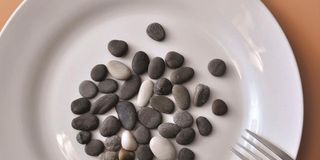
pica could be as a result of nutritional deficiency.

What you need to know:
- Pica could be as a result of nutritional deficiency.
Two of my senses surprise me with what excites them. First, it is my sense of smell that makes me have an odd longing for the rain’s scent when it falls on dry land –known as petrichor. And then, my taste buds, which get a hypnotic feeling when edible clay (udongo) lands on my tongue. For about four years now, I have been snacking on edible clay, and unchaining this fondness is akin to denying a dog bones when it is within their reach.
I don’t remember what triggered this craving, but ending this habit has been inexorable. It has become an addiction –an expensive one, especially to my health. As a science reporter, I started researching about people like me, those who have weird non-food cravings, and I learnt that there is a medical name for that: Pica. It is a Latin name for the magpie bird, which is known for eating almost anything.
The more I scoured the internet, the more I got enlightened and realised that it is more than just a craving. My Tiktok algorithm picked this and I started getting videos of people eating edible clay and some sharing their near-death experiences. Still, I was unmoved. It wasn’t until I got a dreadful constipation when a doctor diagnosed me with iron deficiency after I shared my history with her, and then I decided to slow down. I am struggling to quit.
Growing up, I assumed that such cravings are only for pregnant women. My assumption was wrong. A study done around Lake Victoria region confirmed that even non-pregnant ladies can have pica. The study was published in the International Journal of Environment Research and Public Health in 2019. “Pica is a behaviour that is not limited to pregnancy, with 53 out of 221 women (24per cent) reporting any pica consumption while currently breastfeeding,” shows the Lake Victoria study.
Satisfy curiosity
I spoke to other ladies, whose stories like mine, show the need for exploration on pica.
Lucy Oyugi started eating clay to satisfy her curiosity on what it tastes like.
“I started when I was in high school, my cousin was pregnant at the time and one of her cravings was edible clay. She told me to take a bite and that's when I got hooked,” she tells Healthy Nation.
“She would then bring me different varieties. Some were a bit hard to bite while others you could bite into easily,” she adds.
She has never looked back since then. She even has preferences on where to buy, and she notes that she abhors those sold in supermarkets.
Lucy limits herself to taking at least two pieces of clay every week, and has only managed to go without it for two weeks and gave in on the third.
“I have been given advice by people that if I eat liver and milk, the cravings will disappear. I do have those in my diet, but I still have the cravings. I'll try to eat them more consistently to see if it might help,” she says.
Grace Kenyatta was diagnosed with anaemia in 2021 during her annual medical checkup. It is in 2022 that she started craving edible clay but has never been to hospital for complications related to eating clay.
When she has serious cravings, she longs for a place that sells edible clay. Luckily, they can easily be found in a supermarket.
Like most people who eat edible clay and have been diagnosed with anaemia, Grace was given an iron supplement, but the craving still won’t go away.
Rose Nduta had a double craving for non-nutritive items –edible clay and uncooked rice.
“I started when I was in high school. We used to eat soil from the anthills. It moved to "munyu" and finally to udongo sold in the supermarket. I have eaten this for many years. I used to get bad cravings such that if I am in a supermarket and I see the udongo, I start eating before I even pay for it,” she tells Healthy Nation.
“Eating uncooked rice was not a daily thing but I noticed that every time I was cooking rice, I would throw a little in the mouth just before I put it in the cooking pot,” she says.
She did this for five years, but eventually stopped after seeking medical intervention.
In the five years, edible clay was her weakness. On the days that she couldn’t find those sold in the supermarket or local groceries, she would dig in the soil.
She suffered constipation blows like I did, and even went to hospital where she was given drugs to ease the feeling.
That was not the end of it. One time when she was feeling lethargic and decided to go to hospital, the doctor found out that she had low blood levels.
“The doctor advised that they should assess my blood count and my levels were at seven. I was given an iron jab and the cravings stopped. I also improved my diet quite significantly,” she says.
Every six months, she goes for an iron jab and her diet now involves iron rich foods like liver.
“I have no craving anymore, I even feel energised after a long day at work. I’d like to tell everyone who is struggling to go get checked. There is an underlying medical condition,” she says. There are many other non-food items that people are addicted to apart from edible clay and uncooked rice. Stacy Weboko is addicted to ice cubes, and she tells Healthy Nation that this kind of craving started about two years ago.
“Whenever I would go out with my friends, I’d always ask for ice cubes,” she says.
Stacy studied hospitality and when they had practical exams, she would always be near the refrigerator, where she could easily access ice cubes.
“I enjoy crushing the ice cubes. In fact, my wisdom teeth feel so relaxed after an ice cube eating session. I didn’t realise that it was an addiction until my colleagues pointed out,” she tells Healthy Nation.
She, however, still indulges and has not had any health related complications so far.
When I was doing my research for this story, I came across a medical anthropologist –Prof Sera L Young, who has studied Pica and has written a book about it called; ‘Craving Earth’.
Her book starts in Pemba, an island found in Zanzibar, where she interviewed a woman who was fond of nipping clay during her pregnancy. That woman made her curious about pica and the more intuitive questions she asked, the more she dug to find the answers.
In her book, she explains that in modern medical literature, there are specific names for pica depending on the non-food item that someone eats. Most of the names have Greek origins. For people who eat edible clay like me for instance, geophagy is the term that describes that craving. For raw starch non-nutritive foods like rice, they are referred to as amylophagy, and for ice cubes like Stacy’s craving, it is known as pagophagy. Other non-food items that people ingest include; chalk, charcoal, ash, flour, newspaper, toilet paper, paint chips, used coffee grounds, baby powder, and paint chips.
She explains that the most common form of pica is geophagy, which studies show is consumed in six continents. Her book explains that humans have been eating soil for more than two million years. She cautions that not all geophagy is pica, it only becomes pica when strong cravings are involved.
In her book, Prof Young says pica may cause anaemia, and vice versa.
“Anaemia, simply put, is a condition in which hemoglobin concentration is too low. Haemoglobin is a protein with many vital functions, and one of its most important is transporting oxygen to cells throughout the body. Thus, a deficiency of haemoglobin means that red blood cells are not getting enough oxygen,” she writes.
She says that pica can result in lead poisoning, explaining lead accumulates in our body, hair and teeth.
“Acute lead poisoning causes seizures, comas and death. Lead poisoning is particularly scary because most of it happens without warning (except for the kind of lead poisoning inflicted by Wild West gunslingers). Lead poisoning is also linked to anaemia, since lead interferes with haemoglobin synthesis,” reads an excerpt of Craving Earth.
There exists different eating disorders, but Dr Christopher Opio, a consultant gastroenterologist from Aga Khan University Hospital, explains to Healthy Nation that pica involves eating non-food substances, whereas the other disorders involve food-related behaviours tied to body image or emotional triggers.
Heakth risks
He explains that there are potential health risks involved for people with pica such as poisoning (heavy metal poisoning, radiation poisoning, among others), gastrointestinal blockages, infections, or nutritional imbalances due to consumption of harmful substances.
He says that it can also lead to organ damage including the liver and pancreas, and could result in kidney failure.
Dr Opio explains that pica can be diagnosed based on medical history, physical findings or laboratory and imaging tests.
“Any child or adult with the following can be diagnosed with pica if: they have had persistent eating of non-nutritive, non-food substances for a period of at least one month. The eating of non-nutritive, non-food substances is inappropriate to the developmental level of the individual. The nature of ingested items is variable and that the eating behaviour is not part of a culturally supported or socially normative practice,” he explains.
Dr Opio says the cause is not explicitly known, but he points out factors such as nutritional deficiency- iron deficiency and zinc deficiency, child neglect, pregnancy, epilepsy, stress, cultural factors, learned behaviour, low socioeconomic status, underlying mental health disorder, or familial psychopathology.
Rosejoy Aluvala, a nutritionist, tells Healthy Nation that pica could be as a result of nutritional deficiency.
“When the body lacks certain nutrients, it often has distinct signals to notify you that it is in need of that thing. For instance, when you are thirsty, you will particularly crave for water. It's the same thing that the body does when it comes to iron,” she explains.
“When the body lacks iron, it triggers a complex physiological response to compel you to provide it. The signals may manifest as cravings for substances that are perceived as iron sources maybe because of their smell or texture,” she adds.
Rosejoy says a nutritional assessment needs to be done so that the real issue is handled by diet therapy or any other medical recommendation as advised by a doctor.
“In case the problem has a psychological aspect to it, then a psychotherapist can take it up,” she explains.
Dr Leila Larson, an assistant professor from the University of South Carolina, tells Healthy Nation that their unpublished study on anaemic pregnant women in Malawi found that one in every seven participants engaged in pica.
“We saw a larger decrease in geophagy (craving and consumption of earth) among those women who received iron treatment compared to those receiving the standard of care. This tells us that treatment with iron reduces pica, and geophagy in particular,” she explains.
A study published in the Journal of Family Care Practice dubbed; An Age Old Disorder That Is Often Missed , shows that there is documentation of adverse effects of pica including potassium abnormalities and gastrointestinal conditions ranging from irritation and abdominal pain to perforation, blockage, and colon ischemia.
“Patients who eat paper may be exposed to mercury poisoning, so a serum mercury level is advisable,” the study shows.
Their analysis of 25 studies shows that behavioural therapy reduced pica behaviour by 80 per cent or more.
“Behavioural treatments included reinforcement procedures alone, response reduction procedures alone, and combined reinforcement and response reduction procedures. Reinforcement shapes behaviour by controlling the consequences of the behaviour using a combination of rewards and punishments. Response reduction, or blocking, involves obstructing every attempt to eat inedible items,” they explain.
They also say that pica may not be associated with mental issues and so researchers say that it is not an abnormal behaviour.
Another study published in the scientific journal Cureus shows that there is a physiological relationship between the senses of smell and taste.
“Pica may be accompanied by an inclination towards the smell of earth. Liking the smell of earth may be a novel symptom of iron deficiency,” they say.
When I was scrolling on Tiktok, one user mentioned that edible clay is an ingredient used in making some medicines.
In her book, Prof Young mentions that this is scientifically proven and it is used as an effective treatment for diarrhoea.
“You may have already swigged some clay, albeit in far more industrialised wrapping …it is the largest-selling over-the counter medicine for nausea and diarrhoea in the United States, gets its name from the original active ingredient— kaolin, one type of clay,” reads an excerpt.
She says that unfortunately, clay is no longer the active ingredient due to formulation changes in the 1990s.
“The second major application of clay in modern medicine is external — for wound healing. This use is also very old,” she writes in her book.
In the Lake Victoria study conducted in Mfangano Island, the International Journal of Environment and Public Health Research cites culture as a contributory factor to pica.
“Pica may be a strongly embedded cultural practice…its social and cultural significance may hold importance for users beyond its physiological effects. Among the Luo population on the Kenyan coast, pregnant women have previously reported that the practice of geophagy was strongly connected to fertility, healthy blood during reproduction, and community,” explains the study.
The study explains that eating edible clay is often associated with mockery, which leads to stigma ,and this is the reason there are many unreported cases of pica substances in the country.