Scientists find that an old deworming drug can reduce malaria transmissions
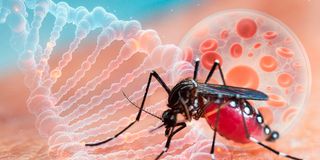
Risk levels have tripled or quadrupled due to increased rainfall, higher temperatures and land-use changes that have created ideal breeding conditions for mosquitoes.

What you need to know:
- Scientists have repurposed an old drug commonly used for deworming into one that can help reduce malaria transmission in Kenya's most affected regions. The drug's name is Ivermectin.
- Drug repurposing is when scientists use a drug known for a particular use and then suggest a new way of using it.
Scientists have repurposed an old drug commonly used for deworming into one that can help reduce malaria transmission in Kenya's most affected regions. The drug's name is Ivermectin.
The researchers, some from the Kenya Medical Research Institute (KEMRI), Barcelona Institute for Global Health (ISGlobal), and the Manhiça Health Research Centre (CISM), published their findings in the New England Journal of Medicine.
Drug repurposing is when scientists use a drug known for a particular use and then suggest a new way of using it. If approved for use in the country, it will offer a complementary addition to the existing malaria control strategies.
The trial for the drug called Broad One Health Endectocide-based Malaria Intervention in Africa (BOHEMIA) was conducted in Kenya’s Kwale County.
“We found that in an area that already had high ownership and use of long-lasting insecticide-treated nets, a 400-microgram-per-kilogram dose of ivermectin given to all eligible participants once per month for 3 consecutive months at the beginning of the short rains season led to a 26 per cent lower incidence of malaria infection,” indicates the study.
In a statement shared with newsrooms, KEMRI said that the results showed a statistically significant reduction in malaria infections, especially among children living in well-covered areas of the intervention clusters.
Healthy nation spoke to Prof Marta Maia, the principal investigator of the BOHEMIA trial and an entomologist working with KEMRI Wellcome Trust based in Kilifi, who explained that it is recommended that the drug be given during mass drug administrations and not at the individual level.
“If one person takes it, it’s not going to have any impact. If everybody takes the drug around the same time, then we will have a toxic environment for all these mosquitoes, and we will have an impact on the population,” she explained.
She said that the drug is given to everyone in the community, except pregnant women and children who weigh less than 15 kilograms.
Before this study was done, she explained to Healthy nation that other preliminary studies showed that if people took Ivermectin and got a mosquito bite, the mosquitoes wouldn't survive longer.
The probability of survival of a mosquito reduces its chances of being a malaria-causing mosquito.
“Mosquitoes are not born with malaria. Ivermectin could potentially reduce the population of old mosquitoes. Those are the dangerous ones. The ones that have just emerged don’t carry malaria. They have to bite at least twice, and they need at least 10 days in between the two bites to develop a parasite that can transmit malaria,” she explained.
“When we reduce survival, then we can potentially reduce transmission,” she added.
While the drug does not affect the malaria parasite, anytime the mosquitoes bite people who have taken the drug, the mosquitoes get intoxicated and die.
“It doesn’t matter when the vector bites, be it in the morning or evening, it is still going to die,” she explained.
Why the age group?
Before the scientists did the study, they did a comprehensive analysis to choose a suitable location. They settled on Kwale County since it is one of Kenya’s malaria-endemic regions.
“We found that the highest burden was among children aged 5 to 15 years old. We were not treating malaria, we were trying to find out whether there is a drop in transmission after people have taken the drug,” she explained. “You won’t see a dramatic reduction of mosquitoes,” she insisted.
Prof Maia explained that the best time to take the drug is just before the peak of malaria transmission.
During the study in Kwale County, for instance, the drug was given to the sample population in 2023 just before the short rains in an El Niño year.
“Everybody has to take the drugs right at the start of the rains, every month, for three months. That same schedule is used for other malaria interventions. This makes it possible to integrate it into other malaria programs,” explained Prof Maia.
“The good news is that in this trial, we didn’t see any safety concerns. We followed up the participants and the side effects were transient; only headaches and diarrhoea, which did not last long,” she said.
Next step?
The World Health Organization (WHO) process for approval of the drug is quite long. Prof Maia said that the researchers will have to conduct one more study that yields positive results for the WHO to consider pre-qualification of the drug.
“Repurposing has to follow regulatory pathways. In Kenya, it is the Pharmacy and Poisons Board (PPB) that is in charge. In the case of Ivermectin, the scientists only raised the dosage from 200 micrograms per kilogram (mcg/kg) to 400 micrograms per kilogram,” she explained.
Prof Maia said that while the WHO needs to prequalify drugs, every country is sovereign and they can decide what to use and what not to use.
She explained that the drug is different from a malaria vaccine because vaccines do not reduce transmission of malaria, but severity of the disease, and prevent death.
“Before we reach elimination, we will have to complement such programs with additional tools. Ivermectin is not a replacement for anything, but a complement to existing interventions,” she said.