SHA: Officials allow higher payments for family, friends at cost of patients
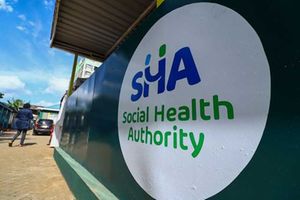
Social Health Authority (SHA) signage at Mutuini Hospital in Dagoretti South Sub-County, Nairobi, on August 27, 2025.

Human interference in Social Health Authority (SHA) packages has led to preferential treatment for certain Kenyans, creating a growing discrepancy in healthcare access.
The Nation has established that many patients, particularly those without connections to influential figures, find themselves disadvantaged—receiving lower package approvals compared to those who can make a phone call and secure higher authorisation.
Despite the outlined benefit packages gazetted by the government, calls by Kenyans to senior SHA officials are fostering favouritism and leaving countless patients struggling to receive the care they desperately need.
The majority of those who cannot afford treatment are left to pay out-of-pocket for services that SHA should ideally cover as per the Gazette notice on tariffs and packages.
For Elizabeth Kerubo and Jecinter Awino (not their real names), despite paying the same premium, sharing the same ailment—breast cancer—and getting tests done at the same hospital, their experiences could not have been more different.
The two women belong to the same WhatsApp support group. When Kerubo was sent for tests, SHA approved and paid for all three. She encouraged Awino to visit the same facility, confident her friend would receive similar treatment. What she did not mention was that a relative holding a senior position at SHA had made a call to ensure the approval went through.
When Awino visited the same hospital, she was hopeful that SHA would cover the necessary tests. However, only one test was authorised. Frustrated, she had to dip into her savings to cover the costs of the other two tests.
“It was only when I called Kerubo that she told me a call had been made that led to SHA approving her tests. I do not understand. We pay the same premium of Sh6,000. We were diagnosed with the same disease. We were scheduled for the same tests. But I have to pay extra, from my pocket, because I do not know anyone. This is impunity,” she said.
Dr Ahmed Kalebi, a consultant pathologist, broke down the costs: immunohistochemistry costs Sh3,500 per marker, flow cytometry costs Sh2,500 per marker and PCR analysis for gene detection in cancer costs Sh8,000 per marker.
According to the medic, SHA often ends up paying for only one marker for a patient who requires multiple markers for the correct diagnosis of cancer to be made. The system for review and approval, he said, is not working as designed or expected.
For instance, breast cancer, he said, requires three or four immunohistochemistry markers, but SHA approves only one. A patient with leukaemia may require 10 flow cytometry markers, but SHA approves only one. Similarly, a patient with lung cancer requiring four molecular test markers gets only one approved.
“This means the patients do not benefit fully from the gazetted SHA benefits package, and they have no recourse for appeal,” he said.
Overall, Dr Kalebi noted that SHA is working well as far as specialised laboratory testing is concerned—unlike the defunct National Health Insurance Fund, which never paid for such tests.
Approved tests
“The biggest concern is the lack of clarity and consistency in the application of authorisation for approved tests. Many patients fail to benefit because of deficiencies at the SHA review and approval stage, forcing them to top up out of pocket,” he said.
The inconsistencies extend to maternity care.
“We have normal delivery and caesarean section patients receiving different packages, even when treated in the same hospital, by the same doctor, using the same equipment,” said a gynaecologist who requested anonymity.
“One patient who had undergone a caesarean section received Sh30,000, yet another received Sh80,000—same hospital, same doctor, yet completely different experiences,” the gynaecologist added.
According to the gazetted tariffs, normal delivery and essential new-born care is capped at Sh10,000, while caesarean section is capped at Sh30,000. For oncology services, facilities from Level 3 to Level 6 with National Cancer Institute certification and capacity have a limit of Sh400,000 per annum.
Dr Brian Lishenga, the chairperson of the Rural and Urban Private Hospitals Association, said the problem lies in human interference with SHA allocations.
“There is a disconnect between what is written in the guidelines and how it is executed,” he said.
He added that many SHA packages are priced below market value, making it difficult for healthcare providers to offer them without incurring losses.
“If hospitals cannot afford to treat patients under these packages, they often will not accept them at all. This leads to a scenario where only patients with connections to senior officials receive the care they need,” he said.
When the association raised the issue of human interference with senior SHA officials, they were assured it would stop.
The “engine rule”, a system where all approvals are processed, was meant to ensure allocations are handled equitably.
“But it seems the ‘engine’ only works for those who do not have powerful people to call. Even with that system in place, many Kenyans are not getting the services they need. They have to beg to be treated,” Dr Lishenga said.
Structured process
He further stated that the interference has led to out-of-pocket payments.
“In a world where healthcare should be a right, not a privilege, these inconsistencies in SHA serve as a painful reminder of the work that lies ahead. We need to speak up and have this stopped,” he said.

SHA Chief Executive Officer Dr Mercy Mwangangi.
When the Nation reached out to SHA Chief Executive Officer, Mercy Mwangangi on her known telephone number, she neither answered nor returned calls. WhatsApp messages also went unanswered.
Ms Golda Larissa, SHA’s director of benefits and claims management, said she was not authorised to speak to the media and referred inquiries to the corporate communications department.
SHA Deputy Corporate Communication Officer Jacob Mutinda requested questions in writing. He mentioned that the authority was developing a structured process for the CEO to address media inquiries comprehensively, as she receives numerous requests daily. However, no response was received by the time of publication.
Follow our WhatsApp channel for breaking news updates and more stories like this.