Sharing the burden: How inter-county cooperation can solve Kenya’s waste crisis
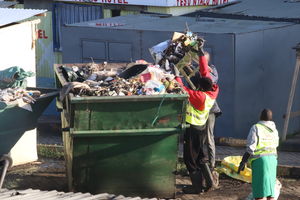
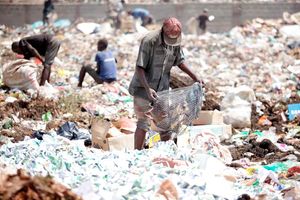
The Dandora dumpsite in Nairobi County.

What you need to know:
- Nairobi County alone produces approximately 3,000 tonnes of waste daily, while the neighbouring Machakos generates 450 tonnes.
- Both counties, along with most others nationwide, rely on poorly managed dumpsites that pose serious environmental and health risks.
Kenya's 47 counties collectively generate over 22,000 tonnes of solid waste daily, yet not a single county operates a properly engineered sanitary landfill. This environmental crisis demands innovative solutions that transcend county boundaries. The answer lies in inter-county collaboration, a proven model that can turn waste management from a cost into a sustainable, revenue-generating venture.
Nairobi County alone produces approximately 3,000 tonnes of waste daily, while the neighbouring Machakos generates 450 tonnes. Both counties, along with most others nationwide, rely on poorly managed dumpsites that pose serious environmental and health risks. The infamous Dandora dumpsite, which has operated for over four decades without proper waste treatment systems, exemplifies this crisis. Studies consistently recommend its decommissioning, yet viable alternatives remain elusive due to land constraints and financial limitations. The economic toll is staggering, with individual counties spending an average of Sh2-4 billion annually on waste management while achieving poor results. Nairobi's waste management budget alone exceeds Sh 6 billion yearly, yet waste collection efficiency hovers around 60 per cent, with final disposal remaining environmentally unsound.
The business case for collaboration is compelling. The construction of a modern sanitary landfill serving Nairobi and Machakos counties would cost approximately Sh8-12 billion compared to Sh15-20 billion that would be spent if each county built separate facilities.
By sharing infrastructure, equipment, and technical expertise, counties can achieve 35-40 per cent cost savings while unlocking multiple revenue streams such as tipping fees from partner counties at Sh1,500-2,000 per tonne, methane capture for electricity generation worth Sh800 million annually, recyclable material recovery valued at Sh400 million annually, and carbon credit sales generating Sh200 million per year. Within 12-15 years, a joint landfill would achieve full cost recovery while providing sustainable waste management for both counties.
The environmental benefits are equally impressive. Properly engineered facilities would eliminate methane emissions equivalent to removing 180,000 cars from roads annually. Leachate treatment systems would protect groundwater resources, while waste-to-energy components could generate 25-30 MW of clean electricity, enough to power 45,000 homes. These environmental improvements would significantly enhance public health outcomes and contribute to Kenya's climate change mitigation goals.
Success stories
Global success stories provide valuable blueprints for implementation. Japan's inter-prefectural waste management model offers particularly relevant lessons, with the Kansai region operating shared facilities serving multiple districts, where costs are distributed based on waste volumes contributed. Each participating district pays Sh 3,000-4,000 per tonne equivalent, generating steady revenue for host locations while reducing individual costs by 25-30 per cent. Similarly, Sweden's inter-municipal waste-to-energy plants serve multiple jurisdictions, with some facilities generating surplus energy sold to neighbouring countries. These models demonstrate that shared infrastructure creates economies of scale impossible to achieve individually.
A concrete proposal for the Nairobi-Machakos partnership would unfold in three phases over seven years. The first phase, spanning year one and two, would focus on planning and agreements by establishing an Inter-County Waste Management Authority with equal representation, conducting detailed feasibility studies and environmental impact assessments, securing approximately 200-300 acres in Machakos County and developing cost-sharing agreements based on waste volumes contributed.
The second phase, covering year three through five, would involve construction activities including building the sanitary landfill with waste-to-energy components, installing modern weighbridges, leachate treatment systems, and gas capture infrastructure, developing access roads and waste transfer stations, and training technical staff while establishing operational protocols. The third phase, beginning in year six and continuing indefinitely, would commence commercial operations with initial capacity of 2,000 tonnes daily, invite neighbouring counties like Kiambu and Kajiado to join as paying partners, and reinvest revenues in facility upgrades and expansion.
Success requires robust institutional arrangements through a comprehensive governance framework. An Inter-County Waste Management Board would ensure equal representation from participating counties, maintain an independent technical advisory committee, implement transparent financial management systems, and establish performance monitoring and reporting mechanisms. The legal framework would include formal inter-governmental agreements under the Inter-governmental Relations Act, revenue-sharing formulas based on waste volumes and agreed cost allocations, dispute resolution mechanisms through established inter-county forums, and environmental compliance monitoring systems. Financial management would involve joint financing through development partners and county contributions, ring-fenced revenue accounts for facility operations and maintenance, annual audits and public reporting requirements, and reserve funds for facility upgrades and emergency repairs.
The collapse of the JICA-backed initiative—despite strong technical design and international funding—highlights critical implementation gaps that must be addressed to ensure this new collaboration succeeds. Governors must endorse the project consistently, involve locals in planning and benefit-sharing from the earliest stages, invest in technical capacity to reduce dependence on external consultants and build local expertise.
Kenya's waste crisis cannot be solved by individual counties acting alone. It demands a unified national strategy, and the Nairobi-Machakos partnership is just the beginning. With proper planning, adequate financing, and political will, it can be replicated across the country. Other promising partnerships include Mombasa-Kilifi-Kwale for coastal waste management, and Nakuru-Narok-Kericho for the Rift Valley region. Each partnership should be tailored to local conditions while following proven principles of cost-sharing, environmental protection, and transparent governance. The question is not whether inter-county collaboration can work, but whether Kenyan leaders will embrace this proven solution before the waste crisis becomes irreversible. The time for action is now.
Mr Kigo is a retired environment officer