Sickle cell disease treatment options for our patients
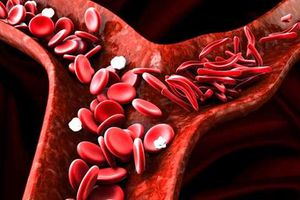
Every year, roughly 14,000 people in Kenya are born with sickle cell disease—a hereditary blood disorder that reshapes soft, flexible red blood cells into rigid, crescent-like forms.
What you need to know:
- In Kenya, our sickle cell disease warriors have consistently advocated for prioritisation of their care without fail.
- It is a daily battle to monitor the changing health systems and keep fighting for inclusion, yet Kenya as a country bears a remarkable burden with regard to the disease.
This week on Thursday, we celebrate the World Sickle Cell Day, with the theme “Global Action, Local Impact: Empowering Communities for Effective Self-Advocacy” standing out rather aptly.
With the sweeping changes in donor funding for healthcare and health research, struggling communities living with much less spoken-about health conditions are the first to feel the brunt. Hence the critical need for them to stand together to advocate for themselves.
It has been an uphill task for people living with sickle cell disease to draw attention to this hereditary condition with lifelong implications right form birth. Even worse is that the global burden of the disease is heaviest in the low and lower middle-income countries, with struggling health systems already burdened by infectious and non-communicable diseases.
In Kenya, our sickle cell disease warriors have consistently advocated for prioritisation of their care without fail. It is a daily battle to monitor the changing health systems and keep fighting for inclusion, yet Kenya as a country bears a remarkable burden with regard to the disease.
The fact that it is not automatic for our policy makers to remember that sickle cell disease is a key non-communicable disease (NCD) that must be listed alongside diabetes, hypertension, chronic kidney disease and cancer when discussing NCD policies is disturbing. Even in spaces as basic as consideration for healthcare financing, sickle cell disease advocacy groups are forced to have to keep advocating for inclusion in care packages as if it is not an obvious need.
For a disease that has existed for over a thousand years, the slow rate of seeking treatment options is a clear indication of why as the Global South, we must rethink our research and development priorities in health. Predominantly a disease of the black population, it wasn’t until migration brought the disease to the rest of the world that it became a cause for concern. With the identification of the defective red blood cell haemoglobin (HBS) molecule in 19489; and the subsequent DNA mapping of the defective gene causing the defective haemoglobin in 1956, the platform was set for the search for a viable treatment or cure.
In 1998, the Food and Drug Administration (FDA) approved the use of hydroxyurea in the treatment of sickle cell disease. Hydruxyurea does not cure the disease, but it modifies it. When the baby is in the womb and in the early months of life, its bone marrow produces HBF, a variant of haemoglobin. With growth, the haemoglobin produced transforms into the normal adult version, HBA. In patients with sickle cell disease, instead of transforming to making HBA, they make the defective HBS, which leads to the symptoms and complications of the disease.
Hydroxyurea encourages the bone marrow to produce HBF instead of HBS, which allows for better oxygen transport around the body and prevents the recurrence of vaso-occlusion, the basic pathology that leads to pain, acute chest syndrome, stroke and hip joint complications, among others. This allowing the patient to enjoy good quality of life. However, for this effect to be realised, hydroxyurea must be taken throughout life.
For a drug that was first developed for treatment of cancer, it is easy to contextualise why the side effects would be remarkable. Common side effects include nausea, loss of appetite, mouth sores, constipation or diarrhoea. Rare but severe adverse effects include allergic reactions; and low white cell and platelet that may result in severe infections and spontaneous bleeding.
Despite its effectiveness and the need to initiate its use early in life, hydroxyurea is still not available as a stable, ready to use, paediatric formulation in developing world markets. The pharmaceutical companies have not felt compelled to avail a syrup or suspension formulation, or at best a dispersible tablet or granules for the little ones; a product that would save millions of babies in Sub-Saharan Africa. This leaves the babies and young children being forced to take adult-dose tablets or capsules, exposing them even more to the unwanted side effects. Local solutions such as compounding the tablets is not sustainable as it does not remain stable for long.
The first-ever bone marrow transplant for sickle cell disease was carried out in 1984 on a young girl with both sickle cell disease and leukaemia, giving her respite from both conditions. This heralded the birth of allogenic haematopoietic stem cell therapies (the fancy name for the transplant with use of a donor bone marrow) as the first-ever curative treatment option for sickle cell disease.
The basic principle is that the patient’s bone marrow is fully destroyed using chemotherapeutic medications; and then it is replaced with normal donor bone marrow, with the capacity to install itself in the patient and take over the function of producing blood cells. It therefore manufactures red cells that have HBA instead of HBF.
Curative treatment
This has remained a curative treatment option for years despite the difficulty in obtaining a donor match and the risk of transplant rejection. Transplant rejection is where the patient’s immune system refuses to accept the donor marrow, deeming it foreign, and therefore a threat, and attacking it in order to destroy it. Parents have actually sired other children in the hope of one of them being a potential donor match for the affected sibling; while hoping that they will not be born with the disease themselves!
All these complications are now being overridden by newer technologies. According to Julia B. et al, Current and future treatments for sickle cell disease: From hematopoietic stem cell transplantation to in vivo gene therapy, 2025; autologous haematopoietic stem cell gene therapy was developed to overcome the challenges of the allogenic version. This method eliminates the need for a donor, reducing the risk of transplant rejection.
The patient’s own marrow is extracted and it undergoes genetic modification to eliminate or replace the abnormal gene causing HBS production. The modified marrow is then transplanted back into the patient and allowed to thrive and go on to manufacture normal blood cells. This is a painstakingly complex process, fraught with potential complications, generating extremely high costs, making it inaccessible to the general population. However, it has been proven to work but remains an out-of-reach treatment option.
To overcome these challenges, current research aims at developing gene modification tools that eliminate the need to harvest the bone marrow and modify it outside the body. These tools seek to be administered into the body and then allowed to seek out the marrow DNA and modify the abnormal gene on site. This is a much more desirable option that would be much easier to administer, more acceptable and way more cost-effective.
In solidarity with our warriors locally and worldwide, we urge our health policymakers to ensure that the Emergency and Chronic Disease Fund activation under the Social Health Authority is bearing this in mind as it maps out benefit packages for all Kenyans. Ensure access to hydroxyurea for all infants, children and adults as required; and support access to curative treatments as they become available. They too have a right to access the highest attainable standard of health!
Dr Bosire is a gynaecologist/obstetrician