Solar panels power Nairobi's 'Nganya' matatus in green energy revolution
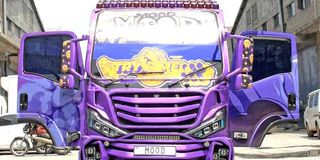
A matatu nicknamed "Mood" pictured at a garage along Lunga Lunga Road on July 24, 2025. Photo | Francis Nderitu

What you need to know:
- Gleaming solar panels now crown the iconic 'Nganya' (flashy) matatus, transforming Kenya's loudest, most visually striking buses into what some quarters would call an example of sustainable innovation
The sun beats down on the colourful roof of a Nairobi matatu as it rumbles through the city's chaotic traffic. But this isn't just any ordinary public service vehicle. Gleaming solar panels now crown the iconic 'Nganya' (flashy) matatus, transforming Kenya's loudest, most visually striking buses into what some quarters would call an example of sustainable innovation.
The power-hungry nightclub on wheels
Step inside a typical Nganya matatu and you're immediately hit by a sensory overload: multiple high-voltage TV screens flashing music videos, subwoofer-heavy sound systems pumping out the latest hits, rows of LED lights that create a disco atmosphere, and USB charging ports keeping passengers connected.
"It's like running a small nightclub on wheels," explains a matatu tout working the busy Nairobi-Ongata Rongai route, "and nightclubs need reliable power – something most of us didn't have."
For years, this power hunger created a costly cycle of dependence. Matatu crews installed multiple car batteries – often two or three just to survive a single day's operations. These heavy power sources consumed valuable passenger space and required frequent replacement, sometimes every few months.
Leonard Kituu, who drives a matatu 'MOOD', know the struggle intimately. "We needed two alternators per vehicle, and they were constantly overworked," he says. "Every time a battery died, the lights would dim, the music would cut off, and customers would complain."
The solar solution
Enter solar technology. What began as rooftop installations for homes and businesses has found an unexpected new application on the colourful shells of Nairobi's public transport.
Jaramba Lighting, a lighting designer who has worked with many matatu crews, witnessed the transformation firsthand. “Before solar, operators had to carry numerous charged batteries onboard to avoid power failures," he recalls. "Now, with solar panels, you get sufficient power at lower costs while protecting the engine from overwork.”
The benefits extend far beyond convenience. Traditional battery systems created both economic strain and environmental damage. Worn-out batteries contributed to toxic waste streams, while overworked engines meant higher fuel consumption and increased emissions.
Environmental impact
While the panels don't yet power the matatus' engines, their impact on auxiliary systems is already significant. "If more matatus switch to solar for lighting, music, and screens, we'll see reduced fuel consumption and less strain on the electrical grid," Mwangi notes. "It's a practical example of how clean energy can work even in informal industries."
This innovation reflects broader global trends in solar-powered transportation. Solar vehicles contribute to improved air quality by reducing dependence on fossil fuels, while offering economic advantages through eliminated fuel costs and reduced maintenance needs.
The decentralised nature of solar power also provides resilience, particularly valuable in Kenya's somewhat unpredictable energy landscape. Solar-powered matatus can operate with reduced reliance on volatile fuel markets and grid electricity.
The matatu solar revolution aligns with Kenya's ambitious renewable energy goals. The country is working to integrate geothermal, hydro, solar, and wind power into a green electricity grid designed to support electric vehicles and deliver measurable environmental benefits.
"Kenya's transport sector accounts for about 23 per cent of the country's carbon dioxide emissions," says Alex Wachira, Principal Secretary for the State Department of Energy, during the recent 3rd Annual E-mobility Stakeholders Conference and Expo in Nairobi.
As more matatu owners embrace solar technology, they're proving that climate solutions don't always require high-tech sophistication – sometimes they just need to make practical sense. These solar-crowned vehicles represent more than an energy upgrade; they embody Kenya's creative approach to sustainability, one colourful matatu at a time.