The 70-year scientific quest to eradicate cervical cancer
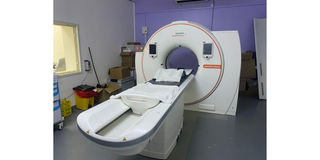
A Magnetic Resonance Imaging machine at the Mombasa Cancer Treatment Centre, located within the Coast General Teaching and Referral Hospital. It is an advanced, non-invasive imaging test that uses strong magnetic fields and radio waves to produce detailed images of the cervix, uterus, and surrounding pelvic organs

What you need to know:
- Kenya introduced the HPV vaccine into its routine immunisation schedule in 2019, targeting young school-going girls.
The world has less than five years to meet an interim target set by the World Health Organization (WHO) to eliminate cervical cancer. Despite this ambitious goal, the disease remains one of the leading causes of cancer-related deaths among women globally and is the fourth most common cancer overall.
To meet the target, WHO mandates that all countries achieve and sustain an incidence rate of fewer than four cases per 100,000 women. By 2030, this translates to the "90–70–90" strategy: 90 per cent of girls must be fully vaccinated against the Human Papillomavirus (HPV) by age 15; 70 per cent of women should be screened by age 35, with a repeat screening by age 45. Following detection, 90 per cent of those identified with pre-cancerous lesions must receive treatment, while 90 per cent of those with invasive cancer should receive proper management.
The journey to treat and manage cervical cancer began quite by accident. In 1951, Henrietta Lacks, a tobacco farmer and young mother of five, sought treatment at a public hospital in the United States after noticing unusual vaginal bleeding. She was later diagnosed with terminal cervical cancer.
During her treatment at Johns Hopkins Hospital, a biopsy sample of her cancer cells was sent to the laboratory of Dr George Gey, a renowned cancer and virus researcher. At the time, Dr Gey had been collecting cells from various patients, and he added Henrietta’s to his collection. Upon analysis, he discovered that her cells were extraordinary. Unlike most patient cells, which would quickly die, Henrietta’s doubled every 20 to 24 hours. He named them "HeLa" cells, the first immortal human cell line.
Henrietta passed on in 1951, never knowing that her cells would fuel global scientific research. According to the Gynaecological Cancer Initiative, for nearly seven decades, more than 75,000 medical studies have utilised HeLa cells.
They have contributed to the development of the polio, HPV, and Covid-19 vaccines, and remain essential in biomedical research for drug testing and studying human biology.
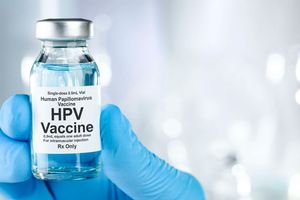
The first HPV vaccine was approved by the US Food and Drug Administration in 2006. Although approximately 13 high-risk HPV strains are known to cause cervical cancer, that initial vaccine protected against only four of those cancer-causing strains. As of last year, WHO reported that at least eight licensed vaccines are available globally to help prevent various HPV strains from becoming cancerous.
WHO emphasises that all licensed vaccines are highly efficacious against HPV types 16 and 18, which are responsible for about 70 per cent of cervical cancer cases worldwide.
Kenya introduced the HPV vaccine into its routine immunisation schedule in 2019, targeting young school-going girls. However, Prof Lucy Muchiri, an associate professor in the Department of Human Pathology at the University of Nairobi, notes that because the vaccine has been available for less than a decade, its direct impact on vaccinated girls has not yet been formally recorded.
She also expresses concern that awareness remains low among many Kenyan women regarding the importance of cervical cancer screening and prevention. Currently, out of every 100 women at risk of cervical cancer, only 16 present themselves for screening. "We envisage that this will change in the future," she says.
Prof Muchiri goes on to explain how cervical cancer screening has evolved in Kenya, as outlined in the country's National Cervical Cancer Prevention Guidelines. The earliest form of screening was visual inspection of the cervix with acetic acid, essentially table vinegar. This inexpensive test can be performed even at the dispensary level, provided the nurse has a speculum. The cervix is painted with acetic acid, causing any abnormal areas to turn white.
A similar alternative involves painting the cervix with an iodine solution. In this case, abnormal areas remain pale, while the healthy lining of the cervix takes on a dark brown or golden-yellow hue. This iodine-based method remains the Ministry of Health's first-line screening approach.
Another established method is the Pap smear, where a health provider collects cervical cells using a sampling device and smears them onto a slide. The slide is then sent to a laboratory, where it is stained and examined by a cytotechnologist or pathologist for abnormal cells.
The most recent advancement is HPV DNA testing, a molecular-based technique. Prof Muchiri explains that collection for this test can be done either at home or in a hospital setting. It works by identifying the DNA of the high-risk viruses that cause cervical cancer. "It is becoming more common and has high acceptability because of the self-sampling aspect," she says. "Beyond that, it is easier to automate, allowing screening to be carried out more efficiently."
Turning to global disparities, Prof Muchiri notes that while some high-income countries have already met certain WHO elimination targets, low-resource nations are still struggling. Although vaccination coverage in Kenya is progressing well, the country faces significant challenges in treating women diagnosed with precancerous lesions. "This is because the public health sector is grappling with limited resources such as human resources, routine stockouts of reagents, and equipment issues," she explains. "Addressing this will truly require concerted efforts."
Prof Muchiri was part of the pilot phase for HPV vaccination in Kenya and recalls that parents were highly receptive to the vaccine at that time. She believes that as long as accurate public health information is effectively communicated, communities are willing to accept it.
Also read: Why I gave my child the HPV vaccine
Last month, the first real-world analysis of the HPV vaccine's population-level impact was published in the scientific journal The Lancet. The study examined cervical cancer-related trends among women aged 20 to 29, covering the period from 2001, before the HPV vaccine was approved, through to 2024. The researchers observed a "substantial reduction" in cervical cancer deaths, which they attribute directly to national HPV vaccination programmes.
"These data suggest that HPV vaccination programmes for adolescent females can lead to reduced deaths from cervical cancer, reinforcing the importance of achieving and maintaining high vaccination coverage, particularly in females aged 12–15 years (while most are still sexually inactive)," the study states.
In its specific setting, the study shows that the highest level of vaccination coverage shown corresponds to around 90 per cent of the population receiving at least one dose of HPV vaccine at age 12–13 years, or as part of catch-up programmes in school years 9 and 10.
A separate study, published last year in the Taiwanese Journal of Obstetrics and Gynecology, notes that while the cervical cancer treatment landscape had remained largely static for two decades, several recent phase III clinical trials have reported findings that are now reshaping clinical practice. "There is a pressing need for new therapeutic strategies, not only for patients whose disease progresses despite standard-of-care treatments, but also for those requiring first-line therapy at diagnosis," the study indicates.
These innovative treatment options, the researchers add, can improve quality of life for cervical cancer patients. However, the high cost of such novel therapies may limit their accessibility in low-resource regions, where the burden of cervical cancer remains most significant.
In light of these challenges, Prof Muchiri urges the government to invest more heavily in research and to empower Kenyan scientists, who already possess the necessary expertise but lack adequate financial resources. At present, most
Kenyan researchers must compete globally for grants to fund their work. "I wish that we would see the value of funding local research that impacts our own population rather than struggling out there with everybody else in the global market for grants," she says.