The cancer you can avoid: Study reveals 40pc of cases are preventable
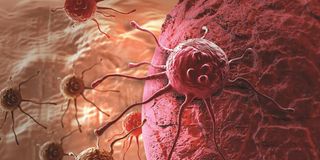
Cancer cells.

What you need to know:
- Cervical, lung, and stomach cancers constituted about half of all preventable cancer cases.
Nearly half of all cancer cases ravaging nations worldwide, including Kenya, could be prevented through lifestyle changes and environmental interventions, a new study shows.
According to the study titled:‘Global and regional cancer burden attributable to modifiable risk factors to inform prevention’, at least four out of every 10 cancer cases (40 per cent) can be prevented if people avoid key risk factors such as alcohol consumption, tobacco smoking, air pollution, and specific infections.
The researchers attributed 7.1 million (38 per cent) of all new cancer cases reported worldwide in 2022 to causes that could have been avoided.
Cancer remains a leading cause of ill health and death globally, with varying burdens across nations as populations are exposed to different avoidable risk factors.
"Cancer is a leading cause of morbidity globally, largely attributable to modifiable risks," reads the study published in the journal Nature Medicine.
"We estimated the 2022 global and national cancer burden attributable to 30 such factors, including tobacco smoking, alcohol consumption, high body mass index, insufficient physical activity, smokeless tobacco and areca nut, suboptimal breastfeeding, air pollution, ultraviolet radiation, nine infectious agents, and 13 occupational exposures, to inform prevention efforts,” said the researchers.
The team, comprising the World Health Organization's International Agency for Research on Cancer, scrutinised 36 cancer types across 185 countries and 30 factors that increase cancer risk.
Using GLOBOCAN data, the researchers examined how common exposure to these risk factors was a decade ago and the link between each risk factor and cancer cases, noting that certain causes could occur simultaneously.
Cervical, lung, and stomach cancers constituted about half of all preventable cancer cases, according to the findings.
While cervical cancer, mainly caused by the human papillomavirus (HPV), could be avoided through vaccination, lung cancer was linked to air pollution and smoking, with Helicobacter pylori attributed to stomach cancer.
Tobacco ranked as the highest cancer risk factor at 15.1 per cent, followed by infections at 10.2 per cent, with alcohol consumption (3.2 per cent) rounding out the top three cancer contributors, data analysis showed.
These avoidable risk factors were linked to approximately 7.1 million of the 18.7 million new cancer cases reported in 2022. Men were more likely to develop preventable cancers (4.3 million cases, 45.4 per cent) than women (2.7 million cases, 29.7 per cent).
Smoking emerged as the biggest cancer risk factor for men globally, accounting for about a quarter (23.1 per cent) of all preventable cases in men, compared to 11 per cent in women.
For women worldwide, the top preventable cancer risk factors were HPV and Helicobacter pylori, linked to 11.5 per cent of all cases.
The study explored geographical variations, with data illustrating that women in the African continent are the most affected by cancers linked to preventable causes, accounting for 38.2 per cent of cases.
In contrast, women in Western Asia and Northern Africa reported the lowest burden of cancer from modifiable risks, at 24.6 per cent.
Among men, East Asia recorded the largest share of cancer burden linked to preventable risk factors, compared to men in the Caribbean and Latin America, where the share stood at 28.1 per cent.
"The proportion of preventable cancers ranged from 24.6 per cent to 38.2 per cent in women and from 28.1 per cent to 57.2 per cent in men across regions," the researchers explained.
Infectious, environmental, behavioural, and work-related risks are all potentially preventable causes of cancer, the experts say.
Understanding the link between these risk factors and the global cancer burden is essential, they emphasise, as it helps nations plan and customise prevention programmes to their specific needs.
To address the growing cancer burden from preventable risk factors, the researchers recommend regular physical exercise and healthy diets. They also urge nations to adopt robust control measures, including vaccinations against common infections like HPV, improving air quality, ensuring safer workplaces, and enforcing tobacco and alcohol regulations.
"Strengthening efforts to reduce modifiable exposures remains central to global cancer prevention," the study states.