The deadly mountains: How medical waste is poisoning Mombasa's communities
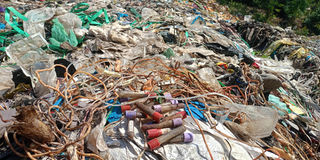
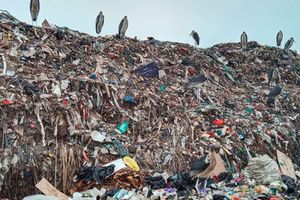
Illegal dumping of medical waste at Ganahola and Kalahari slums in Mombasa County. PHOTO/ Kevin Odit

What you need to know:
- Medical waste is being illegally dumped in Ganahola and Kalahari, Mombasa, exposing residents to diseases.
- Waste pickers, including children, rummage through hazardous garbage without protective gear.
In the Ganahola and Kalahari areas of Mombasa, mountains of waste tower over daily life. To many, it is just rubbish. But for the families who live here, these towering heaps are more than eyesores—they form the backdrop to everything they do.
Children play beside them. Mothers cook near them. Young people rummage through them, searching for recyclables. And somewhere beneath the rotting food and plastic bottles lies something far more sinister: hospital waste.
Used syringes, blood-stained gloves and expired medicines are scattered carelessly just metres from people's homes—waste that is not supposed to be here.
"These are syringes and other medical waste—we do not know where they come from—posing a threat to our children," says Mtawali Kadenge, a father of four.
At the Ganahola dumpsite in Jomvu, survival takes precedence over safety. Dozens of waste pickers, mostly women and young men, wade through the filth without any protection—no gloves, boots or masks. They salvage recyclables to feed their families, earning as little as Sh50 a day.
Playing with poison
The dangers are most visible through the eyes of mothers watching their children.
"Children are playing in the rubbish. You will see them trying to play with each other using discarded syringes, some even attempting to prick one another, which is extremely dangerous," says Beatrice Mudeizi, a mother of two who lives just a stone's throw from the site.
The law is clear on how this should be handled. Kenya's regulations state that hospital waste must be incinerated at high temperatures in licensed facilities, not dumped in the open. Biomedical waste carries lethal risks of HIV, hepatitis and bacterial infections, among other diseases.
Yet enforcement is lax, regulation is almost non-existent. In the silence of weak oversight, some hospitals—both public and private—are cutting corners.
"They do not want to pay for proper disposal, so they dump the waste where no one is watching. But what they are dumping is poison," says Benson Wemali, an environmental health expert.
The evidence at Ganahola tells the story: pharmaceutical containers, IV tubing, stained cotton wool and unsealed sharps, all dumped without caution or conscience.
Attempts to trace the origins of this medical waste prove impossible. Sifting through piles in the hope of finding receipts or documentation yields nothing. No tags, no names. Just torn bags, blood stains and a chilling stillness.
The impact on residents is immediate and frightening. Children run barefoot across toxic ground whilst families inhale fumes from burning waste. People here often fall ill, with no clear explanation for their symptoms.
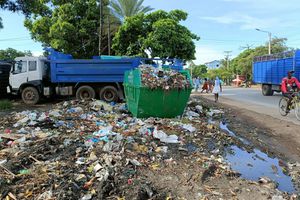
In nearby Kalahari, locals face similar dangers. They allege that county trucks arrive early in the morning to dump hospital waste, sometimes burning it just metres from their homes.
"County health officials will say we should take it easy, but they are bringing something that is certainly not healthy," says Maulid Hassan, a resident.
The county government says it is moving closer to enforcing stricter controls on medical and hazardous waste disposal. They point to long-awaited regulations under the Mombasa Solid Waste Management Act.
The law has existed for some time, but it has gaps in classification, particularly around what constitutes hazardous and biomedical waste. Experts say current practices fall short of international standards.
Now before the county assembly, the proposed regulations aim to define and guide proper disposal protocols for all medical waste, including syringes, expired pharmaceuticals and infectious materials.
"We are not just talking about syringes—we need internationally aligned systems for identifying and managing all forms of hazardous waste," says Mombasa Governor Abdulswamad Nassir.
Partnership
To strengthen implementation, the county has signed an agreement with an international firm to handle both medical and hazardous waste. Authorities hope the partnership will usher in safer practices.
But as communities like Ganahola and Kalahari continue to suffer the consequences of illegal dumping, residents are calling for urgent enforcement, not just policies on paper.
Environmental health expert Benson Wemali's warning carries the weight of scientific certainty: "This is a wake-up call. If the county government does not act, we will see the emergence of strange disease outbreaks—if we have not already."