The fall of St Mary's Hospital: A century of service cut short
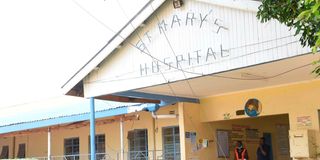
St.Mary's Mission Hospital in Kakamega County.


What you need to know:
- The Social Health Authority owes the hospital Sh40 million for services provided over the past ten months.
- The closure marked the end of a gradual decline that had been building for months.
For eight agonising days, Thomas Wandera has camped at Kakamega County General Hospital, arriving each morning at 5 AM to be by his wife's bedside. The 48-year-old boda boda rider's world was turned upside down when his wife developed complications after birth. The hospital that his family had trusted for decades was no longer there.
St Mary's Hospital Mumias, a 93-year-old beacon of hope for Western Kenya, shut its doors on June 3, after accumulating Sh180 million in unpaid claims from government health schemes. For Mr Wandera and thousands like him, it means travelling hours for healthcare that was once a stone's throw away.
"Over the years, we have been depending on St Mary's Hospital Mumias whenever my wife got pregnant because it's so close to home. But now the facility has collapsed because the Social Health Authority hasn't settled claims for many months," Mr Wandera explains.
The closure represents more than statistics—it's the death of Kenya's oldest missionary hospital and the loss of livelihoods for 200 healthcare workers who downed tools after going four months without pay.
Kakamega Catholic Bishop Joseph Obanyi has appealed to President William Ruto and Health CS Aden Duale to urgently intervene, revealing the crushing debt that forced the closure.
The Social Health Authority (SHA) owes the hospital Sh40 million for services provided over the past ten months. Separately, the defunct National Hospital Insurance Fund (NHIF) owes Sh140 million—money the hospital will likely never recover. Combined, the facility faces total unpaid claims of Sh180 million.
"We cannot operate without money because we need to pay workers and purchase necessary supplies," Bishop Obanyi tells Nation.
The closure marked the end of a gradual decline that had been building for months. Bishop Obanyi reveals how delayed government payments had systematically strangled the institution.
"These payments are usually delayed or remain unpaid, subjecting the hospital to financial difficulties which have led to strikes by staff and concerns about our ability to continue operations," he says.
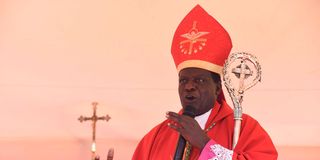
Kakamega Catholic Bishop Joseph Obanyi.
The bishop explains that most patients used insurance covers to pay their bills, leaving the facility with minimal revenue from its own sources.
"Unpaid debts from these entities have crippled our operations and contributed to our financial instability. Despite providing services, the government went quiet on payments for pre-authorised medical services," he adds.
The hospital had been surviving on its savings until those too were exhausted.
"When we ran out of savings, we promised the staff to remain patient as we sought other avenues to get money. But they went on strike and protests, crippling service delivery," Bishop Obanyi explains.
The facility also faced severe shortages of drugs and essential supplies, whilst struggling to cover operational costs, including utilities and maintenance.
Kenya's former Health Minister Prof Amukowa Anangwe, whose brother's life was saved at the facility, expressed dismay at the closure.
"I have known St Mary's Hospital as one of the facilities offering the best healthcare services. It's unfortunate that this hospital has been declining and has now gone down," he said.
Anangwe revealed he had reached out to CS Duale seeking intervention to restore operations.
Kakamega Senator Boni Khalwale placed the blame squarely on President Ruto's administration.
"Many people depended on this hospital for healthcare. For the past month, they have been left suffering because of SHA," he said.
Khalwale accused the President of ignoring warnings about SHA's failures.
"When we tell him that SHA is not good for Kenyans, the President thinks we're being disrespectful and ignores our advice. Healthcare services are worsening because of SHA," he said.
Kakamega Governor Fernandes Barasa urged Duale to revise SHA payment policies.
"Once counties make payments for SHA, let our people get the required services. You must also look at paying private facilities, especially missionary hospitals like St Mary's that have been closed due to lack of payments," he told the CS.
More than 200 employees—clinical officers, nurses, pharmacists, cooks, laboratory technicians, cleaners, morticians and pre-interns—downed tools on July 3, after issuing a 10-day strike notice on June 20.
Their demands included four months' unpaid salaries, non-remitted statutory deductions, medical insurance funds, and improved working conditions.
Dr Pilla Wekesa paints a picture of institutional decay: "Those of us in staff houses are forced to improvise safety measures when it rains because of leaking roofs that haven't been repaired for years. Management is totally ignorant of the facility."
Nurse Aisha Mukhwana describes the personal toll: "Most of us cannot send our children to school or seek quality healthcare for ourselves because our money has been withheld and our medical cover isn't remitted."
She adds that many workers face eviction after failing to pay rent for over four months.
Clinician Kelvin Kiptoo calls for government oversight: "We're appealing to CS Duale to intervene in private hospital operations. Most offer substandard services, yet the government isn't checking on them."
Established in 1932 by the Ursuline Sisters of Bergen through the Kenya Episcopal Conference-Catholic Secretariat, St Mary's had grown from a dispensary into a Level 4 teaching and referral hospital serving Mumias, Butere, and parts of Bungoma and Busia counties.
The facility trained healthcare professionals and provided specialised care for referred patients, standing as a beacon of hope for nearly a century.
The closure has forced patients to seek care from overstretched public hospitals facing their own crises.
Wandera's ordeal illustrates the human cost: "Coming to Kakamega and back every day is expensive and exhausting, especially with heavy rains day and night."
Many patients from low-income backgrounds are dying at home, unable to afford alternative care.
The closure reflects a broader healthcare crisis. On August 7, private hospitals nationwide announced they would no longer treat civil servants without cash payment, following nine months of unpaid government claims.
Kenya Healthcare Federation chair Dr Kanyenje Gakombe told SHA CEO Mercy Mwangangi that providers could no longer sustain treating public servants without compensation.
In response, Dr Mwangangi admitted payment failures: "SHA is engaging all relevant ministries to fast-track payments for adjudicated and approved claims."
Bishop Obanyi warns of lasting damage: "Lack of payment by NHIF and SHA has deprived an entire community of the hospital they relied on for 93 years. Employees and their dependents have been deprived of daily sustenance."
The bishop's final assessment is stark: unpaid salaries and poor conditions had destroyed staff morale, whilst drug shortages and potential staff exodus directly threatened patient care quality.