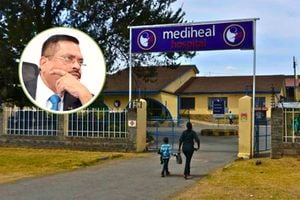
Nandi Hills MP Benard Kitur, who is also a key witness in the matter, disclosed that the criminal network behind the illegal trade in human organs is complex, involving multiple health facilities and a web of unscrupulous actors operating in collusion.
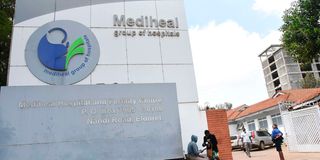
“Preliminary investigations have uncovered a sprawling network that cuts across various private health institutions, both licensed and unlicensed, involving rogue medical practitioners, unscrupulous middlemen, and clinics operating under the radar. Mediheal Group of Hospitals was merely one of the conduits in this illicit trade,” said Mr Kitur.
Following these revelations, more health facilities may face public scrutiny and potential legal action for their alleged roles in the illegal organ trade.
The parliamentary committee has launched a 90-day public inquiry into claims of malpractice, ethical violations and illegal kidney transplant activities at Mediheal Hospital.
The probe follows a government directive to form a 13-member investigative team tasked with uncovering the full extent of the alleged illegal transplants and organ trafficking.
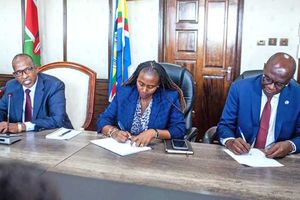
Appearing before the committee chaired by Dr James Nyikal on Friday, Mr Kitur detailed how the syndicate targets vulnerable individuals in impoverished and remote areas, luring them with false promises of lucrative medical opportunities or deceiving them into consenting to procedures under false pretenses.
“While Mediheal Group of Hospitals remains at the forefront of public scrutiny, new evidence suggests it is part of a larger system involving several private health institutions that may be complicit in illegal kidney transplants and unethical organ procurement practices,” Mr Kitur told the committee.
According to the MP, the syndicate has operated for years, preying on vulnerable patients and exploiting regulatory loopholes.
He cited the case of Mr Emmanuel Kipkosgey, whose kidneys were allegedly harvested under deceitful circumstances. Mr Kipkosgey was reportedly enticed with promises of better health, a brighter future and substantial financial compensation in exchange for his organs.
“He Kipkosgey underwent an illegal kidney harvesting procedure. He was promised Sh1.2 million but received only Sh50,000 as a deposit before the operation and Sh400,000 afterward. The balance was never paid,” revealed Mr Kitur.
“Despite his worsening health, Kipkosgey continues to suffer without receiving the full compensation he was promised.”
The legislator urged the committee to identify all implicated hospitals and consider revoking their operating licenses after the probe concludes.
“There are brokers and middlemen who approached young men while they were relaxing at shopping centers, offering an easy way to make money…just go to town, undergo a simple procedure and walk away with cash,” Mr Kitur explained.
He further revealed that one victim was initially taken to an undisclosed hospital for testing before being transferred to Mediheal Hospital for the transplant procedure.
“He was first tested at another facility within Eldoret. After tests confirmed he was a suitable donor, his organs were harvested,” the witness stated.
Dr Nyikal expressed concerns over procedural irregularities, particularly the lack of transparency surrounding the initial medical assessments. He questioned where exactly Mr Kipkosgey was tested before undergoing the transplant.
“Which hospital did he go to for testing? From what I’m hearing, it seems this process was pre-arranged. Before the operation, the individual had to be tested elsewhere. We need clarity on where this initial testing took place,” said Dr Nyikal.
Kilgoris MP Julius Sunkuli also raised concerns about the deliberate withholding of information during the inquiry, especially the refusal to name the hospital where the alleged organ-harvesting victim was first tested.
“Is there a valid reason to conceal the name of the hospital?” Mr Sunkuli asked, noting that withholding such critical information could undermine the integrity and transparency of the investigations.
Endebess MP Dr Robert Pukose, a medical doctor himself, urged the committee to expand the investigation beyond a single institution.
“From Mr Kitur’s statement, it’s clear this issue is not isolated to one hospital. Multiple facilities may be involved. Focusing on just one raises questions. We need a comprehensive investigation to capture the full extent of the malpractice,” Dr Pukose asserted.
Responding to these concerns, Dr Nyikal suggested the probe might need to broaden its scope thorough fact-finding.
“The witness says there is a syndicate. When you talk about a syndicate, it means multiple people and institutions are involved. This may require us to investigate more hospitals and individuals,” he said.
He added that holding in-camera sessions and private interviews with victims would be essential to gather more candid and detailed testimonies.
Preliminary reports indicate that some kidney transplant surgeries were conducted without proper medical records, informed consent or adequate follow-up care. Some donors reportedly suffered severe health complications or disappeared altogether.
There are also allegations that falsified documents and fake donor-recipient matching records were used to facilitate these illicit procedures.
The investigation follows a recent exposé by international broadcaster Deutsche Welle (DW), which highlighted serious concerns about Mediheal Hospital’s activities.
In response, the government established a task force led by Professor Elizabeth Bukusi. The team is mandated to conduct a thorough examination of the legal and ethical compliance of all health facilities offering transplant services across Kenya.
Health Cabinet Secretary Aden Duale (left), Public Health Principal Secretary Mary Muthoni and Director-General of Health Patrick Amoth during a press briefing at Afya House in Nairobi.
Photo credit: Billy Ogada| Nation Media Group
The task force has several responsibilities including reviewing the regulatory framework governing tissue and organ transplants, assessing compliance in relevant facilities and investigating Mediheal Hospital’s practices to determine if they adhered to ethical and legal standards.
The committee will also engage kidney donors, recipients and medical professionals involved in transplant procedures over the last five years.
One key objective is to establish whether there were instances of commercialistion, coercion or violations of the Human Tissue Act.
The probe comes amid alarming allegations that Mediheal Hospital has been illegally harvesting kidneys from vulnerable Kenyans for as low as Sh294,000 and selling them abroad for as much as Sh3.2 million.
The inquiry which began on June 5, 2025 aims to shed light on the magnitude of the problem and recommend strong legislative and administrative measures to prevent future abuses.