The hospitals that pocketed billions from SHA
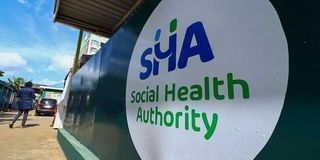
Social Health Authority signage at Mutuini Hospital in Dagoretti South Sub-County, Nairobi, on August 27, 2025.

What you need to know:
- The money, disbursed between July 2025 and April 2026, moved to hospitals, clinics and health centres, from the largest national referral hospitals in Nairobi to small dispensaries serving remote communities.
- It paid for deliveries and dialysis sessions, cancer treatments, road accident surgeries, outpatient consultations and intensive care admissions.
In the ten months since the Social Health Insurance Fund (SHIF) began operating, the fund has released Sh65.4 billion to 4,718 facilities across the country.
The money, disbursed between July 2025 and April 2026, moved to hospitals, clinics and health centres, from the largest national referral hospitals in Nairobi to small dispensaries serving remote communities. It paid for deliveries and dialysis sessions, cancer treatments, road accident surgeries, outpatient consultations and intensive care admissions.
The disbursement came in two phases. Between July 2025 and February 2026, SHIF paid out Sh40 billion over eight months. In March and April 2026 alone, a further Sh25.4 billion was released.
However, the flow of money was uneven. Some counties received far more than others. Facilities were paid varying amounts depending on their level, and hospital types, public, private and faith-based, competed for these resources.
According to explanations given to the Nation, disbursement follows first-come claims and is determined by the population, the number of hospitals per county and the services a facility offers. Counties hosting Level 6 hospitals or large faith-based and private referral facilities received more.
Nairobi dominates
In the report titled "Social Health Insurance Fund (SHIF) Facility Payment Report", Nairobi County hospitals received Sh14.9 billion in total SHIF payments over the ten months, nearly Sh10.3 billion more than Uasin Gishu County, the second-placed county, which received Sh4.6 billion.
"The capital's dominance reflects both its population concentration and the density of high-level health facilities within its borders, including Kenyatta National Hospital, Kenyatta University Teaching Referral and Research Hospital, Aga Khan University Hospital, The Nairobi Hospital and several large private facilities that collectively generate enormous claims volumes," the report states.
Kiambu County followed in third place with Sh4.1 billion, boosted by AIC Kijabe Hospital and PCEA Kikuyu Hospital, both faith-based Level 5 institutions ranked among the top 20 most-paid facilities nationally.
Kisumu County came fourth with Sh2.8 billion, followed by Kisii at Sh2.77 billion, reflecting both their population size and the referral role that Jaramogi Oginga Odinga Teaching and Referral Hospital plays for the broader western Kenya region. Meru received Sh2.74 billion, Mombasa Sh2.68 billion , anchored by Coast General Teaching and Referral Hospital , Nakuru Sh2.28 billion, Nyeri Sh2 billion and Machakos Sh1.47 billion to complete the top ten.
Marginalised counties trail
At the bottom of the table are the arid, semi-arid and marginalised counties where facilities are few, empanelment is incomplete and the population's ability to register and contribute to SHIF is most constrained.
Samburu County received just Sh61.4 million across the full ten months, the lowest of any county. Lamu received Sh126 million, Tana River Sh138.8 million and Isiolo Sh160.9 million. Marsabit received Sh177.6 million, Turkana Sh212.2 million, Narok Sh243.5 million and West Pokot Sh258 million.
"The allocation difference between facilities that were paid more and those that received less was because of not only the population differences but also the function of facility availability, road infrastructure, registration rates, contribution rates and the concentration of high-cost specialist services in urban centres," the report states.
Where a Kenyan lives continues to shape their access to healthcare.
Top facilities
Among individual facilities, Moi Teaching and Referral Hospital in Uasin Gishu received Sh1.696 billion, the highest payment to any single facility in the country. A government Level 6A institution, it is the primary referral centre for western Kenya, a region with a significant disease burden and limited alternatives for complex care.
Kenyatta National Hospital received Sh1.5 billion, placing second. Kenyatta University Teaching Referral and Research Hospital in Nairobi received Sh1.24 billion, ranking third. The three government-owned national referral hospitals at the top of the table confirm that the highest individual payments flow to facilities treating the most complex and expensive cases.
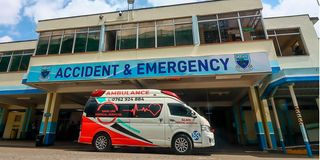
The entrance of the Accident and Emergency unit at Kenyatta National Hospital in Nairobi.
Tenwek Hospital in Bomet County, a faith-based Level 5 facility, received Sh1.08 billion, ranking fourth, reflecting the significant role mission hospitals play in areas where public facilities are under-resourced. AIC Kijabe Hospital in Kiambu County, also faith-based, received Sh878.6 million and ranks sixth.
Rift Valley Provincial General Hospital in Nakuru, a government Level 5 facility, received Sh646.1 million, ranking seventh.
Among private facilities, Aga Khan University Hospital in Nairobi received Sh644.6 million at eighth, Coptic Hospital on Ngong Road Sh580.4 million at ninth, and The Nairobi Hospital Sh566.7 million at tenth. Coast General Teaching and Referral Hospital in Mombasa, a government facility, received Sh565.1 million at eleventh.
Private hospitals take the biggest share
Private hospitals received the most money despite not being the largest category by number of facilities or by the populations they serve.
The fund released Sh32.1 billion to 2,143 private facilities, the highest disbursement to any ownership category, representing 49.13 per cent of all SHIF payments.
More than 2,230 public government facilities received Sh20.2 billion, a 30.88 per cent share. Faith-based organisations, numbering 336 facilities, received Sh13 billion, a 19.96 per cent share.
The private sector's dominance in payments reflects a structural reality about how SHA's benefit package operates.
"When a patient with SHIF coverage chooses a private hospital, and the facility files a claim, the Fund pays against its tariff schedule. Private hospitals, particularly Level 6 hospitals, treat more complex and expensive cases that generate larger individual claims," the report states.
Where the money lands by hospital level
Level 4 hospitals, the county referral and sub-county hospitals that form the backbone of devolved health services, received the largest single share at 43.20 per cent, totalling Sh28.3 billion across 873 facilities. These are the hospitals where most Kenyans access inpatient care, surgical services and specialist consultations outside the national referral system.
Level 5 hospitals, the 102 facilities classified as teaching and referral hospitals at county level, received Sh18.8 billion, a 28.67 per cent share. Together, Level 4 and Level 5 facilities account for nearly three-quarters of all SHIF payments, confirming that the bulk of the scheme's spending is concentrated in the mid-to-upper tiers of the health system.
The six Level 6A national referral hospitals received Sh6.1 billion, a 9.29 per cent share, and the 11 Level 6B facilities received Sh3.9 billion at 5.9 per cent.
Level 3B facilities, numbering 1,008, received Sh3.1 billion at 4.74 per cent, and Level 3A facilities, numbering 1,412, received Sh3.08 billion at 4.71 per cent.
At the bottom, Level 2 facilities, the 1,240 dispensaries and health posts serving the most peripheral communities, received just Sh233.5 million, a 0.36 per cent share. These are also the facilities where the new free maternity service gazetted under Legal Notice No. 78 is intended to operate. The low payment share reflects both the lower tariffs at this level and the longstanding challenge of getting primary care claims processed through SHA's system.
Sh30.5 billion in claims unresolved
However, 489 facilities that had claims processed have not yet received their money according to the report. The funds were returned unapplied due to bank validation failures, incorrect account numbers, wrong bank or branch codes, account name mismatches, dormant or closed accounts and invalid payee details.
"In each case, SHA processed the payment on its end, and the bank rejected it before the money reached the facility," the report states.
The authority said the failure to reimburse facilities is not a punishment. The system automatically rejects claims that are not properly presented. The leading cause is missing documentation, with 285,523 claims rejected for missing forms or required documents. A further 62,656 were rejected for missing itemised invoices, and 38,211 were time-barred because the facility failed to resubmit within the required 14-day window.
About Sh30.5 billion in claims is sitting under SHA review, unresolved, money that hospitals have not received for services they have already delivered.
"Hospitals are already strained by the broader claims backlog. An additional technical failure of this kind adds pressure that ultimately affects the capacity to serve patients. We are hoping that this would be rectified as fast as possible to allow the facilities to operate optimally," Dr Brian Lishenga, chairperson of the Rural Private Hospitals Association (Rupha) told Nation.
"We appreciate the gesture by the government to pay facilities, and we are hoping that this is going to be done on a rolling basis to avoid backlog and piling of claims, yet hospitals are suffering," he added.
SHA has directed affected facilities to resolve the issue by contacting the authority through its toll-free line, email or by visiting the nearest SHA office.
"Facilities are advised to verify their banking details and ensure all account information registered with SHA is current and accurate before resubmitting," the authority stated.
Follow our WhatsApp channel for breaking news updates and more stories like this.