Treated sewage: The drinking water of the future
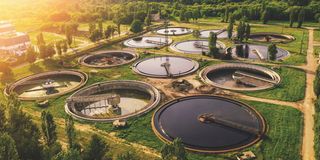
Aerial view of wastewater treatment plant, filtration of dirty or sewage water. PHOTO/POOL
What you need to know:
- Direct portable reuse involves the treatment and distribution of water without going through an environmental buffer
- Water reuse is becoming highly recommended worldwide for strategic, environmental, technological and economic reasons.
Necessity is the mother of all inventions, goes the saying. The Namibian capital of Windhoek has been turning its wastewater into drinking water since 1969. The futuristic city of Windhoek decided a long time ago to recycle wastewater and reintroduce it into its water supply network, making it the first city in the world to reuse domestic wastewater for human consumption.
Of all our natural resources, water has become the most precious. Unfortunately, insufficient protection of the surface waters from contamination has deemed most of these sources unsafe for use. Due to climate change and other factors, our fallback plan to explore underground water is no longer promising; the aquifers are getting depleted thrice as fast as anticipated. Wells as deep as 600 feet are running dry in India, and 1000-foot wells are no longer reliable in California.
Shall we die of thirst? Not likely; treated wastewater will save the day.
There are typically two types of potable water reuse: direct and indirect mobile reuse.
For the indirect potable reuse, the treated effluent is released to an environment buffer like a river, a lake or an underground aquifer before being drawn to a water treatment facility.
Direct portable reuse involves the treatment and distribution of water without going through an environmental buffer. The soaring water demand and ever-disappearing fresh water sources are a wake-up call for extraordinary measures. It’s high time we inject treated water into our freshwater supply systems to balance the books.
This shouldn’t sound like rocket science. Israel recycles more than 90 per cent of its wastewater, and if you’ve been to Singapore, there is a high probability that you have drunk direct portable reuse water.
Compared to other water technologies like desalination and atmospheric water generators, wastewater treatment is an economically viable option in terms of the initial and running capital. The truth is that all water is being recycled repeatedly—no water on earth is truly pristine.
However, using recycled water for drinking is less common, mainly because many people are repelled by the thought of water in our toilets going to our taps.
However, when communities are actively engaged in discussions about water reuse, the technologies and science behind it, and the overall water management context, the public and water managers are better equipped to engage in meaningful dialogue.
Water reuse is becoming highly recommended worldwide for strategic, environmental, technological and economic reasons. Involved technologies in wastewater treatment plants for drinking water should be furnished with highly performance methods such as membrane processes like nanofiltration and reverse osmosis for the population’s safety.
The author is a sustainability consultant. [email protected]