Trouble looms for teachers, police transitioning from private health insurers to SHA
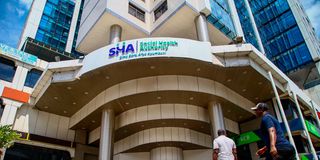
The Social Health Authority building in Nairobi.

What you need to know:
- Private hospitals cut credit line to SHA, to block services to teachers and police unless they pay cash.
Healthcare facilities affiliated with the Rural Urban Private Hospitals Association (RUPHA) will decline to treat teachers and police officers when they transition from their current insurer to the Social Health Authority (SHA), unless they pay cash.
RUPHA chairperson Dr Brian Lishenga announced the decision Monday.
He stated that the migration of teachers' and police medical schemes to SHA should not proceed until Medical Administrators Kenya Limited (MAKL), which oversees their medical schemes, and Minet — which covers 415,000 teachers on the State payroll - settle all outstanding debts owed to hospitals.
The announcement comes days after Teachers Service Commission (TSC) acting CEO Eveleen Mitei revealed plans to transfer teachers to the Public Officers' Medical Scheme under SHA during her appearance before Parliament's Committee on Education.
The existing medical scheme under MAKL covers approximately 450,000 teachers across the country, with the contract set to expire on November 30. SHA medical coverage was set to begin in December.
"We will not have a situation where we have another crisis similar to NHIF, where you migrate a whole scheme without settling arrears owed to hospitals," Dr Lishenga said.
He revealed that most hospitals have not received payments from teachers' and police schemes for over a year. He disclosed that the police medical scheme is worth Sh8.9 billion annually, while the teachers' scheme accounts for approximately Sh20 billion per year.
He noted that a significant portion of the Sh33 billion debt owed by the defunct National Hospital Insurance Fund (NHIF) to hospitals was accumulated when teachers' and police medical schemes were transferred to private insurers.
Concerns 'not addressed', financing model unsustainable
The move comes exactly 16 days after RUPHA issued a 14-day notice to SHA, hoping the Authority would address their concerns.
"SHA has failed to address the issues that we raised two weeks ago and issues that we have raised over the last one year, and therefore they have left hospitals in a state of financial paralysis," he explained.
"This is putting Kenyan patients at risk. At the heart of our call is a simple truth: hospitals must be funded so that patients can access essential supplies, equipment and personnel. Without this, universal health coverage is a hollow promise."
Dr Lishenga argued that hospitals have realised over the past year that SHA's financing model is unsustainable due to the Authority's failure to promptly honour its commitments.
"This is not just about a dispute between SHA and hospitals. This is because of a simple thing that we have come to realise after one year, and that is that the SHA financing model is unsustainable," he said.