Trump aid freeze triggers HIV crisis in Kenya
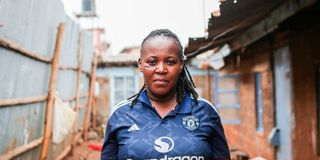
Eunice Atieno, who has HIV, during the interview at Muslim area in Kawangware.

What you need to know:
- Mary complains about the cost of the viral load test, which used to help them know the level of the virus affecting them. Now they are left in shock because they are required to pay Sh3,000 for the first test.
On a chilly Tuesday morning in Kibra slum, Nairobi, Stacy Wanjiru makes her way to Mbagathi Hospital for what should be a routine viral load test — a crucial procedure that determines how well the HIV virus is being suppressed in her body. Healthy Nation accompanies her on this journey, one that reveals a quiet upheaval now facing thousands of Kenyans living with HIV.
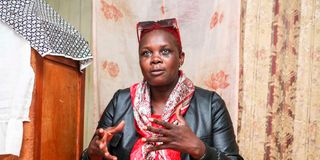
Emily Awuor, who has HIV, during the interview at Muslim area in Kawangware.
Wanjiru joins a queue of patients waiting outside the Comprehensive Care Centre (CCC). For years, this has been her routine: register, get tested, collect medication; all without paying a shilling. But this morning, something is different.
At the reception desk, a health worker delivers unexpected news. Before being attended to, Wanjiru must register under the new Social Health Authority (SHA) system.
Also read: HIV patients petition government to include care under SHA as international funding dries up
“I am shocked they tell me I have to register for SHA to get services I used to receive for free without using NHIF,” she says, visibly frustrated. “It’s confusing because these were essential services we never used to pay for.”
The change comes at a time when many facilities are struggling to adjust following the withdrawal of USAid funding, which had for decades supported Kenya’s HIV programme by providing antiretroviral drugs and testing supplies. According to data from official USAid reports and US Embassy Kenya fact sheets, the United States remains one of Kenya’s key development partners. Under the Kenya Country Development Cooperation Strategy 2020–2025, USAid committed approximately Sh325 billion (about $2.5 billion) in development assistance to Kenya. Of this, nearly Sh61 billion ($470 million) is disbursed annually, with about 80 per cent directed towards health programmes, including the management, treatment, and prevention of HIV through the President’s Emergency Plan for Aids Relief. The figures are consistent with USAid’s Foreign Aid Explorer database and Pepfar’s Country Operational Plans for Kenya.
More difficult
At the CCC in Mbagathi Hospital, a health worker attending to patients living with HIV says the situation has grown more difficult since the US government halted its support.
“It has not been easy,” says the medic, who requests anonymity because they are not authorised to speak to the media. “There came a time when those who were receiving a three-month supply of ARVs started getting only one month’s dose. We had to restructure the schedule to ensure everyone got at least some medication to continue managing the virus.”
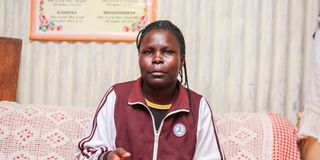
Emily Adhiambo, who has HIV, during the interview in Kawangware, Nairobi on October 27, 2025.
The health worker adds that the shortage has forced patients to make frequent hospital visits, increasing their transport costs and emotional strain, particularly for those living in informal settlements like Kibra and Mukuru, where poverty levels are high.
About 8.5km away, at St Mary’s Hospital in Lang’ata, Healthy Nation accompanies Wanjiru for her regular visit. A health worker there asks her to pay Sh1,000, claiming she is not listed among patients who receive HIV treatment at that facility.
“We are forced to purchase test tubes for the viral load testing since there is a shortage. If I allow you to have your test done, that means those under our programme will not get the service,” the health worker says.
Healthy Nation also conducts a spot check at Kibera South Hospital and Ushirika Health Centre and confirms that registration under SHA is now mandatory to access HIV-related services, including viral load testing and drug refills. For many patients who rely on public facilities and community-based programmes, this new requirement has added another layer of uncertainty to an already fragile system.
In the slums of Mukuru, we meet Nancy (not her real name). She discovered she was HIV positive in 2002, a diagnosis that would turn her world upside down.
“When I was admitted to Kenyatta National Hospital many years ago, I was placed in a ward and after two weeks, I was discharged. My condition worsened, and I was rushed to St Mary’s Hospital, where I underwent tests and was diagnosed with HIV,” she recalls.
The results led to her isolation, even by her five children, who abandoned her. Overwhelmed by stigma and rejection, she sold her belongings and returned to her home in Murang’a County, driven away by the experience that pushed away her own children who had deserted her. Despite everything, she was forced to travel back to St Mary’s Hospital every month for follow-up and care.
“My hope lay with my parents and siblings, but everything went south. In Nairobi, my children ran away, leaving me alone in the house. My sister would abuse me, shouting at me and saying disrespectful words before my children,” Nancy says.
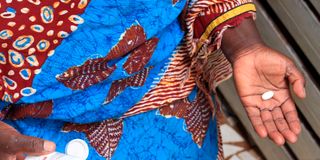
A woman living with HIV during the interview in Kibra, Nairobi on October 22. She shared concerns over frequent shortages of ARV drugs in local health facilities.
She stayed for more than three years without taking any medication, constantly fearing that she might die as her health continued to deteriorate. It was not until she returned to Nairobi that she was connected to a centre where she could receive antiretroviral drugs to manage HIV. “Until 2007, that’s when I was introduced to ARVs, which I have been taking. Not a single day have I ever missed taking them up to date,” she explains.
However, in this era, she has a lot of fear of losing the life she has fought for over many years due to lack of enough drugs. The health facility she visits is facing a shortage of drugs, making her worry considerably.
She claims that at times when she visits the health facility, she does not receive a supply of medication sufficient to sustain her for six months as before. The reduction in medication is causing her anxiety about how she will survive if the situation worsens.
“Most of the time now, they give you only two bottles of medication that last four months, unlike before when they would give you enough drugs for six months. Sometimes they only give you enough for two months. I’m very worried—if their supply becomes insufficient, what will happen to us? We don’t know who will help us get the drugs we need to suppress the virus,” Nancy says.
She complains that the reduction in the amount of drugs has cost her a lot of time as she is now forced to visit the clinic where she is registered more than six times to collect her medication. “It is painful that I have to travel from Mukuru all the way to the Ngong’ Road area to pick up my medicine. Sometimes I don’t even have fare; I have to walk, and I haven’t even had breakfast,” she adds.
Another victim is Mary Makau, who took a long time to accept her status after being tested in 2003 while she was pregnant with her third child. Her baby was born HIV-positive and later died. Mary refused to believe she had contracted the virus, which was then feared to be deadly, until her body began to deteriorate and she developed severe wounds.
“I remained in denial until 2007 when I became extremely ill and my body was completely weakened. I couldn’t even get out of bed. That’s when I decided to go to the hospital to get the medication,” she says.
Mary experienced severe stigma from her neighbours, which was the hardest period of her life. Most of them avoided hanging their clothes on the washing line near hers. The isolation became so intense that she locked herself in the house.
“Somehow my neighbours discovered that I had the virus. They isolated me because my body had wasted away and was covered in sores. I would hang my clothes on the line, and when they came to hang theirs, they would avoid that spot. Wherever I passed, I would hear people saying, ‘That one is just living with Aids,’” Mary laments.
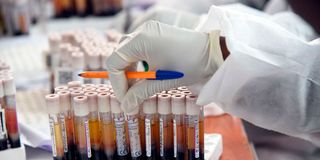
Kemri lab scientist working on HIV viral load sample tests
However, ARVs gave her a second chance—a chance to live, to work, to care for others. But now, that lifeline hangs by a thread. The shortage of ARVs has not only affected treatment but also testing and monitoring.
Mary is among the patients who have been registered on the HIV programme at a facility along Nairobi’s Ngong’ Road for more than 15 years. She complains about the cost of the viral load test, which used to help them know the level of the virus affecting them. Now they are left in shock because they are required to pay Sh3,000 for the first test. She says her income is extremely low, making it impossible for her to afford a test that was previously free.
Lucy, a Community Health Promoter in Mukuru slums, paints a grim picture of the growing crisis. “This month alone, I have found about 10 patients who have defaulted on their drugs. There are even young children whose parents are no longer taking them to the hospital for check-ups, and others are facing challenges accessing their medication.
“Another reason patients default on their treatment is lack of food. When this happens, I have to go to Cana Family Centre to get food for them so they can at least take their medicine,” she adds.
Twenty-seven years ago in Mukuru, Mary Mambo, founder of Cana Health Centre, began helping people living with HIV after visiting several homes and witnessing dire conditions. She was moved to action by young patients who would come to the hospital where she worked, seeking relief from recurring fevers that would not go away.
“Those young people asked me to visit their homes. When I arrived in this settlement, in every house I entered, I found a mother, a father, or both parents lying down, waiting to die,” Mambo says.
Without being seen
Five years after opening the health centre, she received government recognition through the Ministry of Health, which began supplying her with medication for people living with HIV.
“When I came here, 17 per cent of the community was HIV positive. After five years, we reduced that number to 15 per cent. I think right now we are at 10 per cent or less. The stigma was 100 per cent—people were dying silently. We built a clinic and worked 24 hours a day so they could come at night without being seen. Now, 50 per cent can openly talk about their status,” Mambo narrates.
The situation has become critical since USAid support was withdrawn as the health centre was among those that relied on antiretroviral drug supplies. She now fears that decades of progress could collapse if the ARV shortages continue. “We are afraid that after all those years of hard work caring for so many patients, we don’t know what will happen if this programme collapses. We are already starting to see the warning signs.”
Resident of Kawangware, Emily Adhiambo, 43, discovered she was HIV positive in 2011 when she was pregnant with her last child. She was diagnosed after undergoing tests, a revelation that left her deeply worried.
“When I found out, I didn’t want anyone to know. I kept it to myself because I was scared. When it was time to give birth, I delivered at home, and unfortunately, the baby got infected,” she says.
Emily has not been on medication for three months after the clinic she was attending closed five months ago. She and other patients were transferred to a new facility in Kilimani.
“I used to collect my medicine at Liverpool Health Centre, near Yaya, but we were later told we would be transferred to another hospital, where we were required to pay Sh2,000 for new registration before we could receive the drugs.”
“My 14-year-old child, who is also on treatment, went to a facility along Ngong’ Road but wasn’t assisted because she didn’t have the Sh3,000 registration fee. Last month, she went again but still didn’t receive the drugs. When my child misses her medication, her mouth swells. I’m pleading with the government to help us,” Emily adds.
She has tried seeking HIV treatment in public hospitals but has encountered major challenges as these facilities require proof that patients were previously on medication.
“I’ve really struggled. They keep asking for a letter, but I don’t know where to get it. My child also can’t access the drugs. Right now, we have no medicine, yet I started treatment back in 2011.”
Eunice Atieno, too, uses antiretroviral drugs to manage HIV and had to register through the SHA system at a public hospital to access her medication. “We are just coping with the situation because sometimes when you go, you’re told there aren’t enough drugs. I get tested every month because I’m under the SHA programme.”
Emily Awour, who has lived with HIV for 10 years, continues to take her medication diligently. For her, accessing the drugs has not been difficult because she actively advocates for the rights of people living with the virus.
She explains that her doctor has warned that drug supplies might run low if the current situation persists. “I haven’t had many problems because my activism helps me get help faster. But I’m worried about two cases where patients might die.”
“Every time I visit my doctor, he seems worried that the stock of drugs is running out. In our support group, one person has completely stopped taking their medication. Our colleague travelled all the way from Siaya to Nairobi in search of a job but was denied drugs because he couldn’t pay. Now he needs to find bus fare to return home.”
Grace Akinyi, a community health volunteer, says that in the facility where she works, HIV patients must register under SHA. She explains that this helps many patients access public healthcare services for HIV and related illnesses. Nelson Otwoma, a human rights advocate for people living with HIV, confirms that earlier this month, advocates held a meeting with the National Aids and STIs Control Program (Nascop) and the Ministry of Health to ensure all patients enrol in the SHA programme.
He urges patients to understand that the government previously received funding from the US, but that support has been withdrawn.
He appeals for calm among patients as talks continue with the government.
“Because of that, many patients have shifted to level 3, 4, 5, and 6 health facilities. Many Comprehensive care centres were closed, and most people in Nairobi now go to
Kenyatta National Hospital. There are long queues, but at least they can get medication.”
“In some private facilities that had temporarily closed, patients now pay about Sh1,000 since the facilities no longer receive external funding. Other facilities are charging Sh500 as a user fee.”
“We’ve asked the Ministry of Health to work with the government to ensure that all one million HIV patients in the country continue to access their medication without interruption.”
Nascop has assured Kenyans living with HIV that there is no shortage of antiretroviral drugs in the country, amid growing fears of a looming crisis following changes in donor funding and drug distribution timelines.
Dr Andrew Mulwa, Head of Nascop, says Kenya has enough ARV stock at the central and county stores to sustain uninterrupted treatment for all patients. Speaking in a phone interview, Mulwa dismisses claims that patients are receiving shorter refills—sometimes for only one or three months instead of the usual six—because of drug shortages. “We don’t have any looming stock out of ARVs. The only reason a patient can be moved from six months to three or one month of medication is purely clinical,” he says.
“If a doctor notices changes in a patient’s viral load, CD4 count, or liver function, then they may decide to review the refill period for close monitoring. But it is not due to stock issues,” he adds.
However, Lucy says that patients with high viral loads are issued shorter refills—between two weeks and one month—to allow for close monitoring and adherence sessions.
“We do this to help the patient stay on track with treatment. Once the viral load is suppressed and the patient is stable on ART, we can extend the refill period again,” she says, emphasising that viral load testing plays a key role in determining whether a patient is stable or requires additional support.
While ARV supplies remain stable, Mulwa acknowledges challenges in viral load testing in some facilities, especially where donor support has reduced. He notes that some private hospitals and a few public facilities have started charging patients for tests, despite government policy prohibiting user fees for HIV services.
“There are counties that have started charging user fees in an attempt to integrate HIV services with other health programmes under UHC. That is against our policy, but we are working to provide guidance to ensure uniform service delivery,” he says.
The CEO reveals that Nascop is in talks with the community of people living with HIV to align HIV services with the SHA programme under the Universal Health Care plan. This integration aims to ensure sustainability and expand coverage through the Primary Healthcare Fund.
Mulwa admits that the change in the US government’s funding model, particularly under Pepfar, has caused anxiety among stakeholders and patients. However, he reassures the public that no HIV services have been disrupted as a result.
“We are having ongoing negotiations to ensure continuity of services that may be affected by the shift in US government funding. There’s a plan to transition some programmes, especially those serving key populations like men who have sex with men and female sex workers, into government-supported systems,” he says.
He adds that some faith-based facilities have already closed their HIV clinics in anticipation of changes in financing, but the government is working to restore service delivery in those areas.
As Kenya adjusts to reduced donor dependency, Mulwa says the government is focused on ensuring uninterrupted HIV care and treatment for all patients. He reaffirms that future adjustments will prioritise integration, efficiency, and sustainability without compromising the quality of care. “For now, we have no disruption in services. There’s enough stock in the system. The transition discussions are still ongoing, but our commitment is that no one living with HIV will be left behind,” he concludes.
Director General for Health in the Ministry of Health, Dr Patrick Amoth, reaffirms the government’s commitment to ensuring uninterrupted HIV services across the country. He says that HIV care is available in more than 6,000 public, private, and faith-based health facilities, with around 3,800 of them providing antiretroviral therapy.
“The 6,000 facilities include those in the informal settlements such as Mukuru and Kibra, which continue to offer comprehensive testing and treatment to ensure access for all populations.”
He notes that the ministry has strengthened viral load testing services by decentralising operations and increasing the number of viral load laboratories from 12 to 15 across counties. All ART facilities can now collect samples, which are analysed in regional labs, with results returned within 10 days. This system, supported by county-level capacity building and consistent supply of testing consumables, helps prevent treatment interruptions and drug resistance.
“We are enhancing county-level capacity in areas such as Kisumu, Busia, Migori, and Homa Bay, ensuring timely and accurate testing. In addition, the ministry issues viral load testing consumables to all counties, which in turn supply facilities for consistent sample collection. The ministry has developed integrated guidelines on sample referral networks guiding the movement of samples to testing hubs, maintaining efficiency and accessibility. As a result, the average turnaround time for viral load results is now under 10 days, supporting continuity of treatment and reducing risks of drug resistance,” he adds.
Regarding sustainability amid reduced donor support, Dr Amoth says the government has allocated Sh25 billion for HIV commodities and is expanding domestic financing and local pharmaceutical production to minimise reliance on external funding. Additionally, plans are underway to include essential HIV commodities in the upcoming national health benefits package.