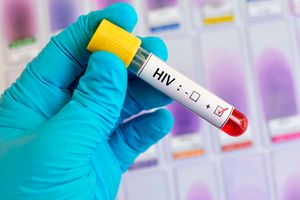
HIV patients petition government to include care under SHA as international funding dries up


Members of the National Empowerment Network of People Living with HIV/Aids in Kenya (Nephak) are urgently petitioning the Ministry of Health to include HIV care under the Social Health Authority (SHA) benefit package.
They say HIV and TB care were originally excluded from SHA because they were adequately funded by international partners, specifically Pepfar (The US President's Emergency Plan for Aids Relief) and the Global Fund.
However, that external funding has now significantly diminished, leading to a crisis for patients. Whilst antiretroviral drugs (ARVs) are still provided free of charge through these donors, essential services previously covered by the funding are now unavailable.
"SHA excluded HIV, which according to us, equals stigma and discrimination. We are registered with SHA, but we are suffering because SHA doesn't cover HIV care," said Mr Nelson Otwoma, the Executive Director of Nephak.
He explained that the most critical impact has been the halt in essential laboratory work, stating that for the last three months, facilities have been unable to perform vital diagnostic tests, including viral load testing, CD4 count testing and creatinine tests.
A viral load test measures the amount of a specific virus, such as HIV, in a blood sample. A CD4 count is a blood test that measures the number of CD4 T-lymphocytes, a type of white blood cell vital for a healthy immune system, particularly for people with HIV. Doctors use CD4 counts to assess damage to the immune system, monitor a person's response to antiretroviral therapy (ART), and determine when to start treatments that prevent opportunistic infections.
"Creatinine tests and other tests are necessary for managing non-communicable diseases (NCDs) and kidney problems prevalent amongst people living with HIV. Without this monitoring, people are suffering, as their health conditions cannot be properly managed," said Otwoma.
"We are also calling for an increase in budget allocation to health to fill the gap left by external donors and take care of integrated people-centred health services that include HIV care," he added.
Anne Okaro, the National Chairperson of The Kenya Network of HIV-Positive Teachers (Kenepote), also made a passionate appeal for comprehensive support for teachers and learners living with HIV, requesting an integrated health and mental wellness package that extends beyond the provision of antiretroviral (ARV) medicine.
She explained that whilst ARVs are accessible, teachers face a financial burden due to other co-existing health issues, and that this burden has weighed heavily on some teachers, leading to mental stress.
"Mental health is a critical, life-threatening issue that is now killing us. Teachers are suffering from profound depression and other mental health challenges stemming from the dual stress of managing their illness and dealing with family issues and a lack of support systems outside of their immediate peer group," said Okaro.
She stressed that the daily experience of stigma is one of their greatest burdens, and that it has severely hindered their ability to seek and receive quality care.
"We are asking to be handled like human beings and not to be constantly subjected to reminders of our HIV status when we visit a clinic. I didn't choose to have HIV. I'm a victim of circumstances, and my condition should never be a reason for discrimination or a denial of quality services," said Okaro.
Oluoch David Odhiambo, representing the Aids Healthcare Foundation (AHF), noted that the experience of the patients he serves is that laboratory services are very poor, especially in government facilities. The inability to access essential diagnostics prevents proper management of the disease.
He also pointed out that protective commodities, specifically condoms, are not available in facilities, stressing that this scarcity will lead to a continued rise in new HIV infections, especially amongst young people, and that as the number of people living with HIV grows, the national burden will increase significantly.
"We urge the government to make immediate policy changes to include HIV care in SHA and to ensure the availability of essential prevention tools," he said.
SHA Chief Executive Dr Mercy Mwangangi explained to Nation that HIV is currently financed as a vertical programme under the Ministry of Health. She said, however, that the Social Health Authority (SHA) provides coverage for a wide range of medical conditions and services through its essential benefits package.
"In line with the Social Health Insurance (SHI) Regulations, this package is reviewed every two years by the Benefits Package and Advisory Panel. Any proposed inclusion of HIV-related tests or services can therefore be considered once formally submitted to the Panel for review," she explained.